
A dye-garden pigment desk clips handwritten cards to swatch photos. One trial asks a transformer only to pull the botanical name; another asks it to invent a poetic label. Which trial is analysis rather than generation for cataloging?
Select an answer to reveal the explanation.
Short Explanation
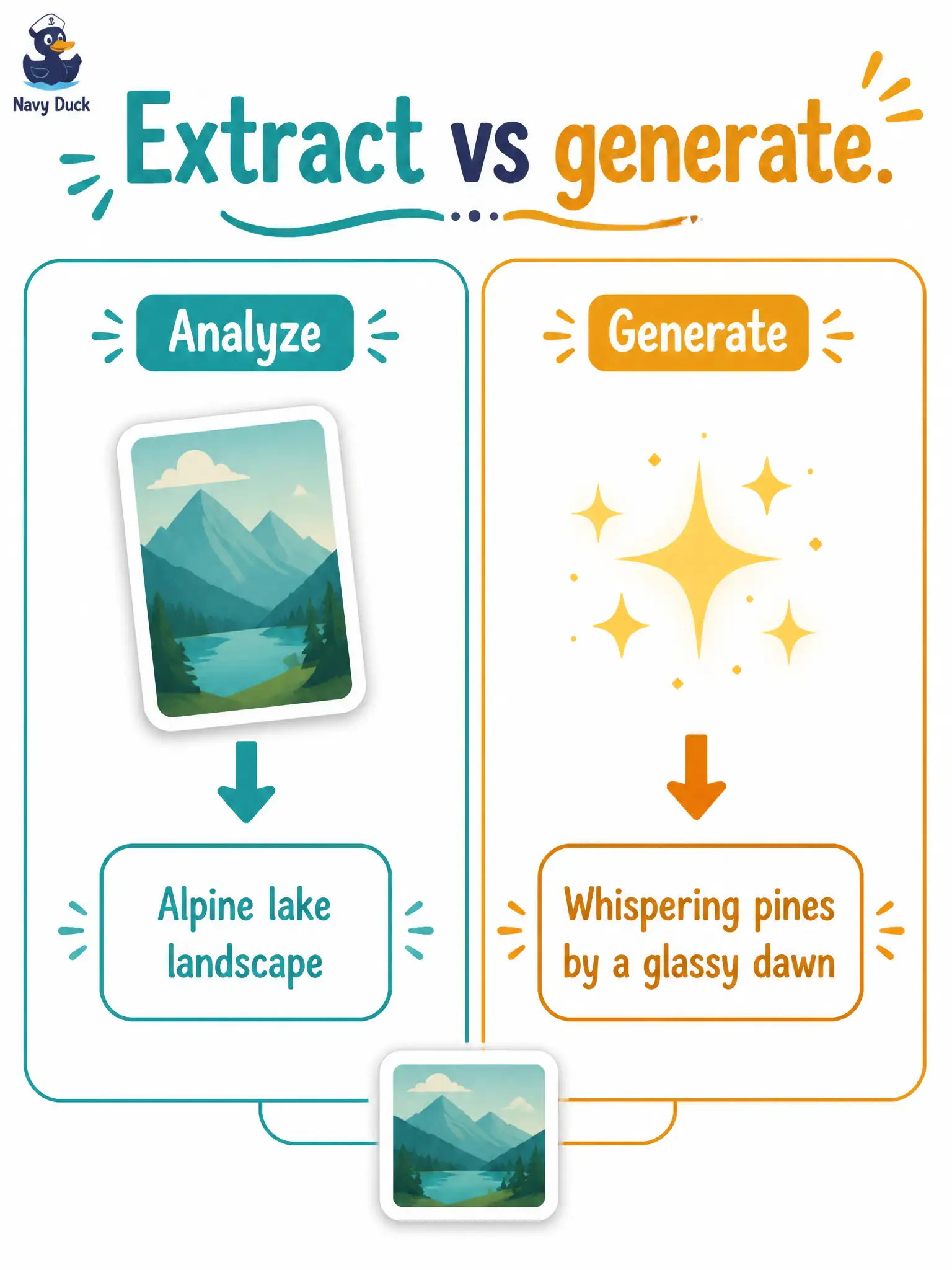
Pulling a name off a card is like reading a filing label already there. Inventing a poem is making something new. Cataloging needs the extract/analyze behavior, not a creative rewrite.
Full Explanation
A dye-garden pigment desk that clips handwritten cards to swatch photos needs cataloging behavior that recovers botanical identity already present on the card, not creative rewriting. Extracting the botanical name with a transformer is analysis rather than generation because it reads existing text evidence beside the photo instead of inventing new copy. Civic collections serving gardeners and conservators depend on stable names tied to swatches; treating the trial as extract-and-analyze protects public catalog integrity when staff later search by true pigment identity.
Inventing a poetic label fails by framing generation as proof of understanding when the cataloging goal is recovery of the written botanical name. Running both trials and keeping whichever string is longer fails by substituting length for task fit—longer poetic output does not mean better analysis. Discarding the photo and regenerating a new swatch from the poetic label fails by abandoning the paired image evidence and turning the desk into an image-generation loop unrelated to catalog recovery.
Exam caveat: on the associate multimodal path, analysis versus generation is a text-arm framing question, not a license to drop the photo. Operational check: score whether the extracted botanical string matches the card ground truth while the swatch photo remains available for visual confirmation.