
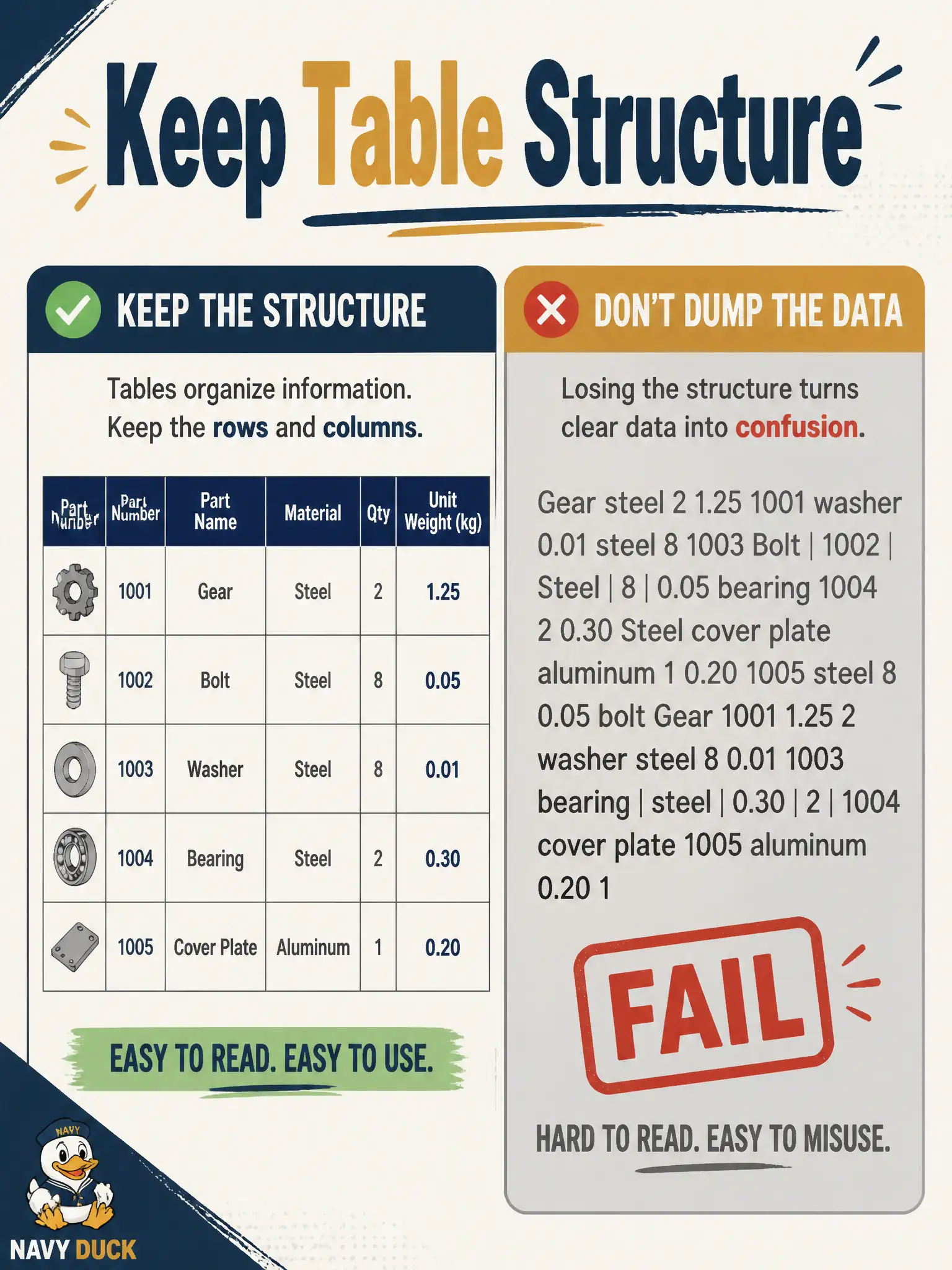
A flint-knapper’s PDF has a parts table on one page and a narrative on the next. Naive OCR dumps both as a word soup. What should analysis flag?
Select an answer to reveal the explanation.
Short Explanation
Pouring a spreadsheet and a story into one blender makes soup you cannot chart. Flag that tables need their structure kept—not just letters recognized.
Full Explanation
When a flint-knapper’s PDF has a parts table on one page and a narrative on the next, and naive OCR dumps both as a word soup, analysis should flag that table structure must be kept—not only characters recognized. Domain 5 document analysis cares about layout-aware extraction for usable parts lists in the civic workshop catalog.
Abandoning all PDFs for audio diaries fails as an unrelated modality swap that does not fix table structure. Claiming Domain 2 early fusion fixes broken table layout automatically fails because fusion does not restore tabular semantics lost in soup OCR. Replacing catalog tables with VIA video Blueprints fails because video blueprints are not the document-table analysis path.
Exam caveat: OCR quality includes structure (tables, fields), not merely character accuracy. Word soup can score characters yet fail analysis needs.
Operational check: use layout-aware OCR or table extraction for parts pages; validate column integrity on a sample; reject soup-only dumps for the flint-knapper catalog; re-run until parts rows join cleanly to stills or inventory ids. In municipal multimodal stewardship, record the chosen Domain 5 reading and the rejected distractors in the loft change log so future stewards understand which concept boundaries were enforced for citizen-facing archives. Re-check the same chart or extraction after the next collection or OCR pass to confirm the civic gap is closing rather than merely relabeled.