
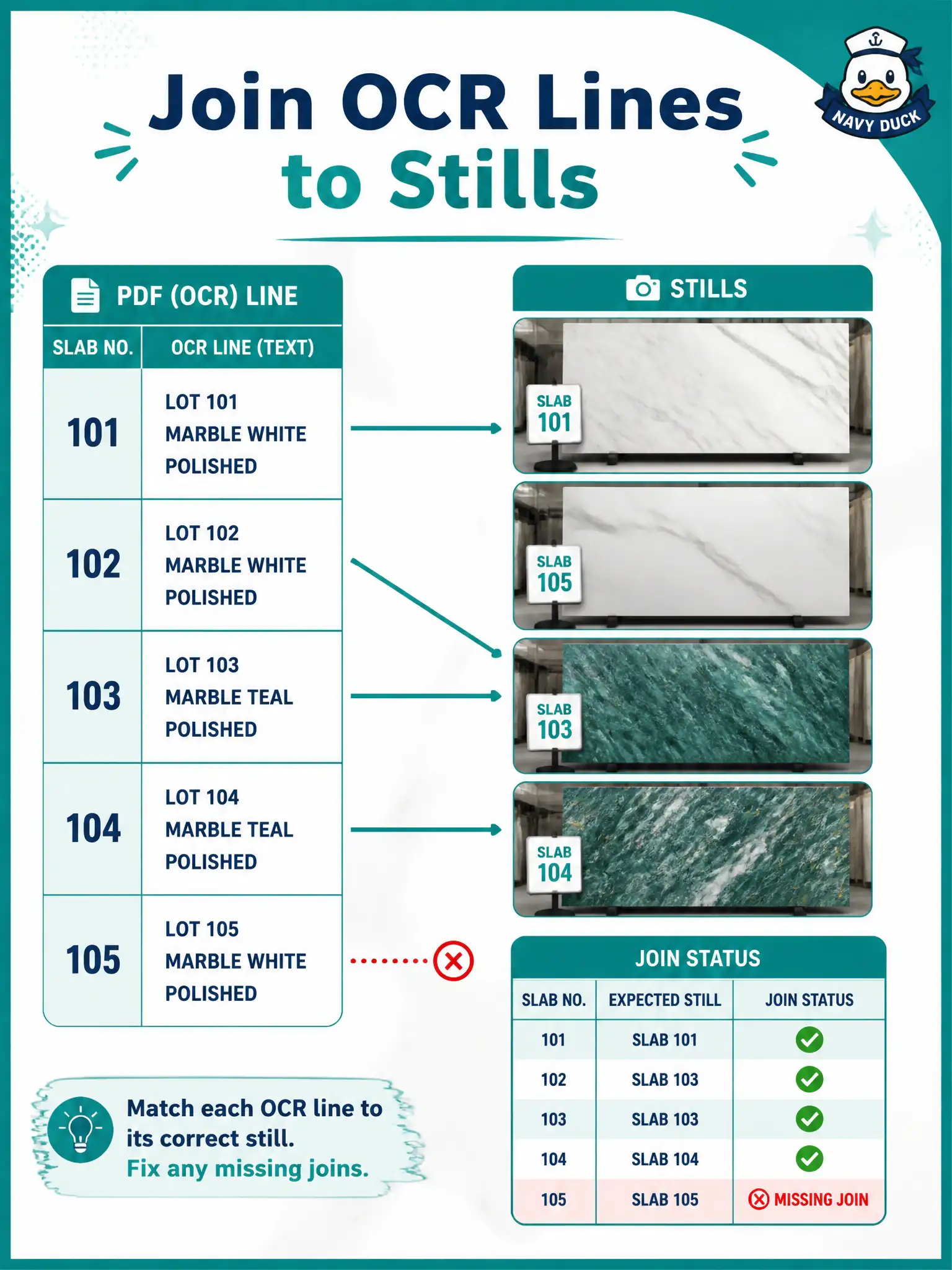
A marble-polish shed’s PDF names each slab on a line, and the camera tray uses the same slab numbers. After OCR, what Domain 5 step joins the document to the images for analysis?
Select an answer to reveal the explanation.
Short Explanation
Matching invoice line numbers to tagged boxes on a shelf is joining. OCR text becomes the key that links PDF lines to stills so missing joins can be charted.
Full Explanation
After OCR on a marble-polish shed PDF that names each slab on a line matching camera-tray numbers, Domain 5 should use the extracted lines as text keys that join to matching stills, then chart missing joins. That join-and-coverage analysis links document text to images for stewardship.
Collecting an entirely new modality because joins are Domain 3 only fails: joining extracted keys to stills is legitimate Domain 5 analysis even when collection also matters elsewhere. Skipping joining and training early fusion on unpaired PDF bytes fails because unpaired opaque bytes do not create analyzable slab–still links. Converting every slab number into a Riva TTS announcement fails modality—speech synthesis is not the join step.
Exam caveat: OCR enables key-based joins for multimodal coverage charts. Joining is analysis; it is not automatic early-fusion training on raw PDF bytes.
Operational check: extract slab ids; join to tray filenames; chart missing joins; assign capture or OCR-fix tickets for orphans in the civic marble shed before model work that assumes paired coverage. In municipal multimodal stewardship, record the chosen Domain 5 reading and the rejected distractors in the loft change log so future stewards understand which concept boundaries were enforced for citizen-facing archives. Re-check the same chart or extraction after the next collection or OCR pass to confirm the civic gap is closing rather than merely relabeled.