
A scythe-smith has twelve carefully paired quench stills and notes. An intern wants fifty random warps because augmentation always helps. What should Domain 5 analysis say?
Select an answer to reveal the explanation.
Short Explanation
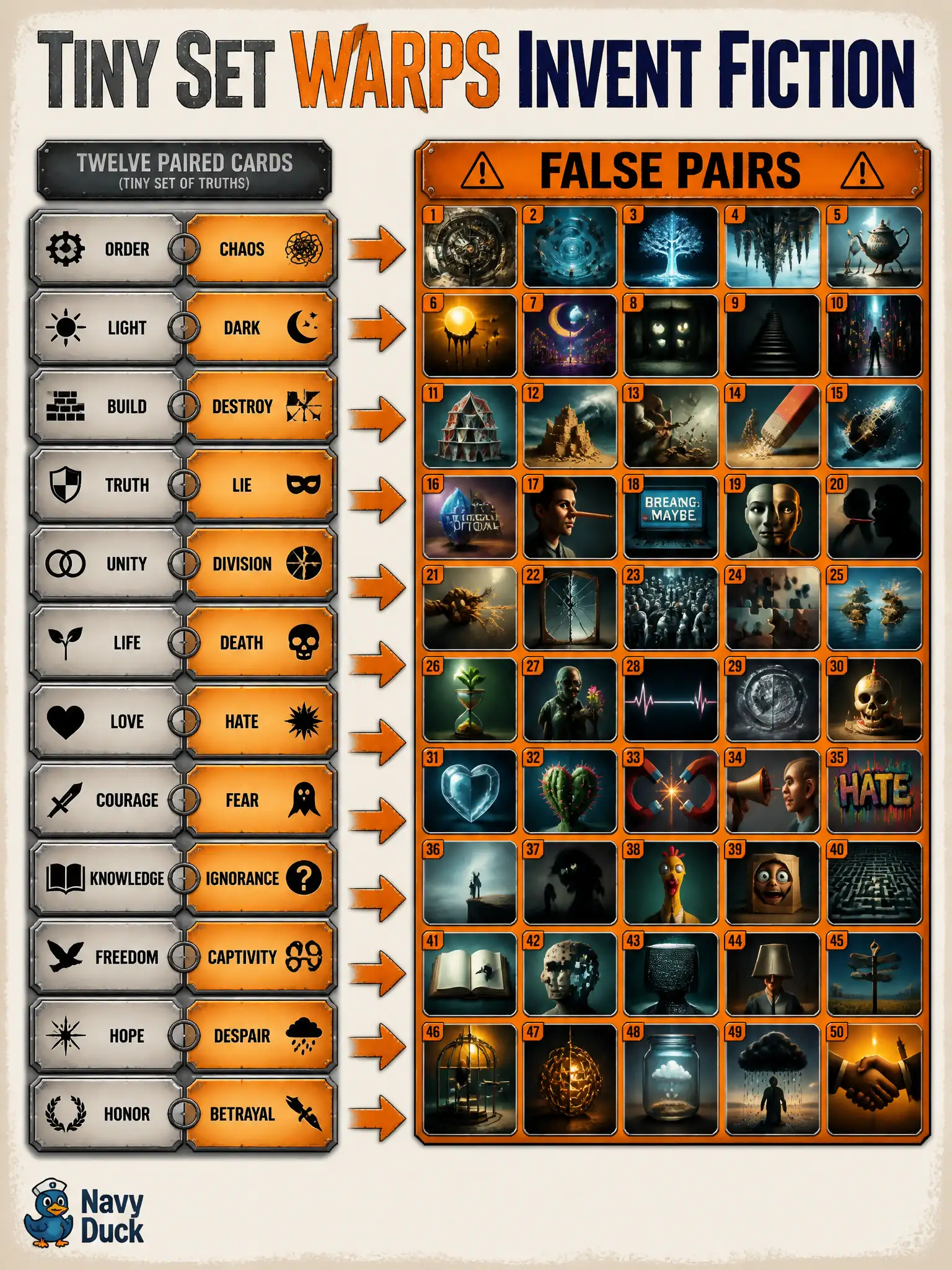
Stretching twelve honest photos into fifty fantasy scenes does not create truth—it creates fiction. On a tiny aligned set, heavy warps invent pairs the notes never covered.
Full Explanation
A scythe-smith with only a dozen carefully paired quench stills and notes should decline an intern’s plan for fifty random warps. Domain 5 analysis says that with so few true pairs, heavy warps invent scenes the notes never described—augmentation cannot conjure grounded civic examples from a tiny set.
Approving the warps because twelve true pairs are enough to invent any scene fails because extreme warps on a tiny paired set fabricate visual content outside the note distribution. Replacing the notes with generated poems so warps cannot conflict fails by destroying the authentic text arm instead of constraining unsafe transforms. Converting the warps into a Domain 2 early-fusion redesign fails because this is an augmentation-data decision, not a fusion-architecture brief.
Exam caveat: when true pairs are scarce, aggressive geometric warps are more likely to invent than to teach. Transfer and careful mild augmentation beat fantasy warps on a dozen examples.
Operational check: inventory true pair count before approving heavy warps; cap warp magnitude or forbid random warps below a pair-count threshold; prefer collecting more quench pairs for the municipal smithy or mild transforms that keep note-described scenes intact; re-check holdout realism after any approved augmentation.