
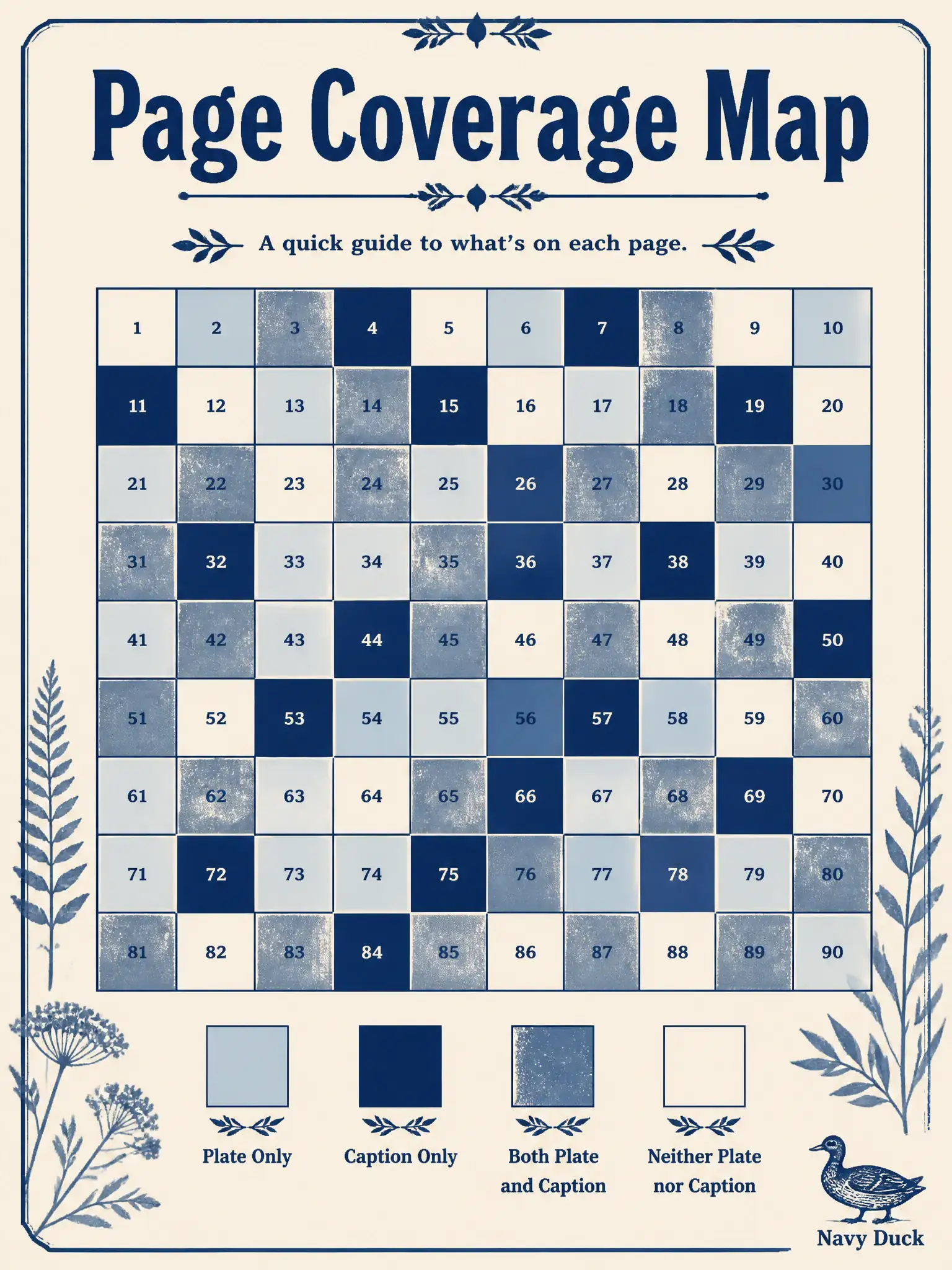
A cyanotype plant-book yard shades each catalog page by whether it has a plate, a caption, both, or neither. What does that page-wise view provide?
Select an answer to reveal the explanation.
Short Explanation
Shading pages by plate-only, caption-only, both, or neither is a coverage map. You can see which arms travel together—and which pages are missing a partner.
Full Explanation
Shading each cyanotype plant-book catalog page by plate-only, caption-only, both, or neither produces a multimodal coverage map: which arms co-occur on each page. That Domain 5 view shows completeness and pairing gaps so stewards know where plates or captions are missing—without pretending the map is an architecture diagram.
Calling the view a Domain 2 fusion-type architecture diagram fails because coverage heatmaps describe corpus co-occurrence, not how modalities are fused in a network. Filling empty pages with generated poems only fails because synthetic text does not restore missing plates and can invent content the civic catalog never held. Treating the map as a replacement for collecting missing plates or captions fails because visualization surfaces gaps; it does not close them without collection or repair work.
Exam caveat: coverage maps are completeness analysis. They inform collection priorities; they are not fusion designs and not a license to paper over gaps with unrelated generation.
Operational check: render the four-state page shading for the plant-book yard; export pages lacking plate or caption; assign collection or captioning tickets; re-shade after intake so the municipal catalog shows rising “both” coverage.