
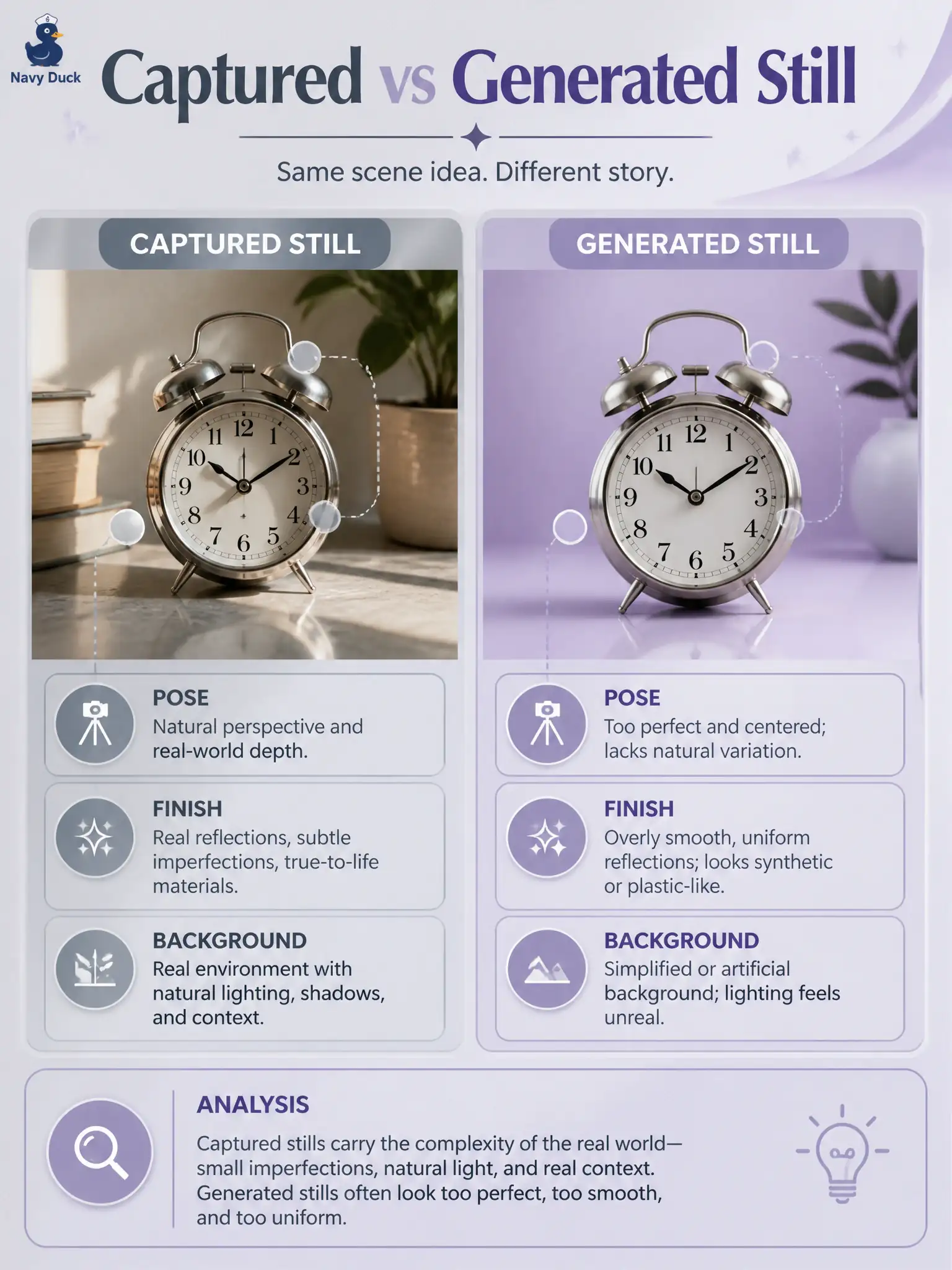
A city hall photo tent pins a real captured plate beside a diffusion render of the same sitting. What is the best Domain 5 use of that side-by-side view?
Select an answer to reveal the explanation.
Short Explanation
Park the real plate next to the render and look at what moved—pose, finish, background. That is analysis of the change, not a courtroom verdict on authenticity.
Full Explanation
Pinning a real captured plate beside a diffusion render of the same city-hall sitting is best used as Domain 5 visual analysis: compare pose, finish, background, and other generator changes. That side-by-side view teaches what the model altered. Authenticity labeling and trust verdicts belong elsewhere (Domain 7); the pair itself is an analysis aid, not a courtroom certificate.
Treating the pair as a Domain 7 trust verdict that the render is automatically authentic fails because juxtaposition does not prove authenticity— it only surfaces differences for human review. Using the view as a Domain 1 experiment redesign that replaces the captured plate fails because analysis of a render should not erase the captured ground truth from the civic record. Claiming generated stills should never be shown next to captured ones fails because controlled side-by-side review is a legitimate Domain 5 method for spotting generator drift without banning comparison.
Exam caveat: Domain 5 visual comparison ≠ Domain 7 authenticity determination. Keep analysis of change separate from disclosure and trust labeling of synthesized content.
Operational check: mount captured and generated stills with shared framing notes; annotate deltas (pose, finish, background); route authenticity labels and visitor-facing disclosure through the trust workflow; keep the captured plate in the municipal archive as the reference while the render remains an analyzed variant.