
A civic magic-lantern loft bars slides with spoken lecture, slides with only a title card, and empty trays. Leadership asks for a fourth unnamed sensor so the bars look full. What should the steward do?
Select an answer to reveal the explanation.
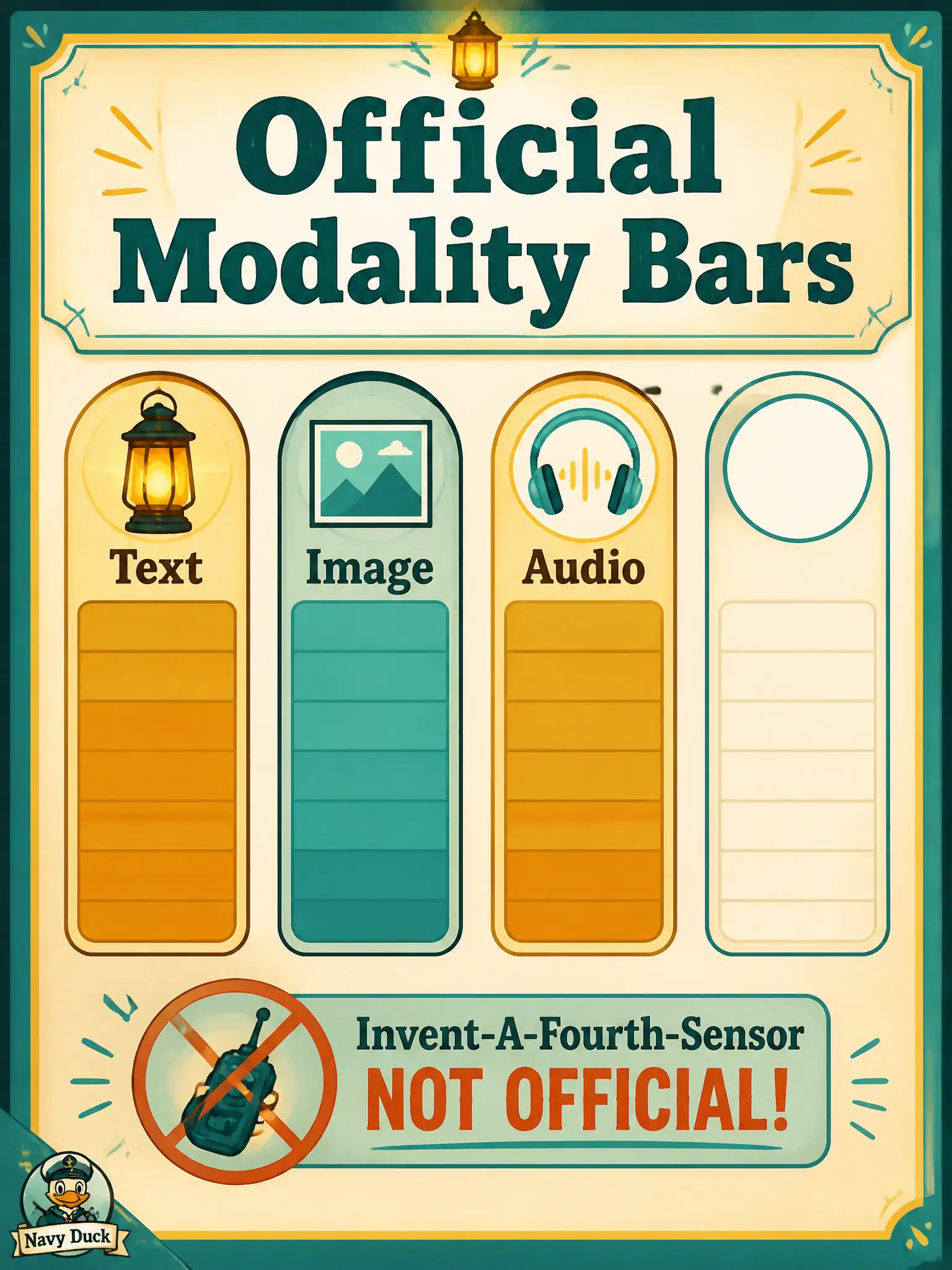
Short Explanation
Empty bars are honest. Filling the chart with a made-up sensor just hides the hole. Stick to the official text, image, and audio arms and read emptiness as a collection gap.
Full Explanation
Civic magic-lantern modality bars should stay on the corpus’s official arms—typically text, image, and audio. Empty trays and thin bars are honest signals of collection gaps. Leadership pressure to invent a fourth unnamed sensor so the chart looks full is a visualization integrity problem: the steward’s job is to keep the official arms and treat empty bars as gaps to fill through collection, not cosmetic inventiveness.
Inventing a fourth modality bar so the chart never shows a gap fails because an unnamed sensor is not an official arm; it conceals missing coverage and misleads stakeholders about readiness. Replacing the bar chart with a Domain 2 tensor-shape diagram fails because tensor diagrams address architecture shape, not whether spoken lecture, title-card, and empty-tray coverage exist in the loft. Dropping empty trays from the chart so remaining bars look complete fails by selection bias—hiding missing trays removes the very gap Domain 5 analysis is meant to surface.
Exam caveat: visualization honesty beats chart cosmetics. Official modality inventories are closed sets for a given corpus; do not invent streams to satisfy a dashboard aesthetic.
Operational check: lock the chart legend to the approved text, image, and audio arms; publish empty-bar counts as collection backlog; refuse unnamed sensor placeholders in municipal briefings; schedule targeted capture for the thinnest arm and re-bar after intake so leadership sees real progress, not a filled-in fiction.