
A canal-barge office has a planner that picks “ask a question” versus “show a still.” Someone files the planner under “late fusion.” What should happen?
Select an answer to reveal the explanation.
Short Explanation
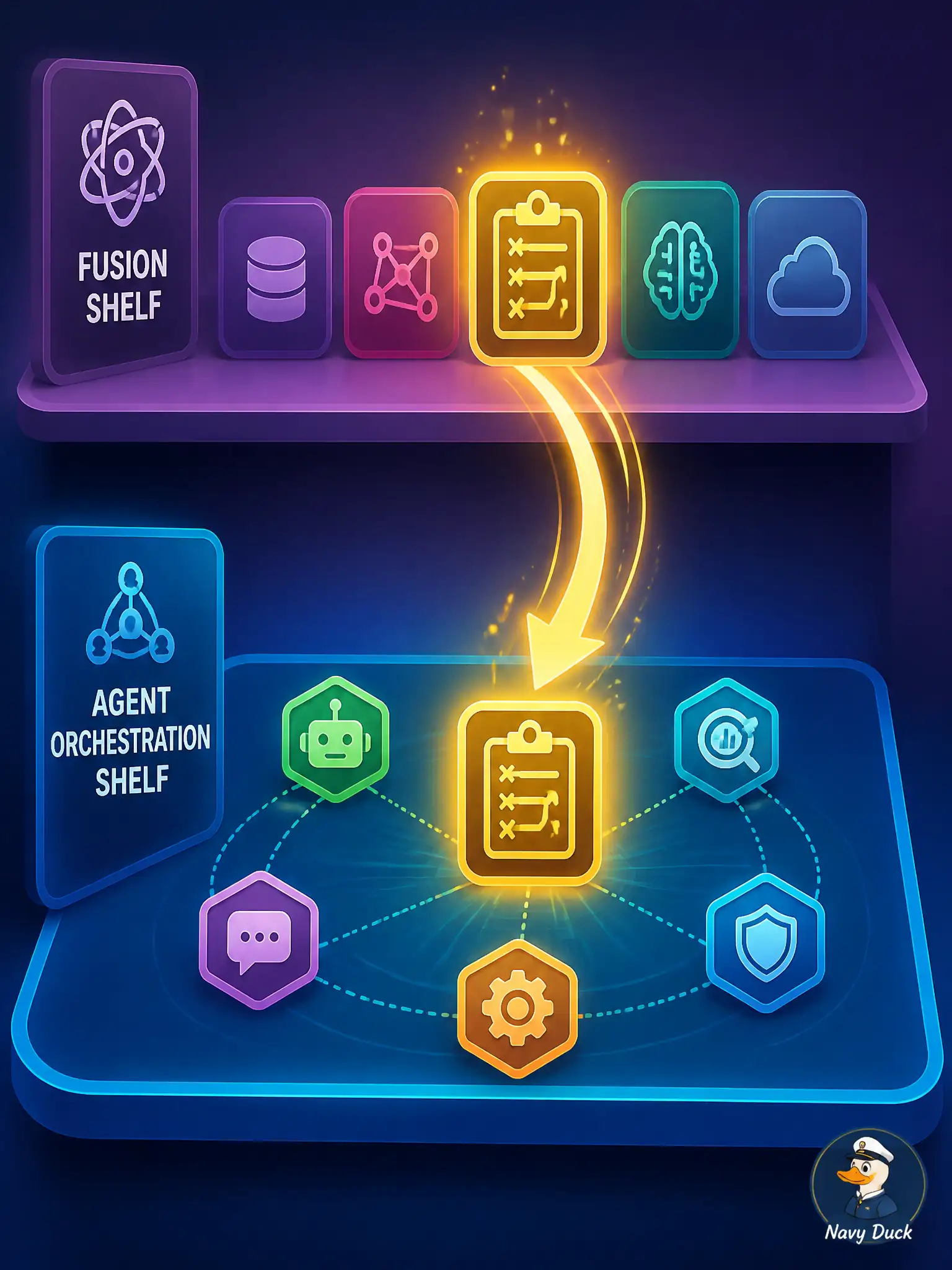
Picking the next act is stage direction, not a fusion label. File the planner under agent orchestration; late fusion is about joining finished modality outputs.
Full Explanation
A canal-barge planner that picks “ask a question” versus “show a still” belongs under agent orchestration—choosing a next act is not early, late, or intermediate fusion. Keeping it filed as a fusion type is wrong. Relabeling it early fusion because asking happens first confuses temporal order of acts with input-level feature joining. Relabeling it OCR readiness is unrelated; planners are not defined as PDF readers. Exam caveat: next-act choice = agent orchestration, not fusion taxonomy. Operational check: move the barge planner document into the agent-orchestration section and reserve fusion labels for where speech/stills/text representations meet. Re-file the barge next-act planner under agent orchestration in the shared taxonomy doc. Next-act planners on canal barges belong under agent orchestration, not under fusion taxonomy. Move canal-barge next-act planners out of fusion folders into agent-orchestration docs so asking versus showing is not miscoded as late fusion. Operators validating q133 should capture evidence of the correct mechanism in civic logs before release. Close q133 with a municipal evidence note that records why the correct mechanism fits this civic multimodal scenario, why each of the three distractors fails by a distinct concept, and which operational check was observed in logs or dataset cards before promotion. File that note with the run packet so later maintenance cannot silently revive a rejected framing.