
A typewriter-repair bench claims “late fusion of audio and stills,” but the audio was never turned into features. What is wrong?
Select an answer to reveal the explanation.
Short Explanation
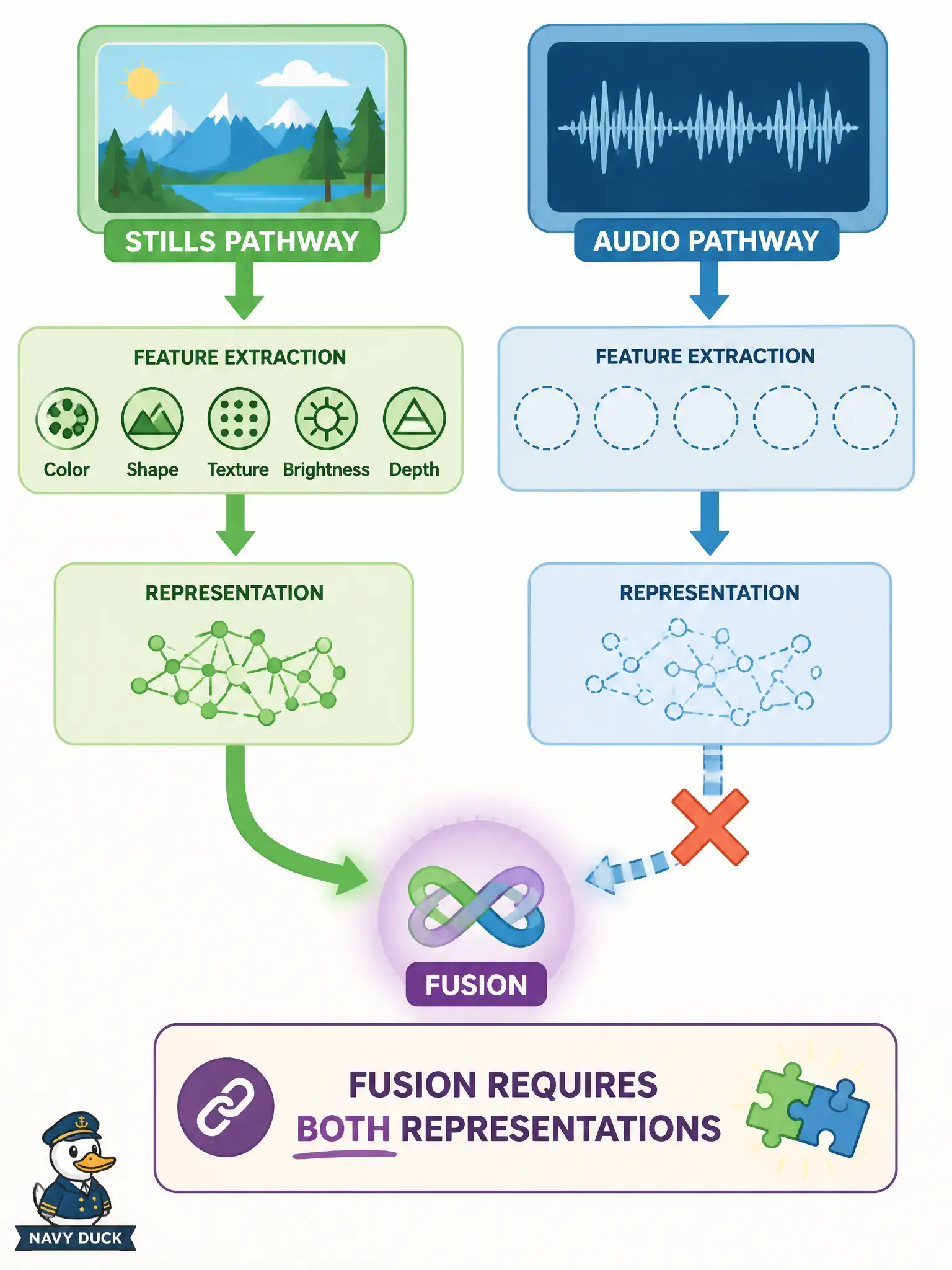
You cannot fuse a stream that was never cooked. Calling it late fusion does not invent an audio encoder—each modality still needs a real representation.
Full Explanation
Claiming “late fusion of audio and stills” at a typewriter-repair bench while audio was never turned into features is invalid: fusion presupposes each named modality actually has a representation—naming a type does not create a missing encoder. Naming late fusion does not auto-create an audio encoder. Late fusion still requires finished modality pathways; it does not fuse missing streams. Stills can participate in fusion designs when encoded. Exam caveat: no representation, no fusion—labels are not magic. Operational check: inventory encoders for audio and stills; if audio features are absent, build or connect an audio front end before advertising late fusion of both. Block “late fusion of audio” tickets until an audio encoder exists for the typewriter bench. Naming late fusion cannot invent a missing audio encoder on the typewriter bench—representations must exist first. Ticket workflow should refuse “late fusion of audio and stills” until an audio feature pathway exists beside the typewriter still encoder. Operators validating q126 should capture evidence of the correct mechanism in civic logs before release. Close q126 with a municipal evidence note that records why the correct mechanism fits this civic multimodal scenario, why each of the three distractors fails by a distinct concept, and which operational check was observed in logs or dataset cards before promotion. File that note with the run packet so later maintenance cannot silently revive a rejected framing.