
A pulley-block shop intern calls “late fusion” the name of a sharper picture. What correction is needed?
Select an answer to reveal the explanation.
Short Explanation
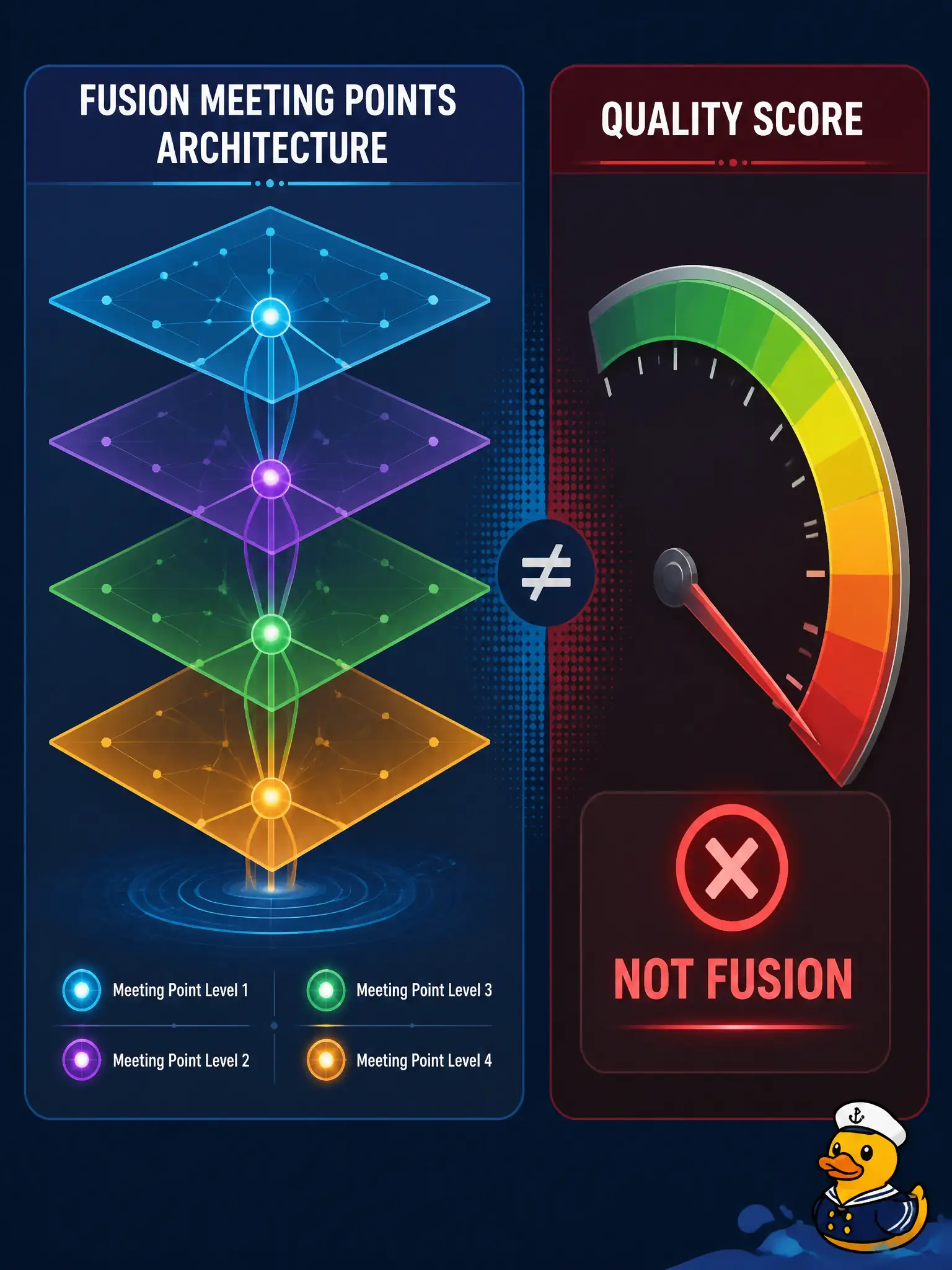
“Late fusion” is a wiring diagram word, not a sharpness trophy. It says where streams meet—not how pretty a still looks.
Full Explanation
Fusion names describe where streams meet in the architecture, not a quality or alignment metric. A pulley-block shop intern calling “late fusion” the name of a sharper picture needs correction. Fusion vocabulary is not an image-quality score from Domain 1 experiments. Late fusion is not a synonym for CLIP score or FID. Fusion does not merely measure pixel sharpness on stills. Exam caveat: keep fusion taxonomy separate from generation/quality metrics. Operational check: when reviewing civic diagrams, ask “where do modalities meet?” for fusion labels, and reserve sharpness, CLIP score, or FID for evaluation discussions. Quarantine sharpness metrics from fusion vocabulary in pulley-block training materials. Fusion names locate architectural meetings; they are not sharpness, CLIP score, or FID aliases for pulley blocks. Move sharpness, CLIP score, and FID discussions into evaluation sections so pulley-block fusion vocabulary stays about meeting points only. Operators validating q125 should capture evidence of the correct mechanism in civic logs before release. Close q125 with a municipal evidence note that records why the correct mechanism fits this civic multimodal scenario, why each of the three distractors fails by a distinct concept, and which operational check was observed in logs or dataset cards before promotion. File that note with the run packet so later maintenance cannot silently revive a rejected framing.