
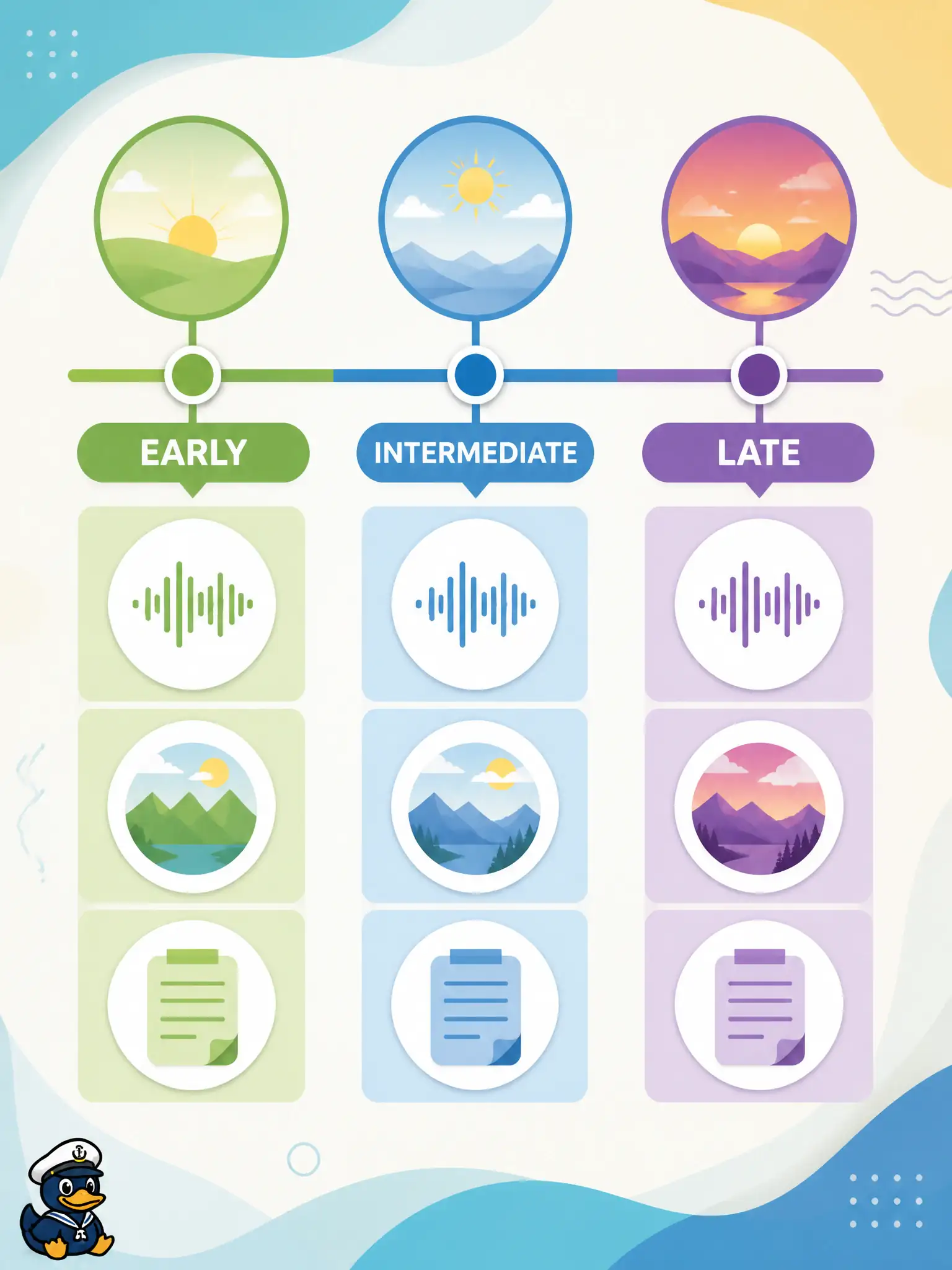
A tea-tasting room has a spoken comment, a liquor photo, and a tasting slip. As a design concept, how do the three fusion types join those modalities?
Select an answer to reveal the explanation.
Short Explanation
Three cups, same idea: early mixes raw ingredients, intermediate lets mid-brew flavors talk, late blends finished cups. The three fusion patterns still apply when speech, photo, and slip all show up.
Full Explanation
As a design concept for a tea-tasting room with spoken comment, liquor photo, and tasting slip, early fusion joins low-level features at input, late fusion combines finished specialist outputs, and intermediate fusion merges mid-level codes before the head—and each pattern can extend to three streams. It is false that only two modalities can ever be fused. Fusion names do not mean averaging pixels only while ignoring text and speech. Fusion types apply to how speech, stills, and notes meet—not to datacenter power meters. Exam caveat: three-way multimodal designs reuse the same early/late/intermediate meeting-point vocabulary. Operational check: sketch where the three civic streams meet (input, mid-codes, or final decisions) and label the fusion type accordingly before implementation. Extend the tea-room fusion sketch to speech+photo+slip with a single meeting-point label. Early/late/intermediate meeting points extend to three tea-room streams: speech, liquor photo, and tasting slip. Draw one tea-room figure with speech, liquor photo, and tasting slip meeting at a single labeled early, late, or intermediate point—three streams, one taxonomy. Close q124 with a municipal evidence note that records why the correct mechanism fits this civic multimodal scenario, why each of the three distractors fails by a distinct concept, and which operational check was observed in logs or dataset cards before promotion. File that note with the run packet so later maintenance cannot silently revive a rejected framing.