
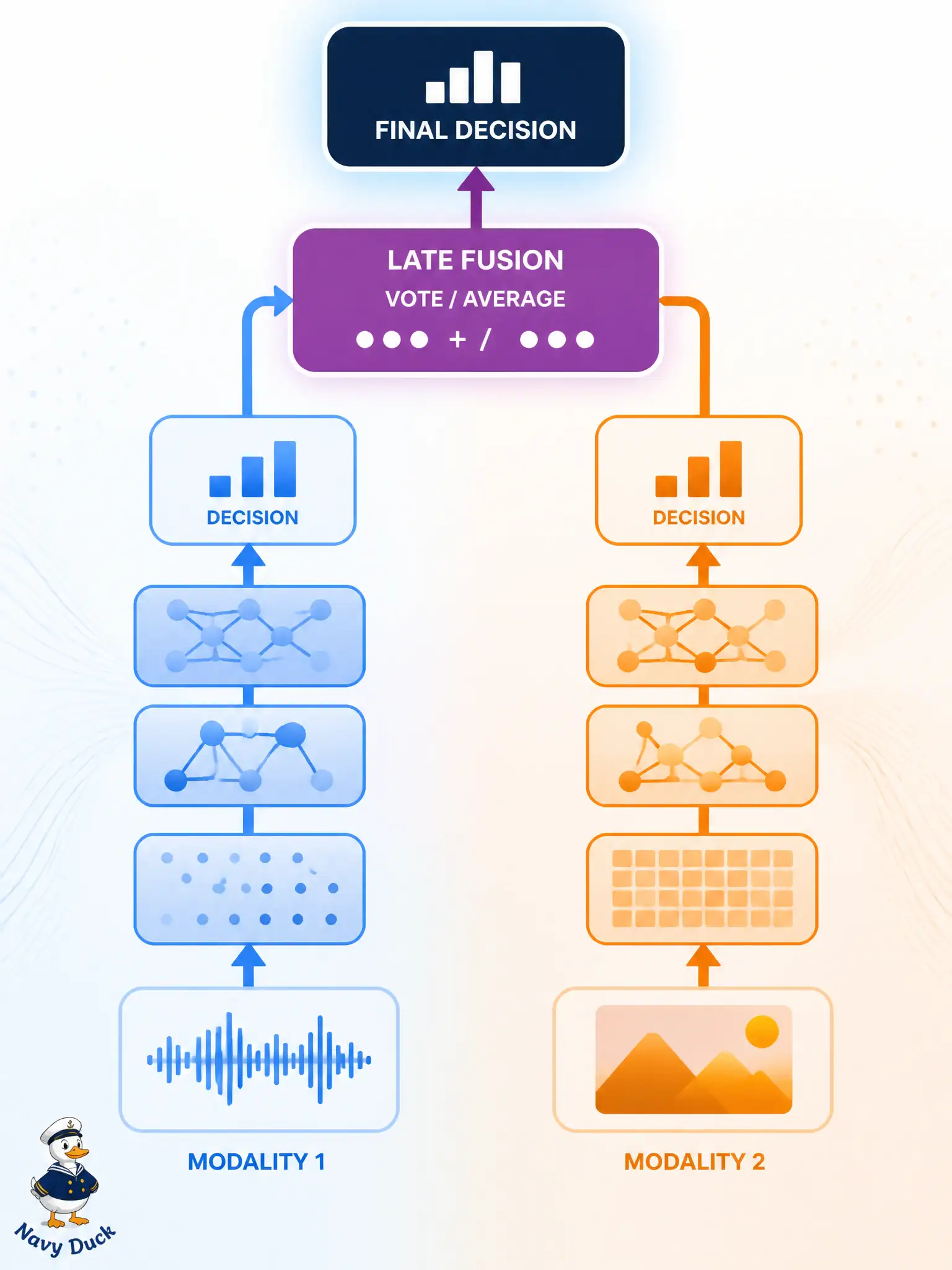
A basket-weaving shed runs a stills-only grader and a notes-only grader, then averages or votes at the end. Which fusion type is that?
Select an answer to reveal the explanation.
Short Explanation
Late fusion is two finished judges shaking hands at the door. Each grader works alone; only the final vote or average mixes them.
Full Explanation
Running a stills-only grader and a notes-only grader, then averaging or voting at the end, is late fusion: each modality is fully processed, then decisions meet. Early fusion would concatenate raw pixels and tokens first. Cross-attention inside one encoder before specialists exist is closer to intermediate interaction patterns, not late decision fusion. Modality orchestration routes data types but is not itself the final averaging of finished decisions. Exam caveat: late fusion = separate specialists, combine outputs. Operational check: keep the basket-weaving graders independent, combine their scores at the end, and verify neither grader consumes the other’s raw inputs mid-network. Keep basket graders independent and version their late-fusion combiner separately. Late fusion finishes stills and notes graders separately, then combines decisions for the basket shed. Keep basket stills and notes graders independently versioned; combine only their finished decisions under a late-fusion combiner module. Operators validating q119 should capture evidence of the correct mechanism in civic logs before release. Close q119 with a municipal evidence note that records why the correct mechanism fits this civic multimodal scenario, why each of the three distractors fails by a distinct concept, and which operational check was observed in logs or dataset cards before promotion. File that note with the run packet so later maintenance cannot silently revive a rejected framing.