
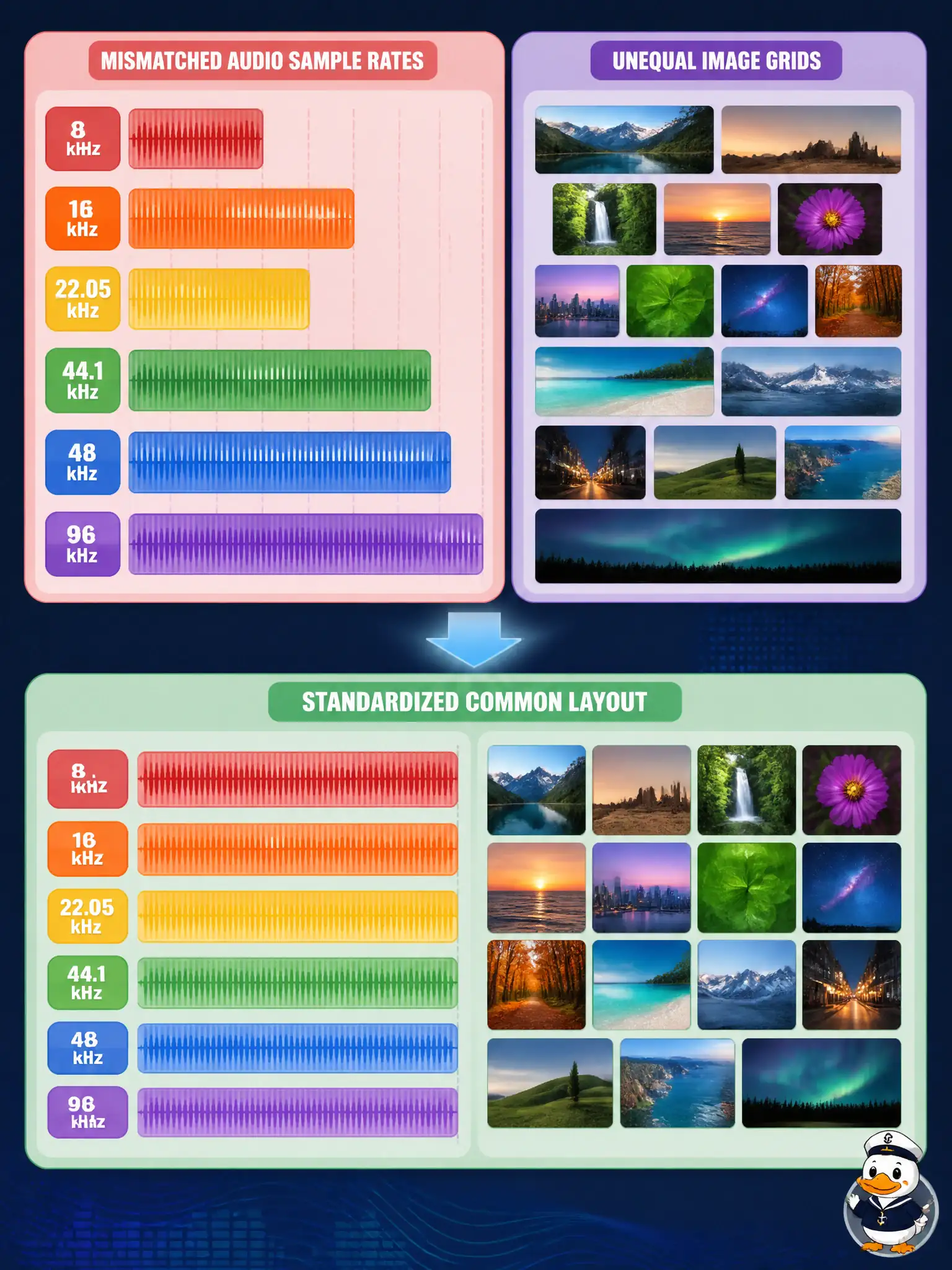
A pearl-boat locker mixes 8 kHz radio clips with 48 kHz deck recordings and stills of three different sizes. Why is this collection not yet network-ready?
Select an answer to reveal the explanation.
Short Explanation
The locker is a jumble of rulers. Until audio rates and image sizes share a common numeric layout, the batch is not ready—fusion labels will not paper over that.
Full Explanation
A pearl-boat locker mixing 8 kHz radio clips with 48 kHz deck recordings and stills of three different sizes is not network-ready because mismatched sample rates and resolutions lack a common numeric layout until they are standardized. Fusion type naming does not require deleting every file. Multimodal systems do not forbid multiple native rates forever; they require resampling and resizing into agreed tensors. Late fusion does not automatically fix every rate and size difference without preprocessing. Exam caveat: readiness includes harmonizing rates and resolutions before batching. Operational check: resample all locker audio to one rate, resize stills to one resolution/tensor layout, then verify batched shapes are consistent across the collection. Standardize pearl-boat audio rates and still sizes in a preprocessing manifest checked into the dataset card. Harmonize pearl-boat sample rates and still sizes into common tensors before claiming network readiness. Publish a pearl-boat preprocessing manifest that locks one audio sample rate and one still tensor layout, then validate every locker file against that manifest. Close q114 with a municipal evidence note that records why the correct mechanism fits this civic multimodal scenario, why each of the three distractors fails by a distinct concept, and which operational check was observed in logs or dataset cards before promotion. File that note with the run packet so later maintenance cannot silently revive a rejected framing.