
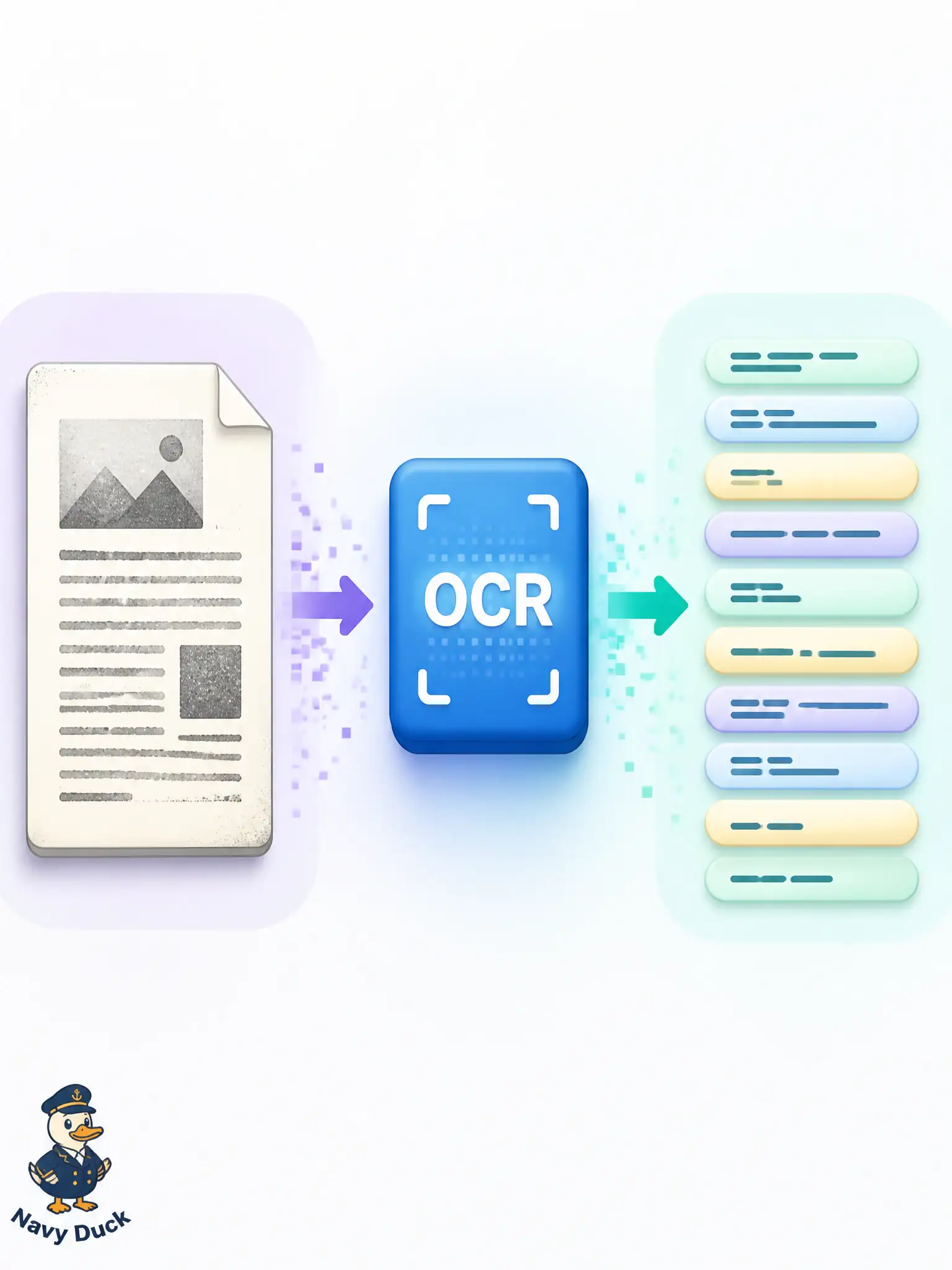
A piano-action shop’s parts catalog is a scanned PDF page. Which readiness step turns that page into text a network can use?
Select an answer to reveal the explanation.
Short Explanation
A scan is a picture of words until OCR reads them. Optical character recognition is the official bridge from a PDF page to usable text for a network.
Full Explanation
A piano-action shop’s scanned PDF parts catalog becomes usable text for a network through optical character recognition (OCR) that recovers characters from the page image. Plotting a Domain 5 chart of ink density without extracting characters does not yield text. Feeding the PDF’s raw compressed bytes straight into a language model skips OCR and standard text readiness. Replacing the catalog with a spectrogram of ambient noise switches to the wrong modality. Exam caveat: scans need OCR (or equivalent text recovery) before LLM consumption. Operational check: run OCR on the civic catalog page, spot-check recovered part names, then tokenize the resulting text for the language stack. Spot-check OCR on piano-action part numbers that must survive into the language model. OCR recovers catalog text from piano-action scans; ink-density charts and raw PDF bytes do not. Run OCR on piano-action catalog scans, spot-check part numbers, then tokenize recovered text—never feed raw PDF compression payloads to the language model. Operators validating q113 should capture evidence of the correct mechanism in civic logs before release. Close q113 with a municipal evidence note that records why the correct mechanism fits this civic multimodal scenario, why each of the three distractors fails by a distinct concept, and which operational check was observed in logs or dataset cards before promotion. File that note with the run packet so later maintenance cannot silently revive a rejected framing.