
A wax-seal archive has a seal photo in pixels and a motto in tokens. What readiness goal must both sides meet before a joint model can score a match?
Select an answer to reveal the explanation.
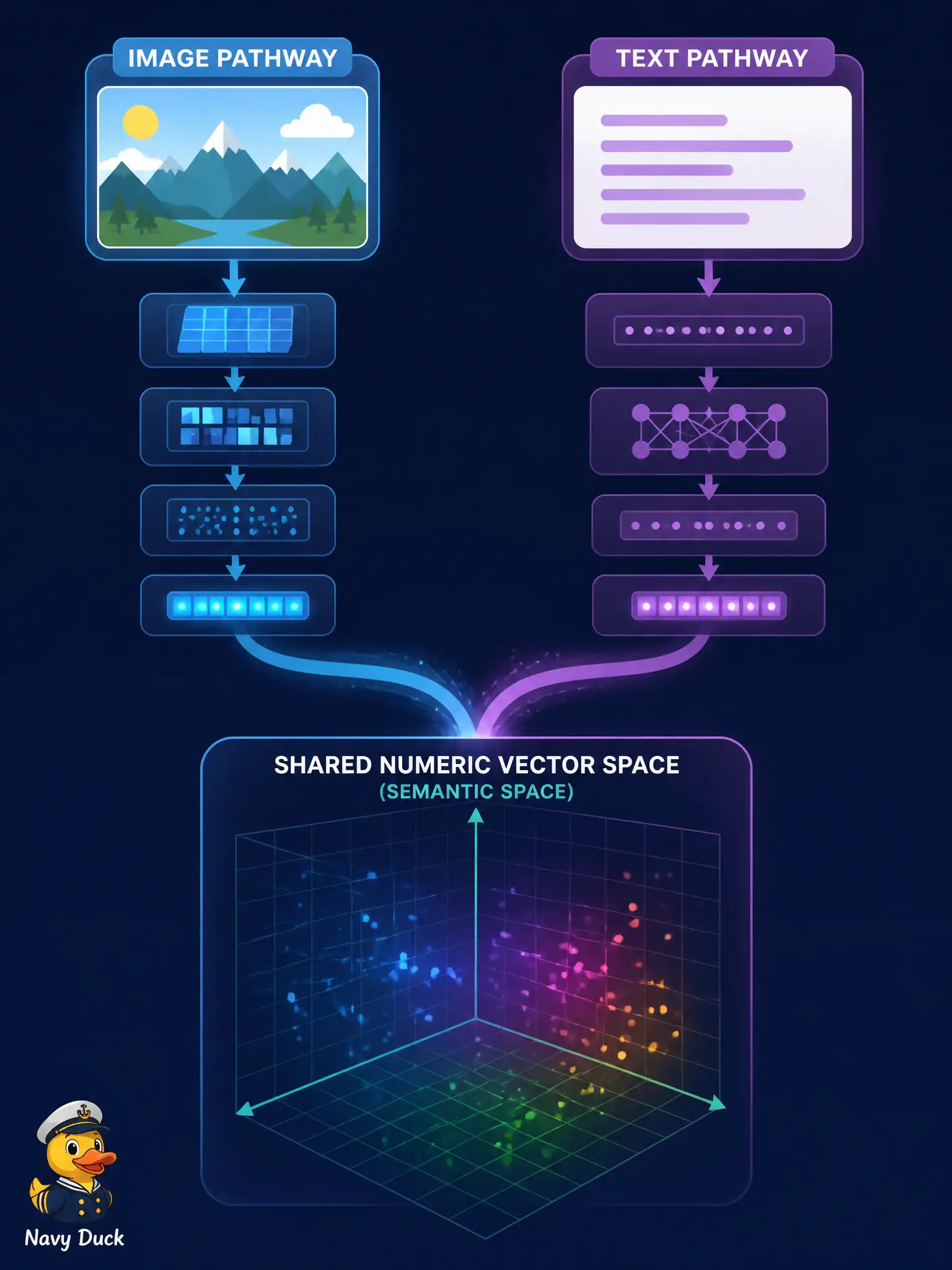
Short Explanation
A match score needs both sides speaking the same numeric language. Encode the seal pixels and the motto tokens into comparable vectors before any joint head can vote.
Full Explanation
A wax-seal archive with a seal photo in pixels and a motto in tokens can score a joint match only when both sides are encoded into a comparable numeric space—vectors a joint model can compare (as in contrastive or matching heads). Leaving the photo as an unopened JPEG while the motto stays raw bytes blocks comparison. Speaking the motto aloud and discarding the photo drops the vision arm. Sharing filename length alone is not a semantic embedding space. Exam caveat: joint scoring requires comparable embeddings, not file metadata tricks. Operational check: embed the seal image and motto text with the archive’s encoders and compute a similarity or match score on held-out pairs before declaring readiness. Require comparable embedding dims for seal photos and mottos before enabling match scoring. Seal photo and motto must share a comparable embedding space before joint matching; filename length is not that space. Before enabling seal–motto matching, confirm both encoders emit comparable vectors and that held-out true pairs score above mismatched archive pairs. Close q112 with a municipal evidence note that records why the correct mechanism fits this civic multimodal scenario, why each of the three distractors fails by a distinct concept, and which operational check was observed in logs or dataset cards before promotion. File that note with the run packet so later maintenance cannot silently revive a rejected framing.