
A brick-kiln yard hears, “We bought a transformer, so it already sees firings and hears the roar.” What is the correct response?
Select an answer to reveal the explanation.
Short Explanation
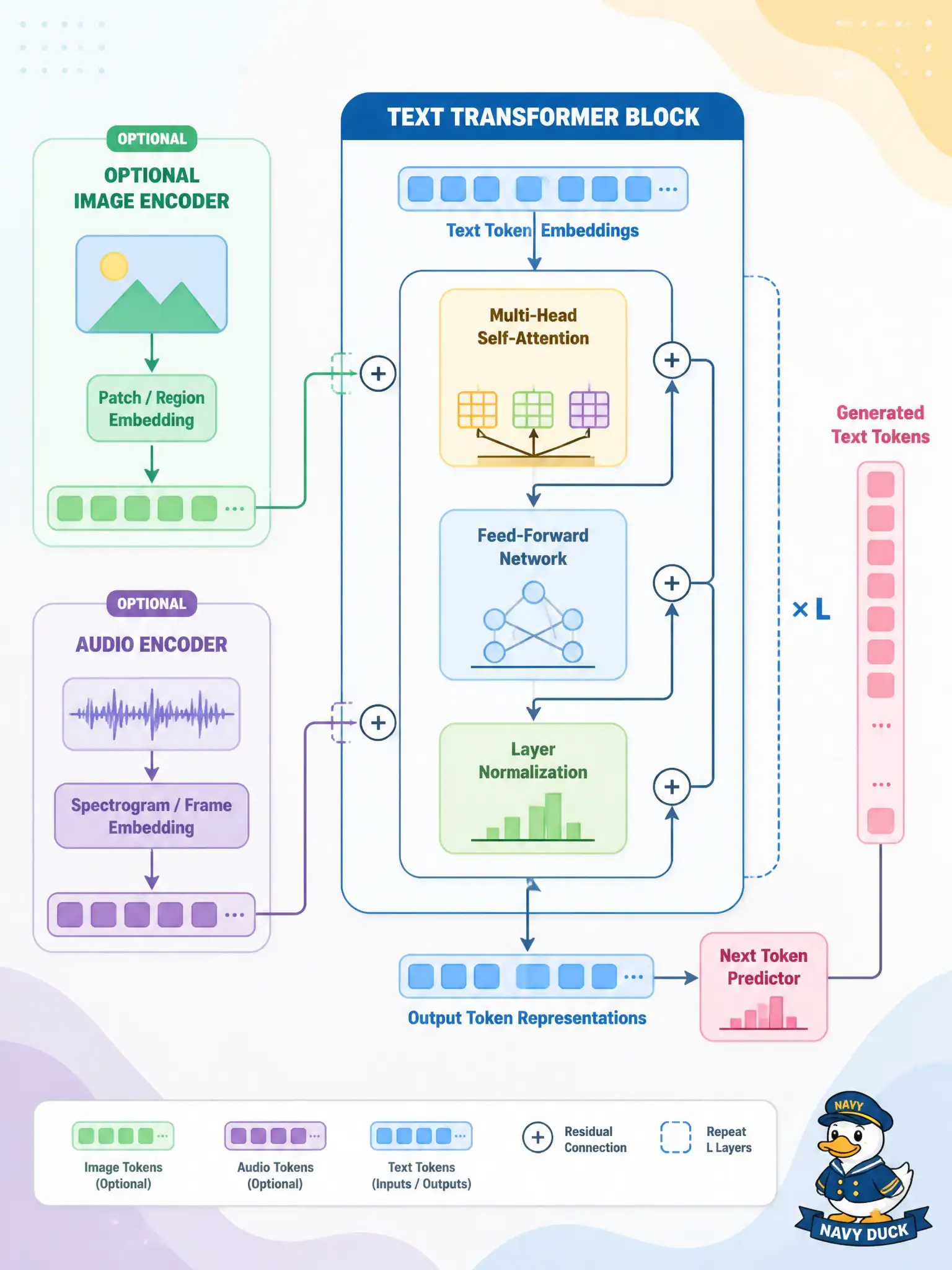
Buying a text transformer does not magically grow eyes and ears. You still need a modality-specific front end that turns stills or sound into something attention can read.
Full Explanation
Buying “a transformer” for a brick-kiln yard does not mean the model already sees firings and hears the roar. A text transformer becomes multimodal only when image or audio is encoded into a form attention can use—patch embeddings, audio features, and similar bridges. Disagree with claims that any transformer is automatically a vision and speech encoder. Transformers do not always include a waveform front end. Purchasing a text transformer does not imply a CLIP image tower is included. Exam caveat: multimodality is engineered by adding encoders and fusion, not by the word transformer alone. Operational check: inventory which encoders exist for kiln stills and audio; if only a text stack is present, plan explicit vision/audio encoding before advertising multimodal perception. Update the kiln FAQ to state that transformers need explicit image/audio encoders to perceive firings or roar. Text transformers need explicit image/audio encoders before a kiln can claim to see firings or hear roar. Inventory encoders in the FAQ so “we bought a transformer” is not mistaken for multimodality. Close q107 with a municipal evidence note that records why the correct mechanism fits this civic multimodal scenario, why each of the three distractors fails by a distinct concept, and which operational check was observed in logs or dataset cards before promotion. File that note with the run packet so later maintenance cannot silently revive a rejected framing.