
A net-mending shed’s care manual is longer than the language stack can hold at once. What does the context window represent for that transformer LLM?
Select an answer to reveal the explanation.
Short Explanation
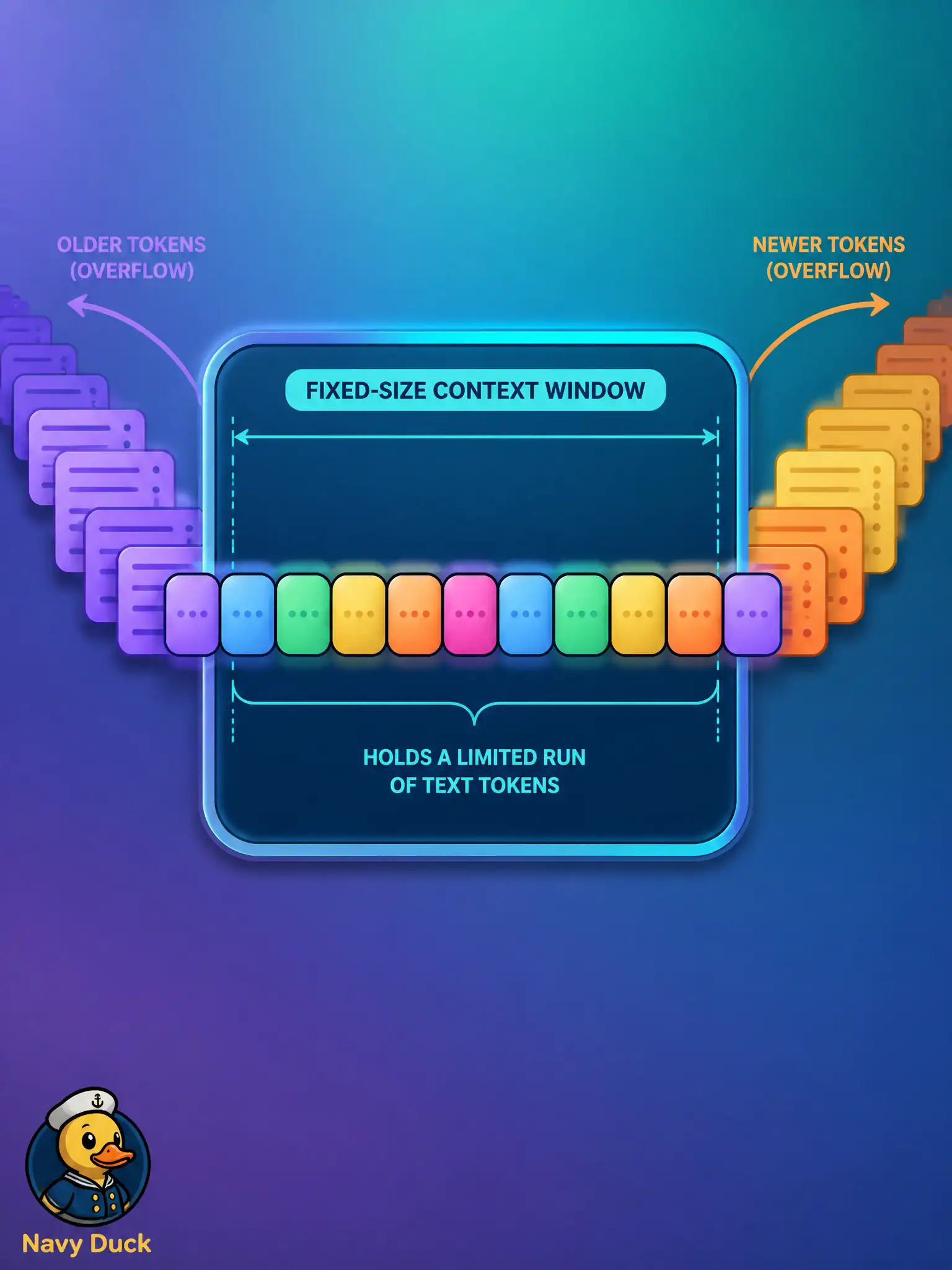
The context window is the model’s desk size. Pages that do not fit on the desk are simply not in front of attention—extra length is not magically visible.
Full Explanation
For a net-mending shed whose care manual exceeds what a language stack can hold at once, the context window is an architectural capacity limit on how much text the transformer LLM can attend to in one pass. It is not a municipal filing fee per extra page. It is not a magical guarantee that attention sees every page regardless of length. It is not a vision resolution setting for sailcloth stills. When manuals overrun the window, stewards must truncate, summarize, retrieve chunks, or otherwise fit text to capacity—recognizing the limit rather than denying it. Exam caveat: associate items test context window as capacity, not billing or vision DPI. Operational check: measure tokenized manual length against the model’s stated context limit; if it overflows, chunk or summarize before a single forward pass and document the strategy for the civic shed. Measure tokens for the net-mending manual and choose chunking before exceeding the LLM context window. Context window caps tokens attended in one pass over the net-mending manual; chunk or summarize when length exceeds capacity. Measure tokenized length against the stated limit before a single forward pass. Close q106 with a municipal evidence note that records why the correct mechanism fits this civic multimodal scenario, why each of the three distractors fails by a distinct concept, and which operational check was observed in logs or dataset cards before promotion. File that note with the run packet so later maintenance cannot silently revive a rejected framing.