
A sled-dog kennel hears that training the photo-plus-log model “uses the GPU.” An intern offers to write a custom CUDA kernel “so training counts.” What is the correct associate stance?
Select an answer to reveal the explanation.
Short Explanation
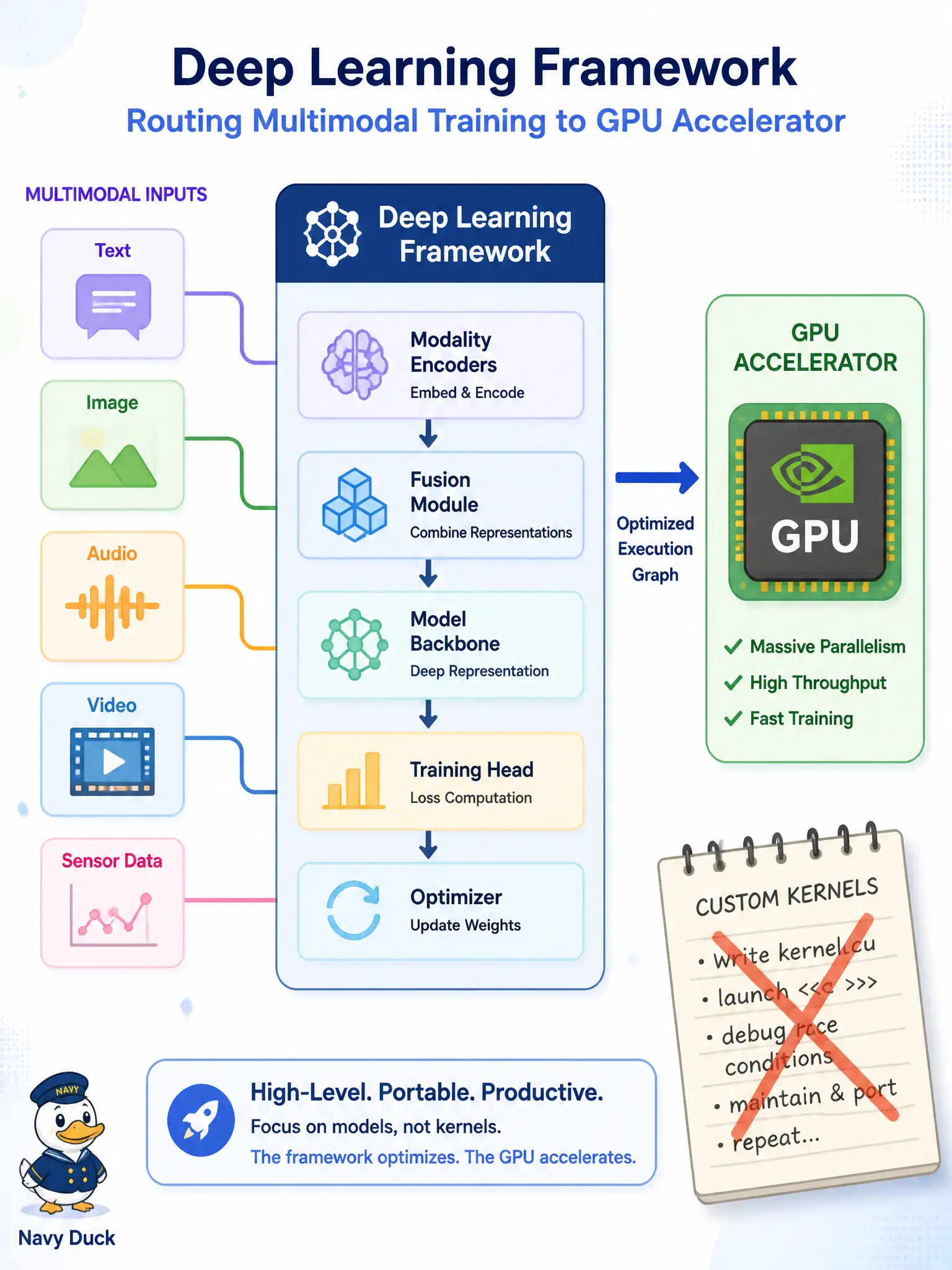
Using the sled team’s engine is not the same as forging a new engine part for every run. Frameworks can put training on the GPU without anyone writing a kernel. Awareness of acceleration is enough at this level.
Full Explanation
Saying training “uses the GPU” at a sled-dog kennel’s photo-plus-log desk means the deep-learning framework can place tensors and kernels on an accelerator to speed training. It does not mean an intern must author a custom CUDA kernel for the run to “count.” GPU use is not forbidden in favor of CPU spreadsheets. CUDA kernels do not replace the loss function or remove the need for a framework. Associate exams test awareness of acceleration, not CUDA programming. Exam caveat: keep NCCL, kernel authorship, and cluster-fabric topics out of scope for NCA-GENM associate items. Operational check: enable framework GPU placement for the kennel model, verify device utilization during a step, and refuse a requirement to hand-write kernels as a success criterion. Associate readiness means knowing the framework can target the accelerator while the loss, data pipeline, and model definition remain the centers of the training story. Document GPU enablement in the kennel training checklist without adding a custom-kernel acceptance gate. GPU acceleration is framework configuration for the kennel model; custom CUDA authorship is neither required nor evidence of a valid run. Associate checklists should stop at device placement verification.