
A letterpress shop is ready to train on plate photos plus ink notes. A volunteer offers a hand-written update loop on a spreadsheet. What is the appropriate associate-level training tool?
Select an answer to reveal the explanation.
Short Explanation
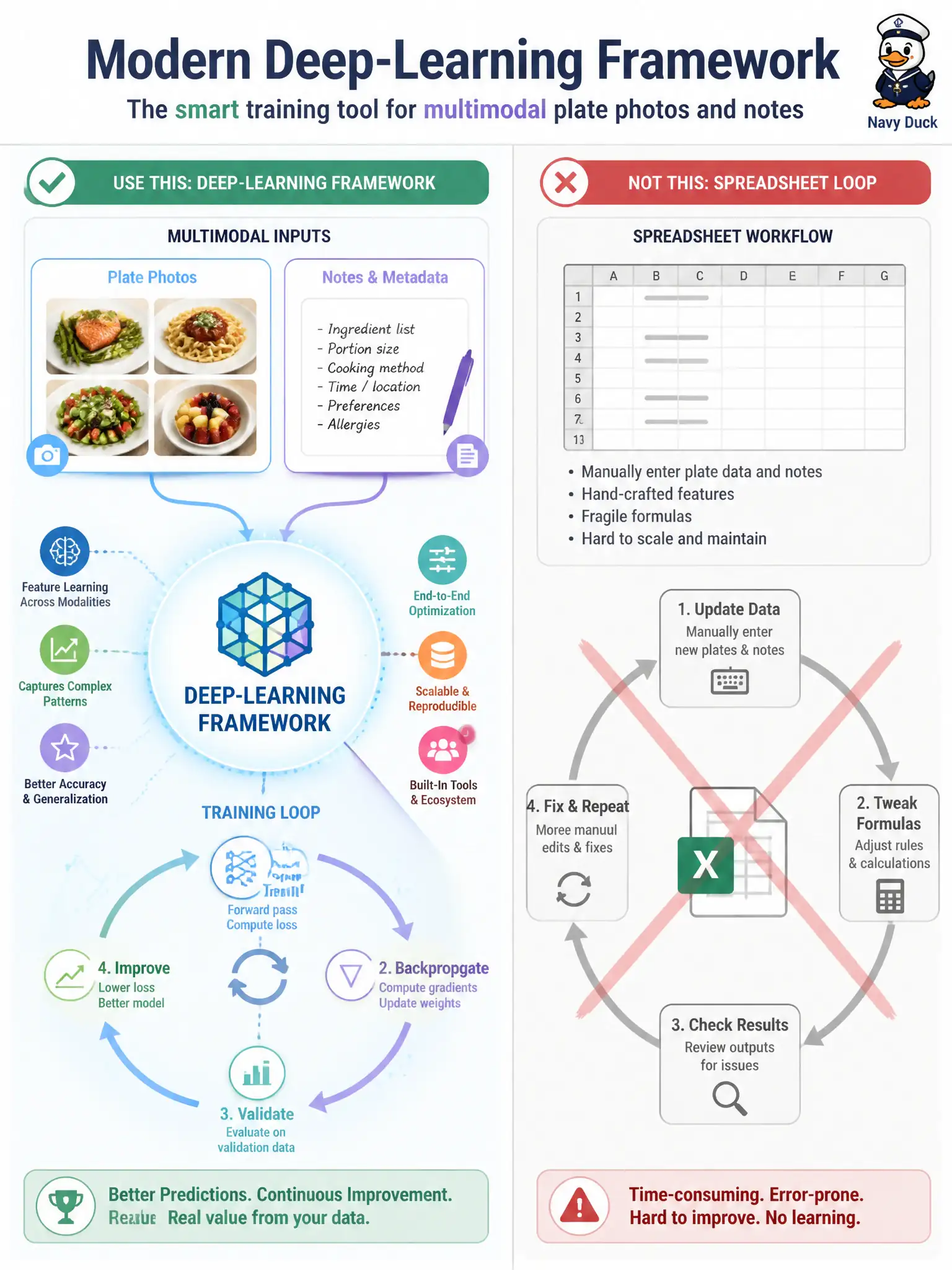
You would not chase every ink weight with pencil math on a giant grid when a real press controller exists. A modern deep-learning framework is the official tool for defining the model and driving training. Spreadsheet loops are not that tool.
Full Explanation
At associate depth, the appropriate tool to train on letterpress plate photos plus ink notes is a modern deep-learning framework that defines the model graph and executes the training loop (forward, loss, backward, optimizer). Hand-written spreadsheet update loops that manually edit every weight cell are not practical training systems. Invented product names and paper ledgers do not replace frameworks. Slideshow templates that only store JPEGs lack a training API entirely. The civic print-shop framing still points to the same tooling reality used in NVIDIA multimodal associate material. Exam caveat: awareness that frameworks can use GPUs matters; writing custom kernels does not. Operational check: load plate–note pairs through the framework’s data pipeline, define the model, run a short training step, and confirm loss and parameter updates appear in framework logs—not in a manual spreadsheet. Frameworks also package GPU placement, checkpointing, and metric logging that a spreadsheet cell editor cannot responsibly replace for plate–ink multimodal training. Reject spreadsheet-only training proposals in design reviews even when plate–ink data volumes look small enough to hand-edit. Frameworks own the plate–ink training loop; spreadsheet arithmetic is a teaching metaphor, not an acceptable production trainer. Require framework logs showing forward, loss, backward, and optimizer for acceptance.