
A 29-week preterm infant at 2 hours has grunting, nasal flaring, retractions, FiO2 0.45 on CPAP 6 cm H2O, with ABG showing hypoxemia and chest film showing ground-glass with air bronchograms. The team suspects neonatal respiratory distress syndrome from surfactant deficiency. Which surfactant therapy strategy for respiratory distress syndrome best improves outcomes?
Select an answer to reveal the explanation.
Short Explanation
You're coating stiff, sticky lungs just in time to keep them open. Early surfactant is your edge here, like oiling a hinge before it rusts shut for good.
Full Explanation
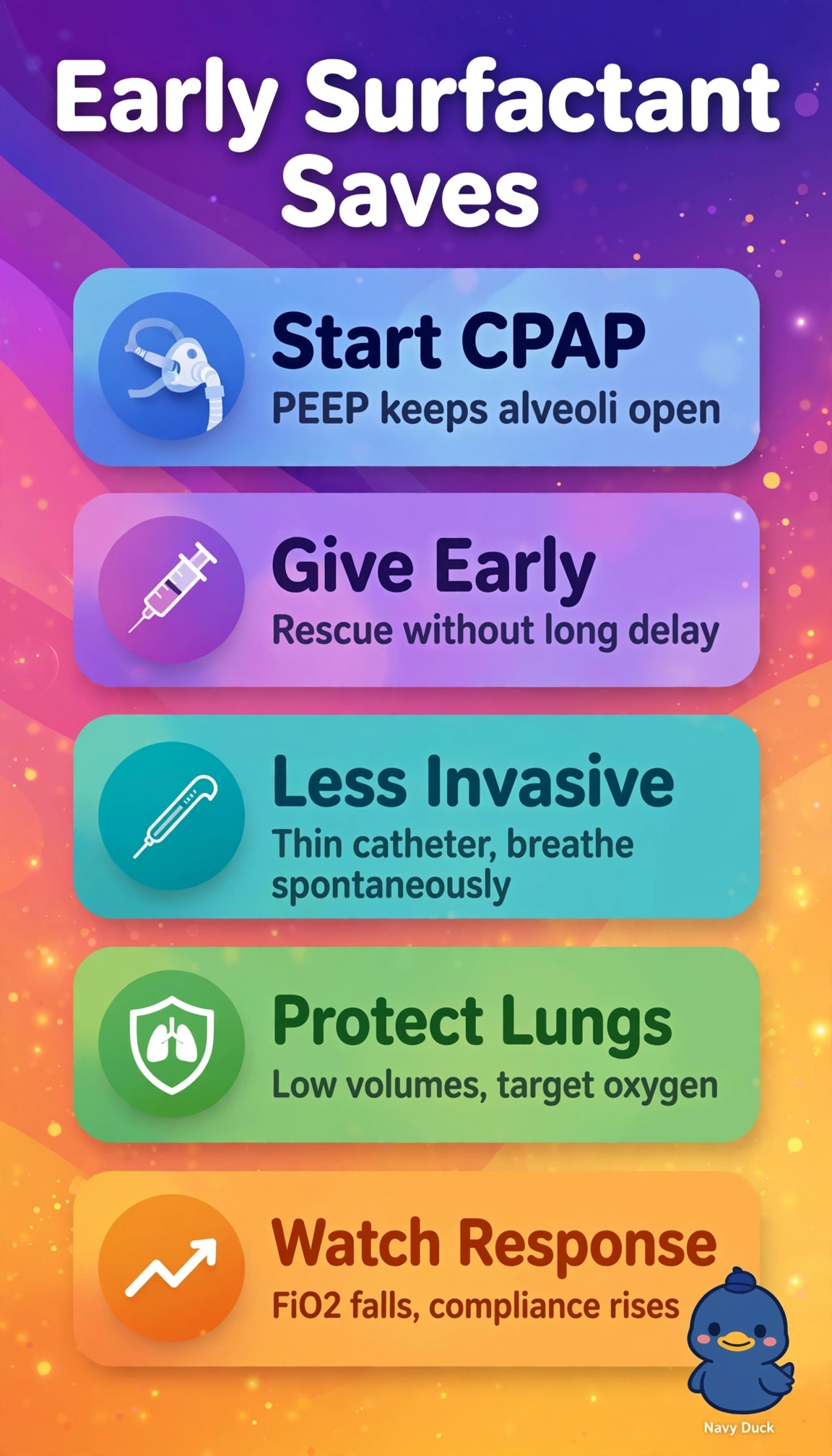
The presentation fits moderate RDS from surfactant deficiency in a very preterm infant where low surfactant raises alveolar surface tension, causing atelectasis, hypoxemia and ground-glass with air bronchograms, so early rescue surfactant restores phospholipid function, lowers surface tension and improves recruitment and oxygenation when given promptly at FiO2 0.45 on CPAP via a less-invasive technique that preserves spontaneous breathing and functional residual capacity while avoiding volutrauma. Prolonged endotracheal intubation with continued mechanical ventilation for recruitment fails by ventilation concept because routine ongoing positive pressure increases bronchopulmonary dysplasia, air leak and lung injury compared with prompt return to CPAP. Continuing CPAP with oxygen while reserving surfactant for late rescue after higher FiO2 fails by timing concept because delay allows progressive atelectasis, greater oxygen exposure and higher likelihood of intubation than early rescue at the current threshold. Giving surfactant early but stopping CPAP immediately for room air breathing fails by support concept because loss of distending pressure promotes derecruitment, increased work of breathing and treatment failure despite adequate replacement. Exam caveat is to distinguish historical prophylactic delivery-room surfactant from current early selective rescue driven by gestational age, clinical distress, oxygen need and radiographic criteria. Practical check is to confirm the FiO2 threshold, maintain CPAP 6 cm H2O continuity, use weight-based dosing with trained less-invasive administration, then reassess retractions, saturation, blood gas and chest movement to judge response or need for repeat dosing without large tidal volumes.