
A term infant born through meconium-stained fluid is limp and apneic at birth with bradycardia at 80 beats/min, poor tone, and no effective respirations after initial drying and stimulation in a community hospital delivery room with a warmed bed and resuscitation equipment ready. Which neonatal resuscitation sequence best follows current resuscitation priorities?
Select an answer to reveal the explanation.
Short Explanation
You recognized that an apneic baby with bradycardia needs breaths without delay. Effective ventilation aerates the lungs and usually helps the heart rate rise.
Full Explanation
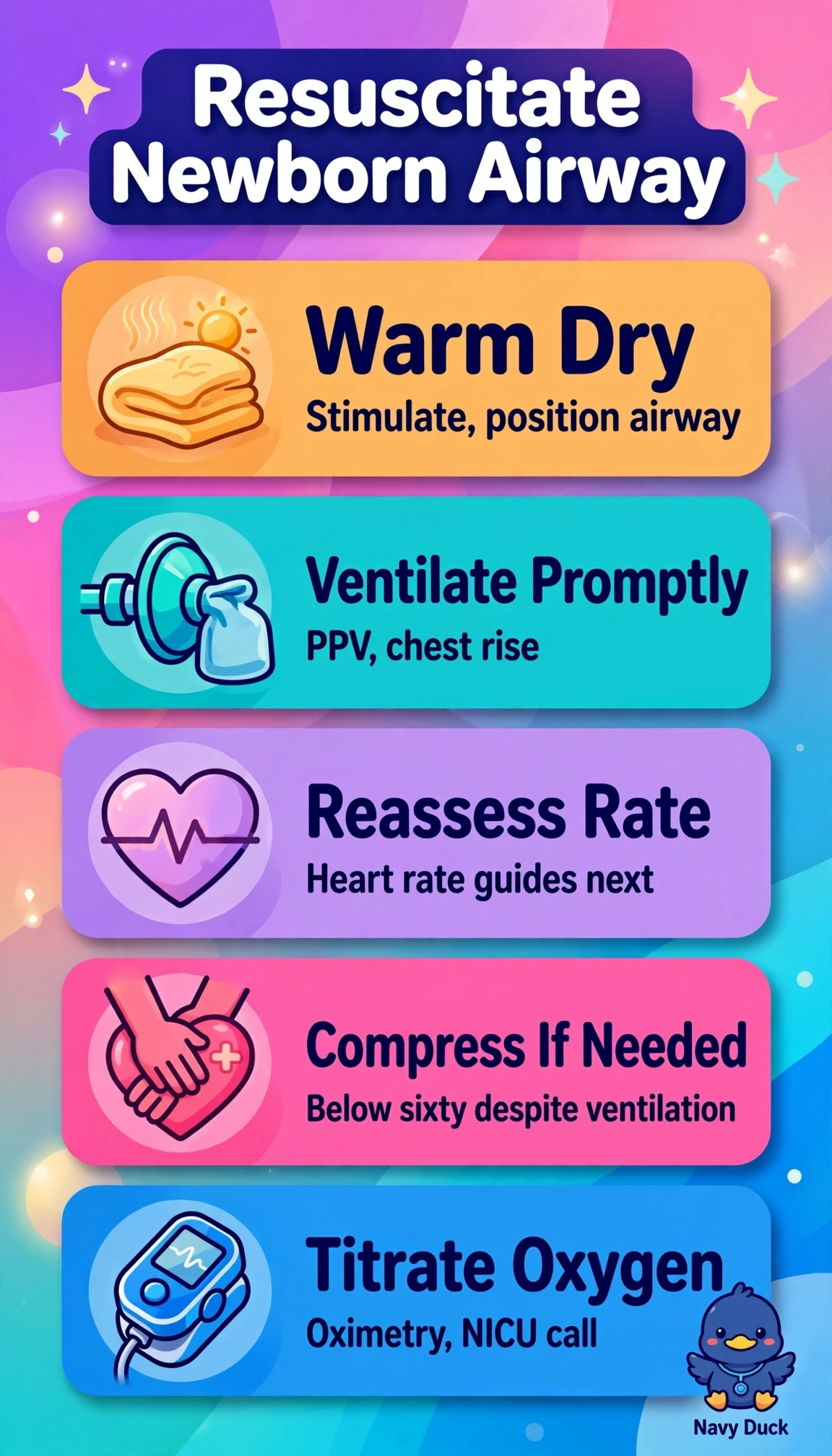
For an apneic infant with a heart rate of 80 beats/min after initial drying and stimulation, begin positive-pressure ventilation with room air and reassess the heart rate. Warmth, drying, and stimulation come first, but lung aeration is the priority when breathing is absent or ineffective; oxygen can be titrated by pulse oximetry. Add chest compressions only if the heart rate remains below 60 despite effective ventilation, with airway and intubation considerations addressed as needed. Routine deep tracheal suctioning for meconium delays ventilation and risks mucosal injury; current guidance favors prompt ventilation, using bulb or selective suction only when obstruction prevents effective ventilation. Tactile stimulation and mask oxygen without breaths do not aerate fluid-filled lungs, so they can prolong hypoxic bradycardia. Starting chest compressions immediately with high oxygen reverses the sequence: hypoxic bradycardia usually responds to ventilation first, and compressions without ventilation provide inadequate oxygen delivery to the heart and brain. Exam caveat: establish effective ventilation, with visible chest rise, before proceeding to compressions. Practical check: confirm mask seal and chest movement, look for a rising heart rate, monitor oxygen saturation against targets, and call for NICU support.