
A 68-year-old man with COPD and a 40 pack-year history is scheduled for elective open upper abdominal aortic aneurysm repair. He wheezes mildly, produces morning sputum, and has a baseline SpO2 of 92% on room air. Which pre- and post-operative respiratory care plan best reduces his pulmonary complication risk?
Select an answer to reveal the explanation.
Short Explanation
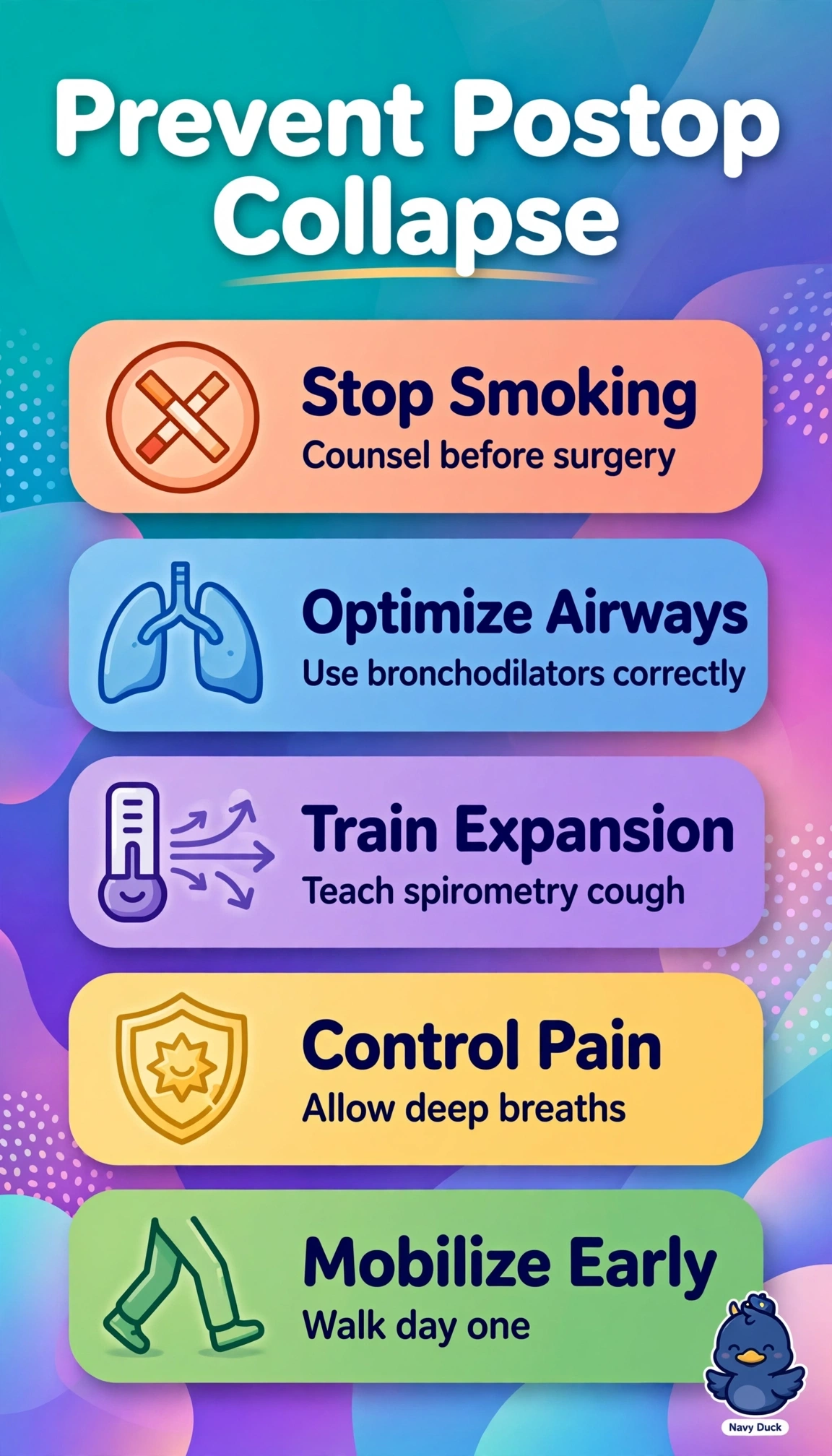
You've got a high-risk belly surgery on top of COPD, so you'll want to open his airways and prep his lungs like you're airing up a flat tire before a long drive. That means your best plan pairs smoking cessation and bronchodilators with lung expansion training, then gets him up and walking early after surgery.
Full Explanation
The correct plan addresses high risk from age, COPD with wheeze and morning sputum, baseline hypoxemia, heavy smoking, and open upper abdominal incision impairing diaphragm function, cough and lung volumes, so smoking cessation counseling, bronchodilator optimization, structured lung expansion training, and early mobilization together reduce atelectasis, secretion retention, and pneumonia. A plan allowing 24 hours of bed rest before mobilization fails the early re-expansion concept because immobility impairs clearance and lung volumes after upper abdominal surgery and stable aortic grafts do not require prolonged bed rest. A plan using inhaled corticosteroid intensification without bronchodilator optimization fails the airflow obstruction concept because active wheeze requires optimized bronchodilators and inhaler technique, while steroids alone do not relieve acute bronchospasm. A plan offering only brief advice to cut down smoking fails the elective optimization concept because a 40 pack-year history before elective repair requires structured counseling with support weeks in advance to reduce secretions and complications. Exam caveat is to avoid delaying surgery for exhaustive pulmonary testing when clinical risk is clear and never postpone cessation to the postoperative period. Practical check is to confirm quit date, inhaler technique with wheeze reassessment, incentive spirometry baseline with sputum character, and documented ambulation distance with oximetry.