
A 45-year-old former smoker with exertional dyspnea completes pulmonary function testing showing FEV1 68% predicted, FEV1/FVC 0.62, TLC 108% predicted, and DLCO 58% predicted without anemia, with repeatable efforts and reference values matched for age, height, and sex. Peak flow diary shows 15% diurnal variability. Which interpretation best evaluates these peak flow, spirometry, and DLCO results?
Select an answer to reveal the explanation.
Short Explanation
Low ratio plus low DLCO points toward parenchymal loss, and you connected those dots. Linking diffusion to obstruction sharpens your interpretation.
Full Explanation
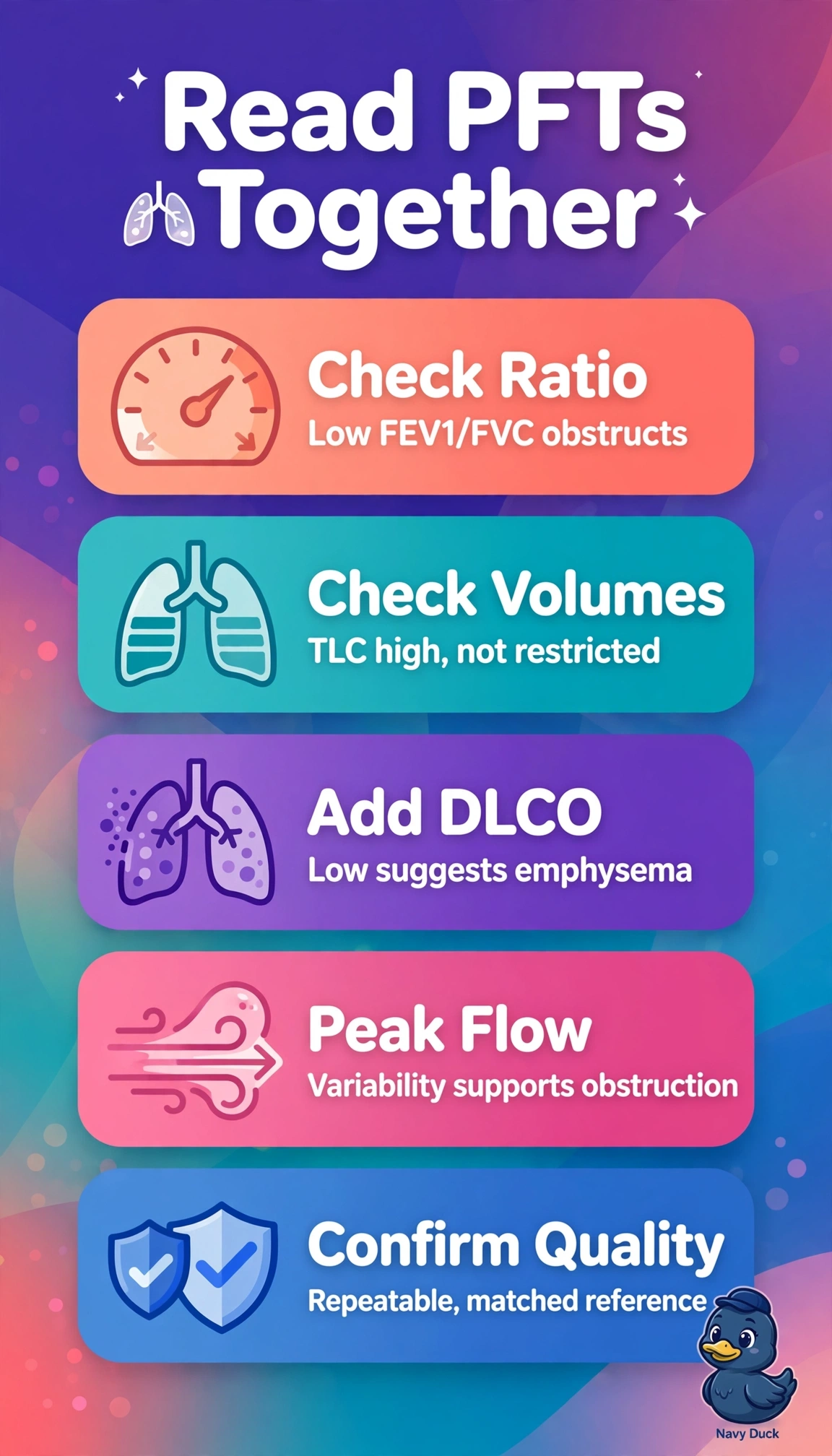
Obstruction requires reduced FEV1/FVC with FEV1 fall, hyperinflation may raise TLC, and reduced DLCO corrected for hemoglobin indicates alveolar-capillary destruction typical of emphysema rather than asthma where DLCO is often normal or high, while modest peak flow variability supports obstructive disease without proving full reversibility. Calling efforts poor despite repeatability and blaming albuterol misuses quality criteria because bronchodilators do not lower DLCO and repeatable maneuvers validate results. Pure restriction needs reduced TLC, not elevated TLC, so using low FEV1 alone ignores ratio and volume criteria and misguides surgical referral without diffusion context. Asthma alone with full reversibility overreads 15 percent variability and dismisses significantly reduced diffusion that argues against isolated reversible airway disease and favors fixed parenchymal loss. Exam caveat is to apply ratio first, then volumes, then DLCO with hemoglobin, and compare to matched reference values. Practical check is to verify effort repeatability, hemoglobin, smoking history, and bronchodilator response before final interpretation.