
A home-care ventilator-dependent child must be moved by ambulance across town for imaging with portable oxygen, battery power and a manual resuscitator available. Traffic may delay arrival and the caregiver is anxious. Which out-of-hospital judgment best ensures safe transport and emergency readiness?
Select an answer to reveal the explanation.
Short Explanation
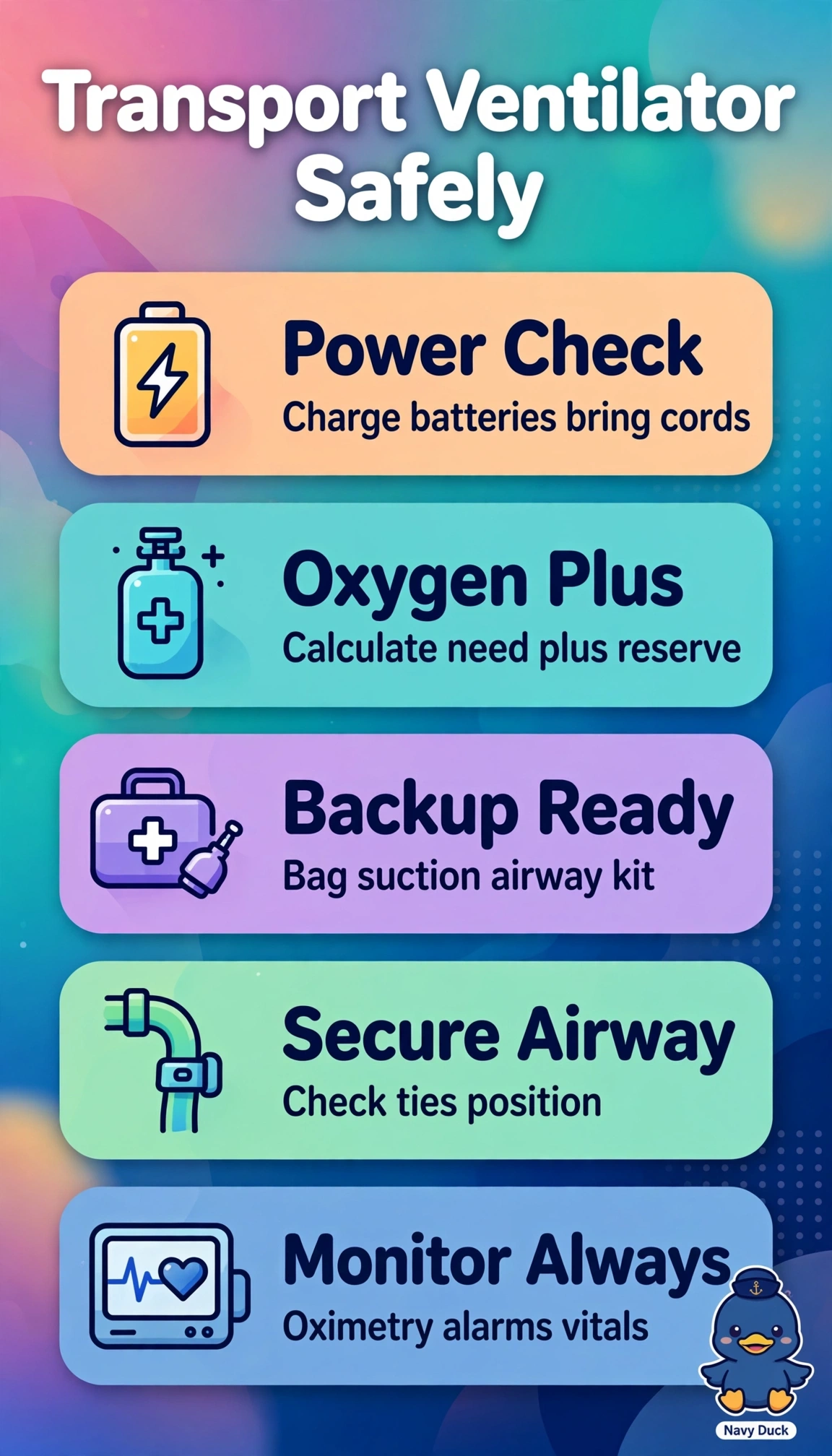
You prepare for delays, not just distance. Confirming backup power, oxygen, ventilation, suction, and continuous monitoring keeps you ready if the trip changes or an emergency arises.
Full Explanation
Safe transport of a ventilator-dependent child requires readiness for power loss, oxygen depletion, ventilation failure, secretion obstruction, and rapid deterioration. Verifying charged batteries, full oxygen, a backup manual resuscitator, suction, and continuous vital-sign monitoring provides these safeguards during a delayed trip. Relying on the ventilator battery without verifying the other equipment leaves oxygen, ventilation backup, secretion clearance, and monitoring uncertain; a charged battery alone cannot protect against those hazards. Leaving suction behind reduces the ability to clear secretions or an airway obstruction, even when the other equipment is ready. Checking vital signs only at departure and arrival misses deterioration that can occur between checks, so monitoring must continue throughout transport. A common exam caveat is that reassuring baseline vital signs do not make intermittent checks or incomplete backup equipment safe for a ventilator-dependent child. Before departure, confirm battery charge and oxygen supply, test the resuscitator and suction, verify that the monitor is working, and keep all equipment accessible so the team can respond promptly if traffic delays the trip or the child’s condition changes.