
A 58-year-old with OSA on nasal CPAP at 10 cm H2O reports morning dry eyes, mouth leaks, machine shows leak 45 L/min, residual AHI 12, and red marks from overtight straps. The cushion is 2 years old, the wrong size, and the humidifier is empty. Which CPAP interface troubleshooting step to control leaks best restores effective therapy?
Select an answer to reveal the explanation.
Short Explanation
You're chasing a pesky leak that steals pressure all night long. Refit is your answer here, like reseating a leaky lid instead of just pressing harder.
Full Explanation
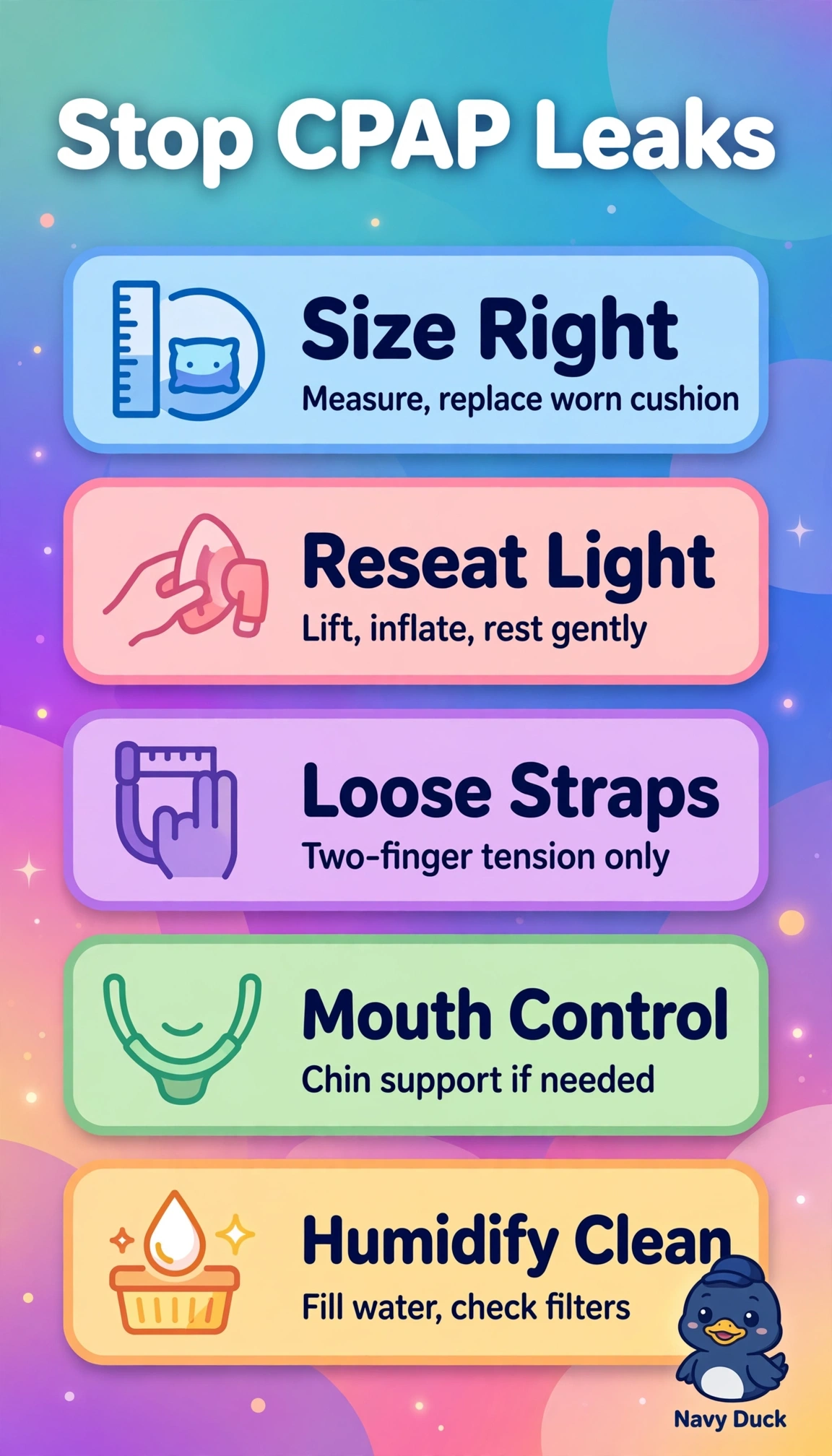
Effective leak control requires simultaneous correction of cushion age and sizing, strap tension, oral leak, and airway dryness because unintentional leak near 45 L/min prevents prescribed 10 cm H2O delivery and sustains residual AHI near 12 while overtightening causes red marks without sealing, so installing a new correct-size cushion restores pliable sealing surface, light reseating avoids distortion and skin injury, chin support limits mouth escape that a nasal mask cannot compensate for, and humidification relieves dry eyes and mouth to support adherence, together returning leak and AHI toward target. An intervention with new sizing, light fit, and chin support but without humidification fails on comfort-adherence physiology because persistent nasal dryness promotes mouth opening and continued leak despite good mechanics. An intervention with new sizing, light fit, and humidification but without chin support fails on oral-leak mechanics because nasal pressure escapes through the open mouth and the device reports high residual leak. An intervention retaining the two-year-old wrong-size cushion despite chin support and humidification fails on material-interface science because aged silicone loses recoil and incorrect geometry cannot seal even when cleaned and positioned lightly. Exam caveat is to search the stem for multiple concurrent faults rather than choosing a familiar partial fix when leak, AHI, skin marks, dryness, and equipment age coexist. Practical check is to refit awake, verify leak below manufacturer threshold for ten minutes, then review morning symptoms, skin, and download residual AHI and adherence.