
A former 27-week infant now 37 weeks postmenstrual age remains on nasal cannula 0.5 L with SpO2 90% to 94%, tachypnea, crackles and poor weight gain despite adequate calories, with a clear chest film except hyperinflation. Diuretics and caffeine were discussed on rounds in a busy NICU. Which chronic lung disease strategy best supports growth while minimizing oxygen toxicity?
Select an answer to reveal the explanation.
Short Explanation
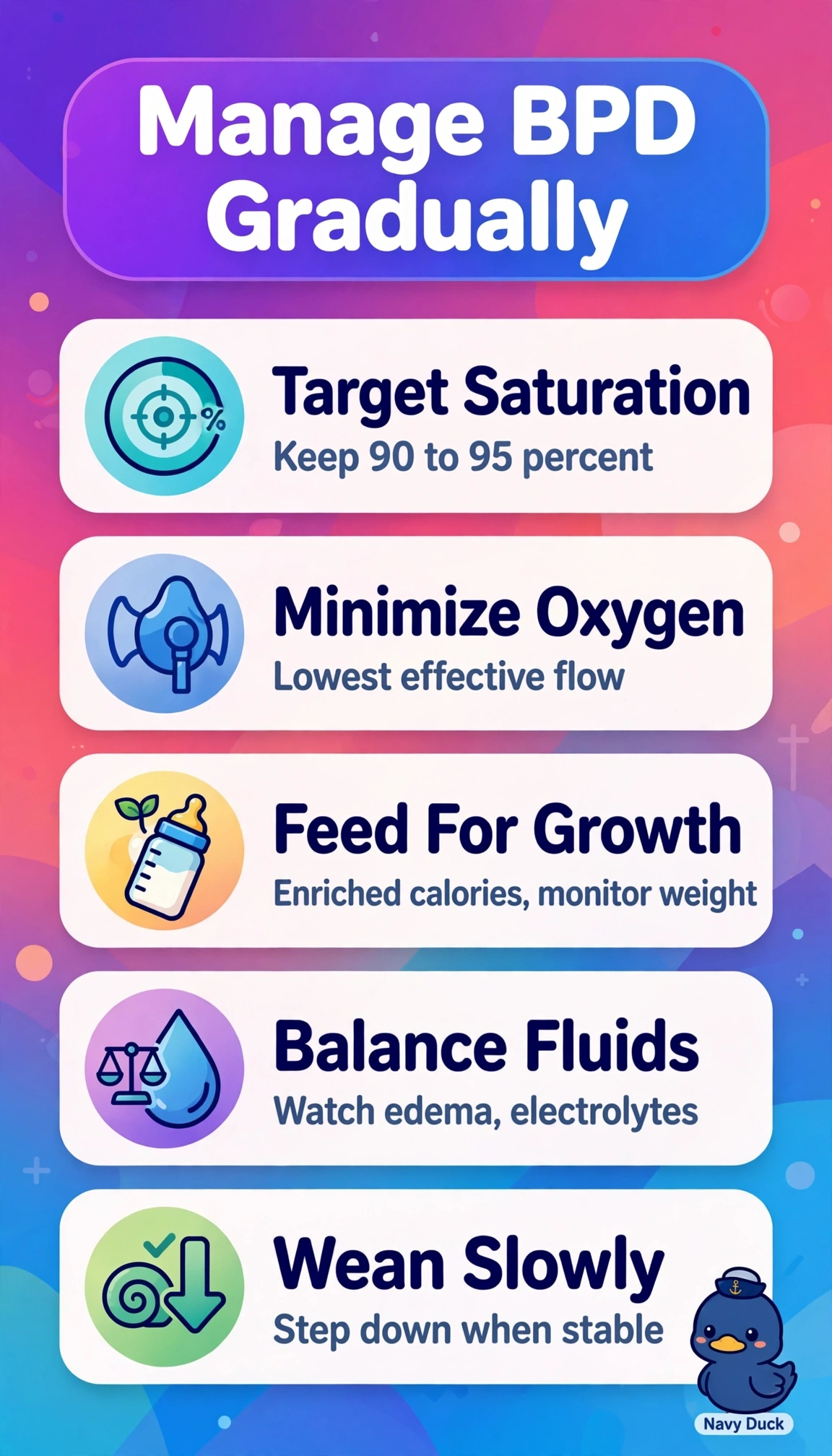
You’re supporting lung growth, not just chasing oxygen numbers. Keeping oxygen in a safe range while supporting nutrition and checking fluid balance helps protect growth; thoughtful weaning avoids unnecessary oxygen exposure.
Full Explanation
At 37 weeks postmenstrual age, ongoing oxygen need, tachypnea and poor growth are consistent with evolving bronchopulmonary dysplasia, where the work of breathing can increase energy needs. Maintaining SpO2 90% to 95% with the lowest effective oxygen supports oxygen delivery and growth while limiting hyperoxia; optimizing nutrition and monitoring fluid balance help meet growth needs without overlooking fluid overload or restriction. Scheduled diuretics for crackles are not justified by crackles alone, particularly with a clear chest film and no stated evidence of edema or fluid overload; routine use can cause dehydration, electrolyte abnormalities and nephrocalcinosis without durable growth benefit. Targeting SpO2 96% to 99% would expose the infant to more oxygen than needed, increasing oxygen-toxicity risk without established growth benefit. Maintaining SpO2 88% to 92% while weaning risks hypoxemia, which can increase pulmonary vascular resistance and work of breathing and impair growth. An exam caveat is that discussion of diuretics or caffeine on rounds does not establish an indication; caffeine is most relevant to apnea and is not a substitute for chronic lung disease support. A practical check is to review SpO2 trends, confirm the lowest effective oxygen flow, follow weight and intake-output, and monitor electrolytes.