
In a medical ward a 58-year-old with moderate asthma uses albuterol metered-dose inhaler two puffs every four hours with poor relief, nocturnal awakenings, and tremor, with correct spacer technique, normal potassium, and no chest pain. The provider asks respiratory therapy to optimize bronchodilator therapy within protocol. Which adjustment best addresses drug, dose, frequency, mode, or concentration for this patient?
Select an answer to reveal the explanation.
Short Explanation
Rescue alone is just a fire extinguisher. You're calming the underlying airway fire too, so adding controller therapy cuts nighttime flare-ups fast.
Full Explanation
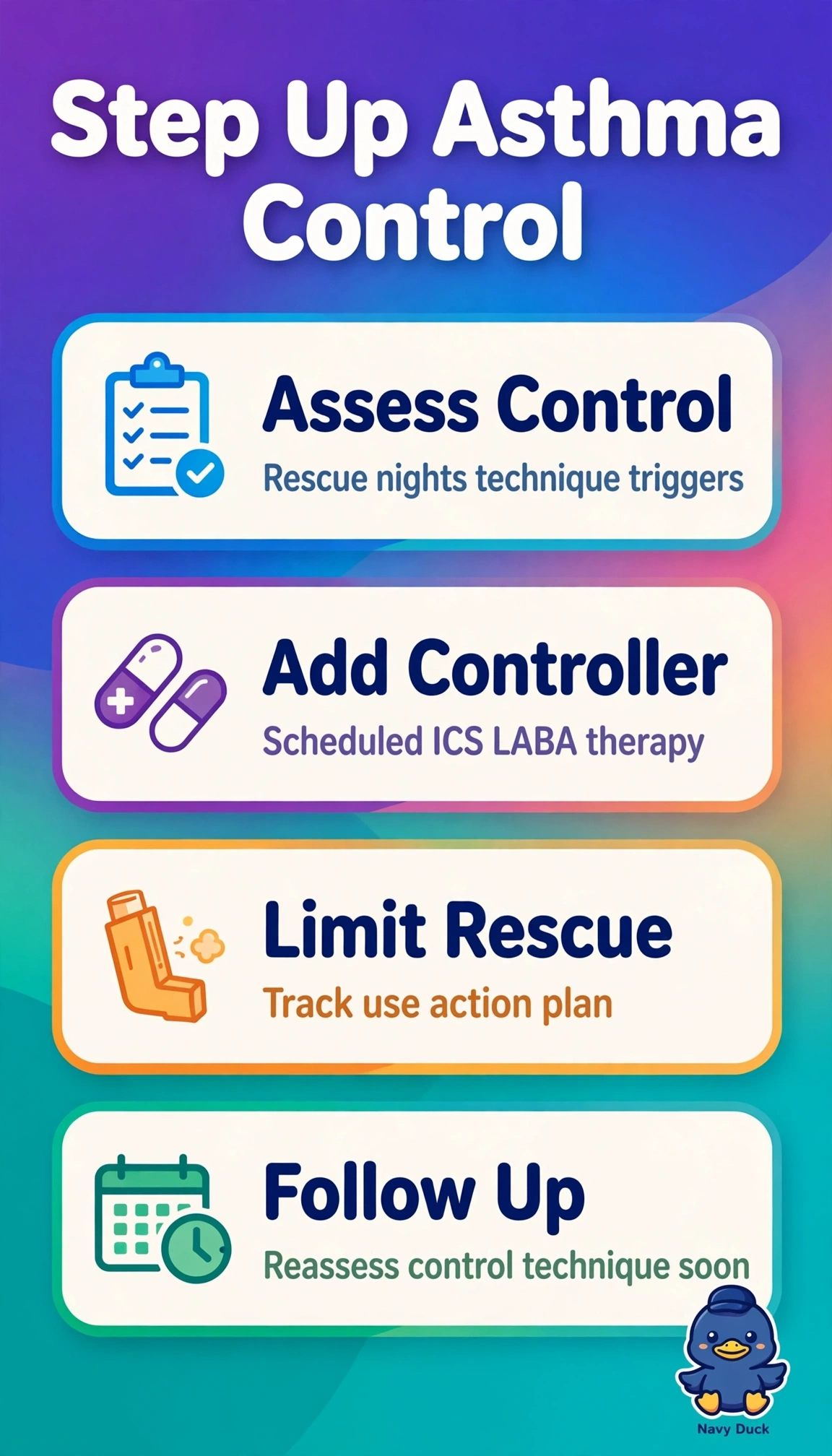
The correct choice fits moderate asthma that remains uncontrolled despite correct spacer technique, with two puffs every four hours, poor relief, nocturnal awakenings, and tremor indicating excessive short-acting beta-agonist reliance and untreated inflammation rather than delivery failure, so scheduled inhaled corticosteroid-long-acting beta-agonist provides maintenance control while daily review of rescue frequency and triggers allows step-down of rescue use, with normal potassium and absent chest pain making this safe to advance. Scheduled nebulized albuterol-ipratropium with peak flow and tremor tracking is established for acute exacerbations and COPD maintenance and optimizes mode and monitoring, but it increases cumulative beta-agonist exposure that already causes tremor without adding the steroid controller required for persistent nocturnal disease. Daily tiotropium while continuing frequent albuterol is an accepted add-on for severe asthma and COPD to prolong bronchodilation, but without inhaled corticosteroid it leaves inflammation untreated and preserves round-the-clock rescue dependence that defines lack of control. Nightly montelukast with counseling and symptom review is a sound adjunct for allergic phenotypes and addresses triggers, yet leukotriene blockade alone cannot replace steroid-based maintenance when rescue is needed every four hours with awakenings. Exam caveat is to prioritize adding controller over changing delivery mode or dose when technique is correct and overuse with systemic effects signals poor control. Practical check is to confirm rescue refill rate, awakening frequency, technique retention, controller adherence, and tremor and symptom improvement at follow-up.