
A 52-year-old with loud snoring and daytime sleepiness has a sleep study showing apnea-hypopnea index 22 events per hour with nadir SpO2 84% and fragmented sleep. The record notes no central events. Which sleep study interpretation of apnea-hypopnea index best guides therapy planning?
Select an answer to reveal the explanation.
Short Explanation
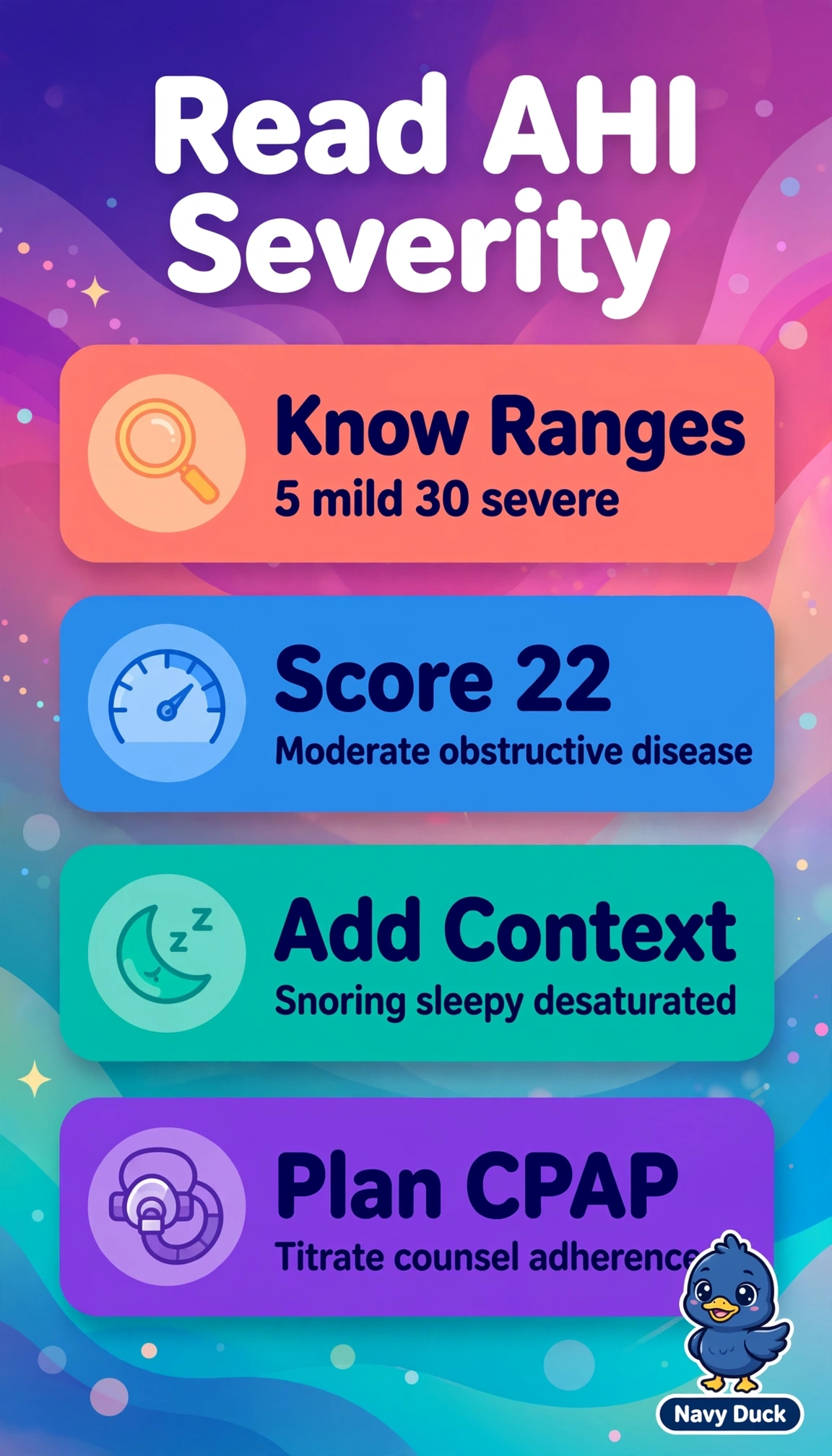
You are translating numbers into action. An AHI of 22 sits squarely moderate, like a yellow-red traffic light urging treatment.
Full Explanation
This case with loud snoring, daytime sleepiness, AHI 22, nadir SpO2 84% and fragmented sleep with no central events defines symptomatic moderate obstructive sleep apnea caused by repetitive upper-airway closure producing apnea, arousal and intermittent desaturation that impairs function and oxygenation, so therapy centers on restoring patency with CPAP titration plus sleep hygiene counseling to improve adherence, symptoms and cardiometabolic risk. Oral appliance as first-line therapy fails by indication because devices suit mild-to-moderate disease or severe disease when CPAP is intolerable, while symptomatic moderate disease with desaturation to 84% is most reliably controlled initially with CPAP. Attributing desaturation to central hypoventilation fails by pathophysiology because absent central events proves obstructive closure, not reduced drive, is the driver requiring different ventilatory management. Deferring airway therapy for intensive CBT-I first fails by sequencing because delaying treatment leaves symptomatic moderate apnea with significant hypoxemia untreated despite relevance of insomnia care. Exam caveat: anchor severity to AHI 15-30 and obstructive versus central distinction, not snoring or latency alone. Practical check: confirm obstructive predominance, symptoms, nadir oxygen, cardiopulmonary comorbidity and CPAP tolerance, then arrange titration, mask fit, adherence review and counseling on weight, alcohol, sedatives and position.