
In an emergency department a therapist must enter the room of an adult with suspected tuberculosis with cough and fever to administer a breathing treatment, with an N95 respirator, gown, gloves, and eye protection available at the doorway and hand hygiene stations nearby. The unit requires airborne plus Standard Precautions and safe disposal. Which sequence best applies Standard Precautions, isolation, and donning and doffing for this encounter?
Select an answer to reveal the explanation.
Short Explanation
Order matters more than speed when air is risky. You're building a clean-to-dirty barrier going in, so careful sequence keeps germs off you coming out.
Full Explanation
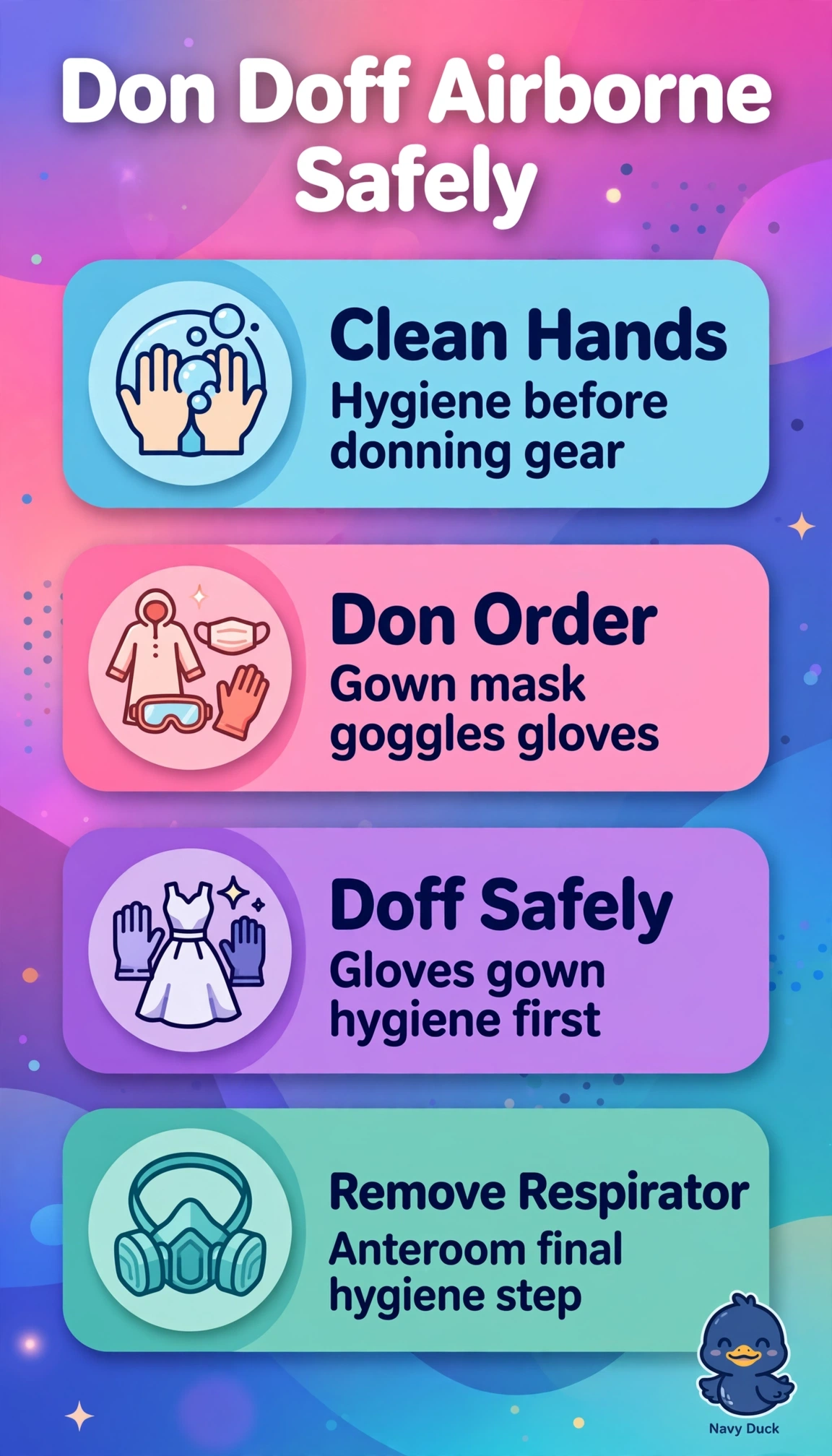
The correct sequence enforces Standard Precautions with airborne additions: hand hygiene before donning, gown fully closed, fit-checked N95, goggles or face shield, gloves over cuffs in the doorway or anteroom, then inside-room care with safe sharps and waste handling, followed by doffing gloves then gown with hand hygiene before removing eye protection and respirator outside or in anteroom without touching fronts, plus final hygiene, preventing self-contamination. Entering without fit check and reusing gowns with inside-room mask-first removal contaminates face and spreads mycobacteria between patients via soiled textiles. Donning gloves first disrupts layering and removing everything together in the hallway aerosolizes contaminants and breaches clean-to-dirty flow. Skipping hygiene with surgical mask for tuberculosis underprotects against airborne nuclei and carrying soiled gowns outside disseminates organisms. Exam caveat: respirator seal check and anteroom doffing are tested details for tuberculosis, measles, and varicella. Practical check: inspect for gaps, secure ties, and perform hygiene whenever gloves change or face is touched.