
A 34-year-old woman with acute myeloid leukemia, profound neutropenia, and BMI 44 develops fever, dry cough, and hypoxemia. She takes amiodarone for atrial fibrillation, has bilateral ground-glass opacities, and snores heavily with morning headaches. Which respiratory failure management priority best addresses her immunocompromised, obesity-related, and drug-toxicity risks?
Select an answer to reveal the explanation.
Short Explanation
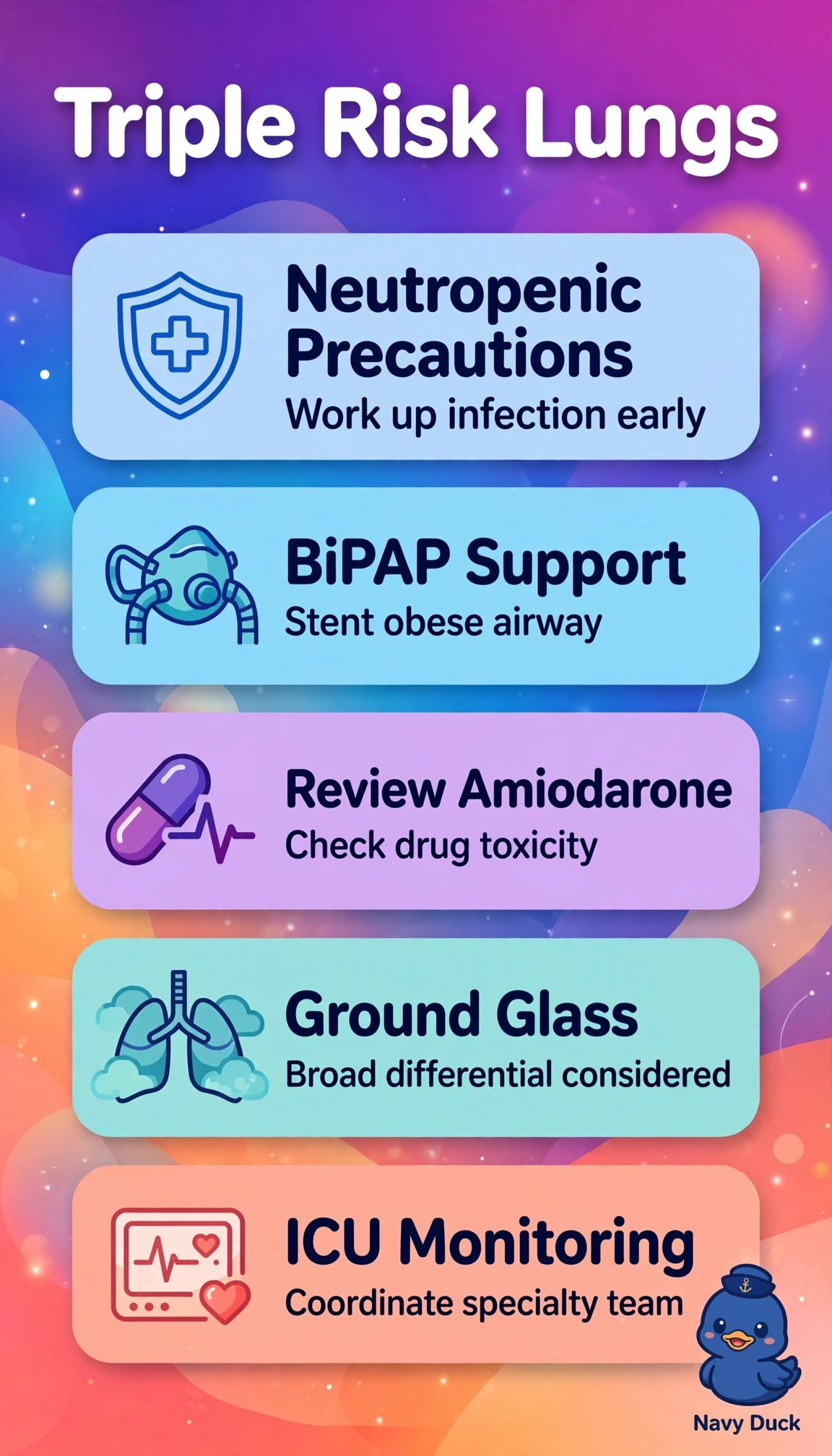
She's juggling three lung threats at once, so you must cover all bases. Infection, extra weight, and drug injury each need a targeted fix, and BiPAP helps the obesity piece. Work up broadly and review meds fast.
Full Explanation
The correct priority unifies three simultaneous drivers: profound neutropenia with fever, dry cough, hypoxemia and bilateral ground-glass opacities demands neutropenic precautions plus early bronchoscopy with lavage for bacterial, fungal, viral, Pneumocystis and leukemic causes to guide targeted therapy; BMI 44 with heavy snoring and morning headaches indicates obstructive sleep apnea and obesity hypoventilation requiring nocturnal BiPAP titration since oxygen alone does not maintain airway patency or correct hypercapnia; and amiodarone with compatible pulmonary findings requires formal toxicity review for drug-induced interstitial disease with cardiology and pulmonology input on discontinuation or substitution. Continuing appropriate infection and ventilation care while leaving amiodarone unchanged fails on drug-toxicity stewardship because ongoing exposure can sustain pneumonitis despite antibiotics and BiPAP. Relying on empiric antibiotics, high-flow oxygen, BiPAP and amiodarone review without neutropenic precautions and early bronchoscopy fails on immunocompromise reasoning because noninvasive empiricism misses resistant or opportunistic pathogens needing microbiologic, antigen, molecular and cytologic diagnosis. Using neutropenic workup and amiodarone review with only daytime oxygen fails on obesity-ventilation physiology because it ignores nocturnal obstruction and hypoventilation. Exam caveat is that ground-glass opacities plus neutropenia invite premature infection-only anchoring when drugs and apnea coexist. Practical check is to confirm neutrophil count, bronchoscopy eligibility, overnight oximetry, and complete medication reconciliation.