
A 30-year-old patient with cystic fibrosis using a positive expiratory pressure mask and oscillatory vest at home reports poor sputum clearance, prolonged treatment time, and intermittent low-pressure alarms on the vest, with thick yellow secretions and SpO2 92%. Equipment appears assembled but filters look damp and hoses have visible condensation. Which device troubleshooting action best restores hyperinflation and secretion clearance?
Select an answer to reveal the explanation.
Short Explanation
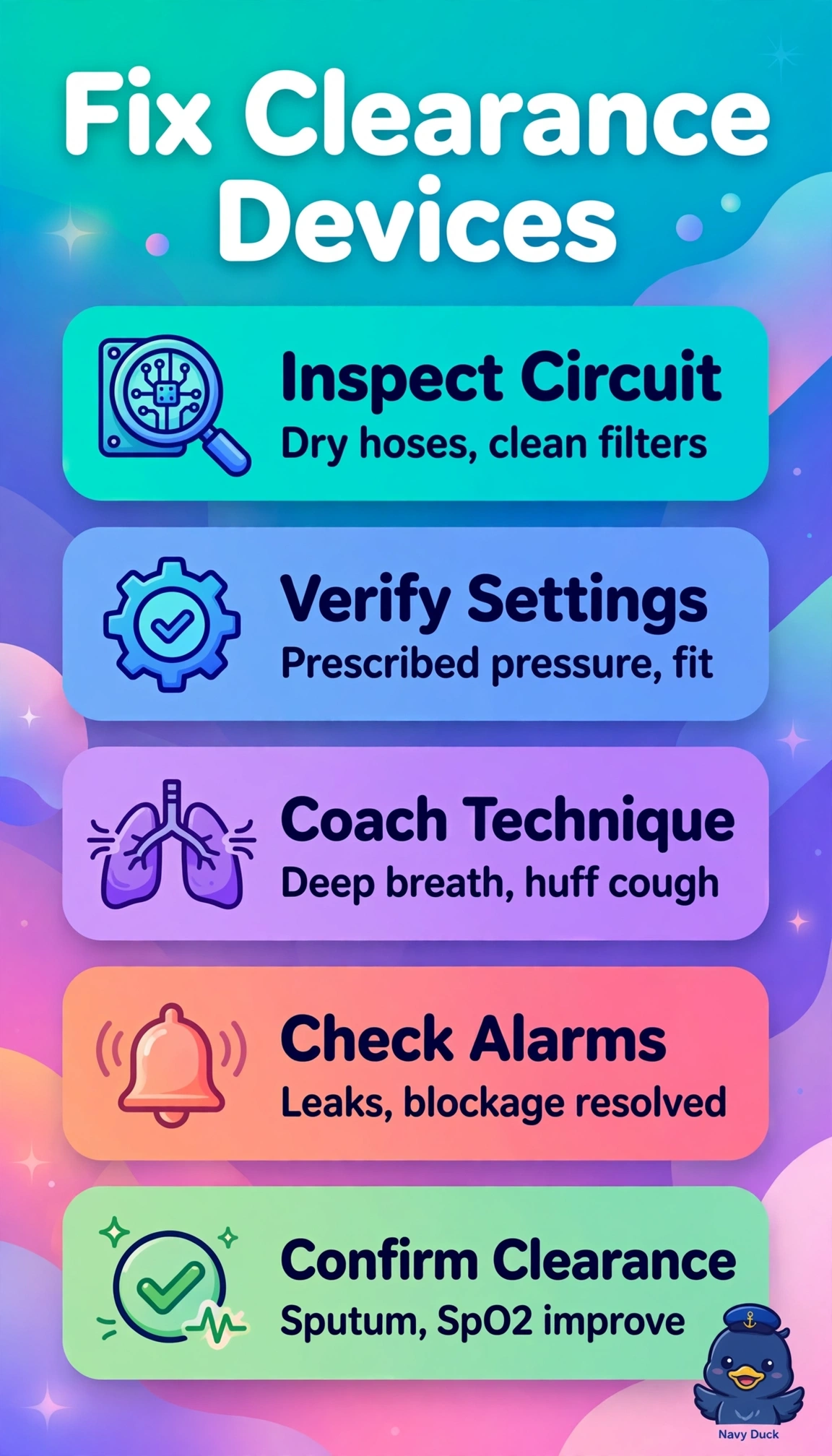
Wet filters and waterlogged hoses choke these devices fast, and you caught it. Restoring clean airflow plus sharp huff technique clears mucus safely.
Full Explanation
Correct troubleshooting restores the clearance chain because damp filters raise resistance and attenuate vest and PEP pressures causing low-pressure alarms and poor hyperinflation, retained condensation narrows hoses, unverified settings allow drift after home assembly, and weak huff technique leaves mobilized mucus to prolong treatment and desaturate to 92%, so replacing filters, draining tubing, verifying pressures, and retraining huff together reestablish flow, pressure, and expectoration. Raising oscillation intensity while reinforcing slow deep breathing through PEP suits tenacious mucus but fails on obstruction because added drive cannot overcome saturated filters and water-filled tubing, so under-pressurization and alarms continue. Replacing filters, draining condensation, and prolonging sessions restores patency but fails on mechanics because without pressure verification and effective huff cough, hyperinflation stays subtherapeutic while longer time worsens burden. Verifying pressures with a manometer and retraining huff cough corrects technique but fails on patency because damp filters and condensation still blunt delivery and trigger alarms. Exam caveat is to treat new low-pressure alarms with visible moisture as obstruction to clear first rather than escalating pressure or time, especially with yellow secretions suggesting exacerbation. Practical check is to rerun the vest after service, confirm alarms cleared, measure PEP pressure, observe huff cough with sputum volume, and recheck SpO2 and effort.