
In the ICU an adult with stridor and morbid obesity requires urgent intubation for a difficult airway. The therapist assembles a video laryngoscope with detachable monitor and tests it at bedside. The monitor powers on, the blade light is bright, the battery shows full charge, but the screen shows no airway image. Which troubleshooting step for video laryngoscope signal connection should the therapist perform first?
Select an answer to reveal the explanation.
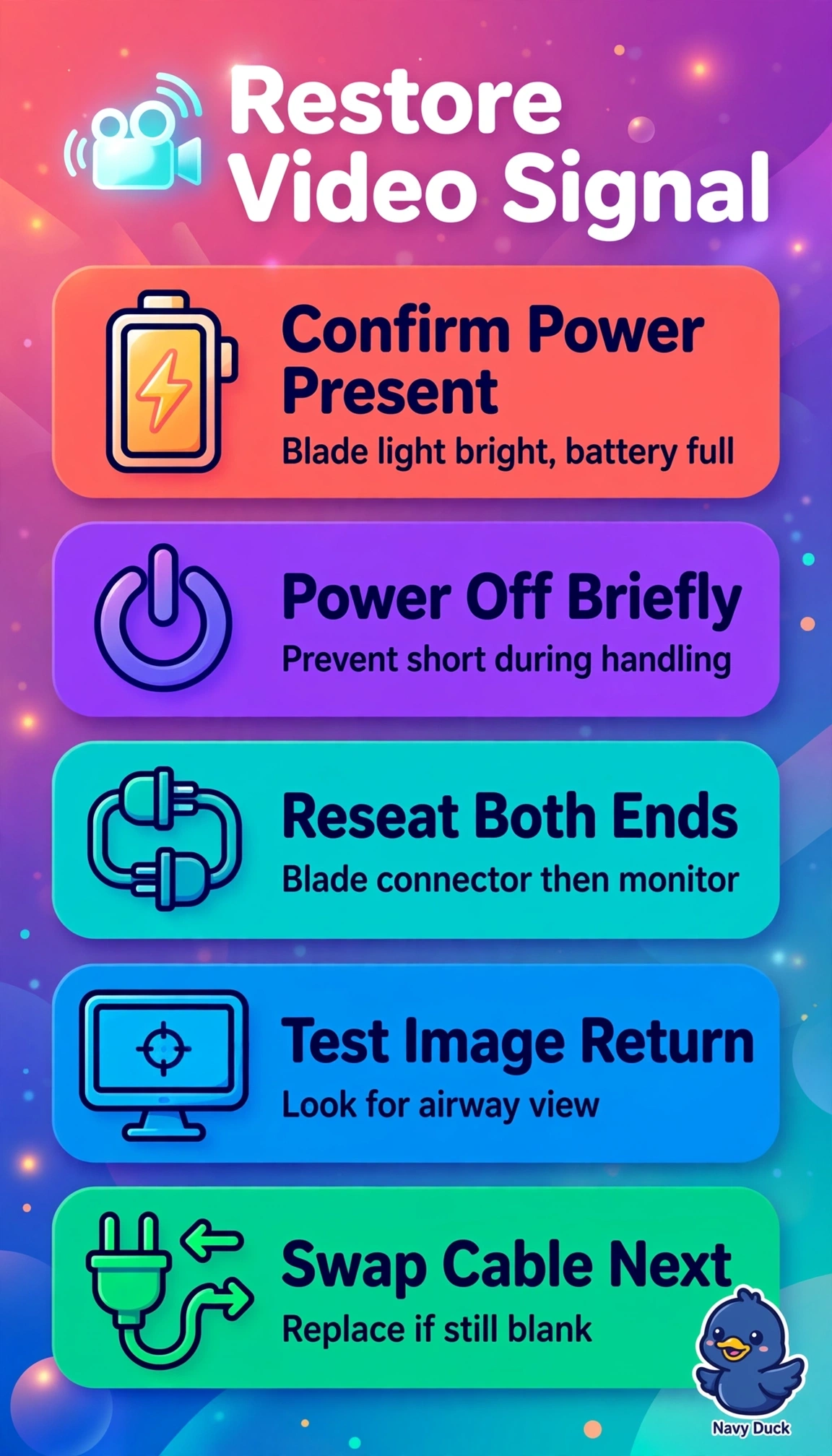
Short Explanation
You have power but no picture, so check the video connection before changing anything else. You can start with the signal path: firmly reseat the cable at the blade and monitor, then test for an image.
Full Explanation
A bright blade light and full battery indicator with no monitor image point to a video-signal problem rather than a power failure: illumination and the camera image travel through separate components. Disconnecting and firmly reseating the video cable at the blade and monitor can restore contact at the connectors and tests the signal path before other troubleshooting. Replacing the handle batteries and increasing blade brightness address inadequate power or illumination, but the bright light and full indicator show that power is already present. Suctioning the oropharynx and cleaning the camera lens with anti-fog solution may help when secretions or fog obscure an image; they do not explain a screen with no image signal. Exchanging the video blade for a larger direct blade may change the approach to glottic exposure, but it does not correct a loose video connection and abandons the video system before checking it. On an exam, distinguish absent illumination, which suggests a power or light problem, from absent image despite illumination, which suggests a signal problem. At the bedside, verify that an image returns after reseating the cable before proceeding with the intubation.