
A 14-month-old with runny nose and cough for 3 days now has tachypnea, subcostal retractions, poor feeding and SpO2 89% on room air with diffuse crackles and wheeze in a crowded pediatric unit during RSV season. The infant is alert with no apnea or cyanosis. Which supportive management strategy best addresses moderate bronchiolitis with hypoxemia?
Select an answer to reveal the explanation.
Short Explanation
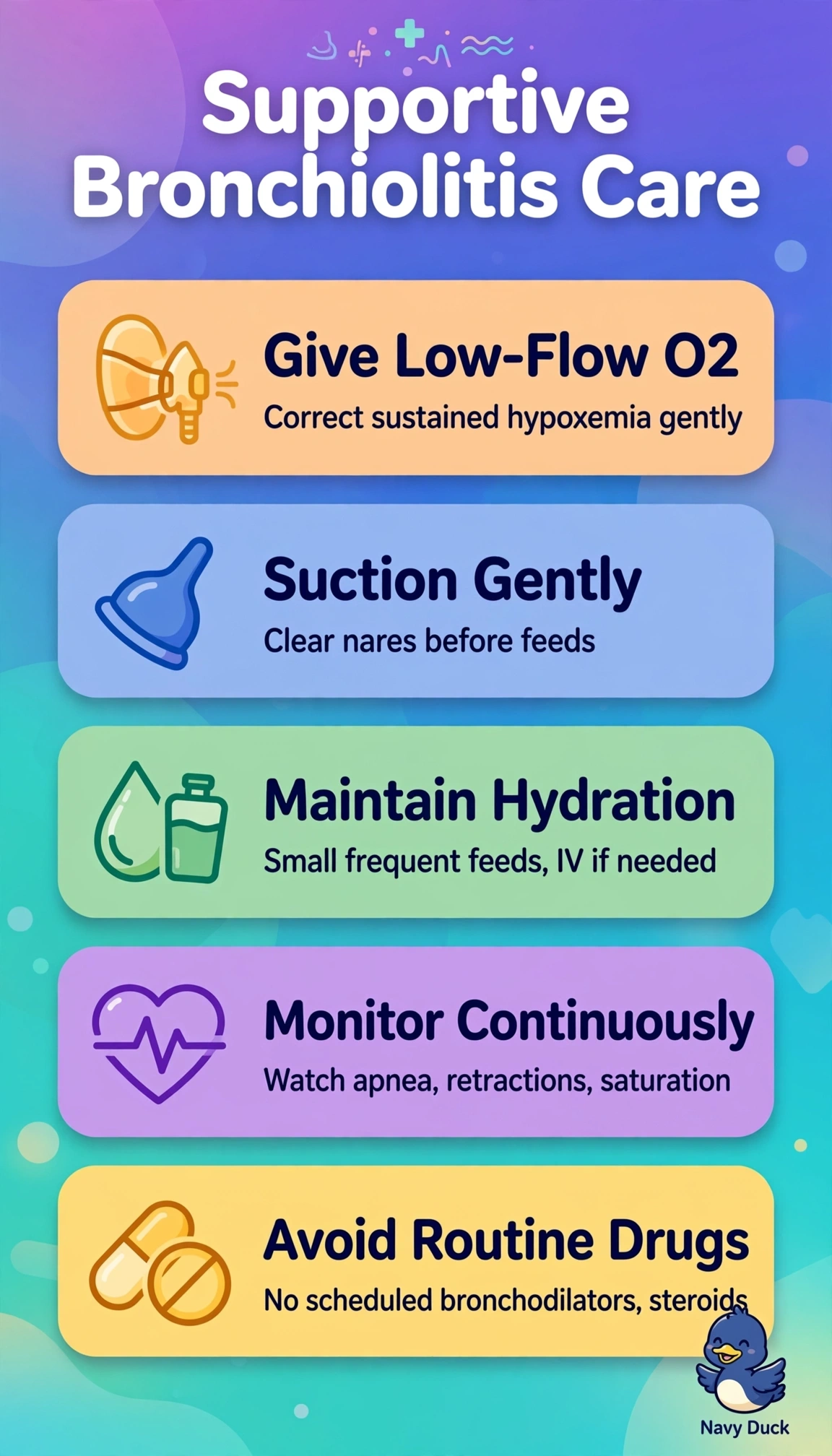
You keep the airway clear, support oxygenation and hydration, and watch closely as the inflammation settles. Gentle suction and low-flow oxygen with continuous monitoring make supportive care the right approach here.
Full Explanation
Low-flow oxygen, gentle nasal suctioning, fluids and continuous pulse oximetry provide evidence-based supportive care for moderate bronchiolitis with clinically important hypoxemia. Oxygen addresses the SpO2 of 89% alongside tachypnea and retractions; gentle suction improves nasal patency for breathing and feeding without mucosal injury, and fluids help with poor intake and increased losses. Continuous monitoring supports prompt oxygen titration and detection of worsening in a busy RSV-season unit, even though the infant is alert and has no apnea. The same bundle with only intermittent spot-check oximetry provides inadequate surveillance: distress and poor feeding with hypoxemia warrant continuous monitoring to guide oxygen and escalation. Humidified high-flow nasal cannula is an unnecessarily intensive starting strategy; it is generally reserved for severe disease, apnea or failure of low-flow oxygen, and requires more resources and monitoring. Fluids, suction and observation while withholding oxygen fail to address persistent hypoxemia with retractions. An exam caveat is that wheeze alone does not make routine bronchodilators, steroids or antibiotics appropriate for typical bronchiolitis without proven bacterial infection or clearly responsive bronchospasm. Practically, verify continuous SpO2 against a target such as 90% or higher, suction gently before feeds, and reassess respiratory rate, retractions, alertness and intake for improvement or need to escalate.