
A 28-year-old single parent with asthma has two ED visits in three months, missed refills, night-shift work, limited bus access, low health literacy, and shared housing with indoor smoking. Inhaler technique is rushed and teach-back is incomplete. Which evaluation of learning needs and social determinants best guides discharge planning?
Select an answer to reveal the explanation.
Short Explanation
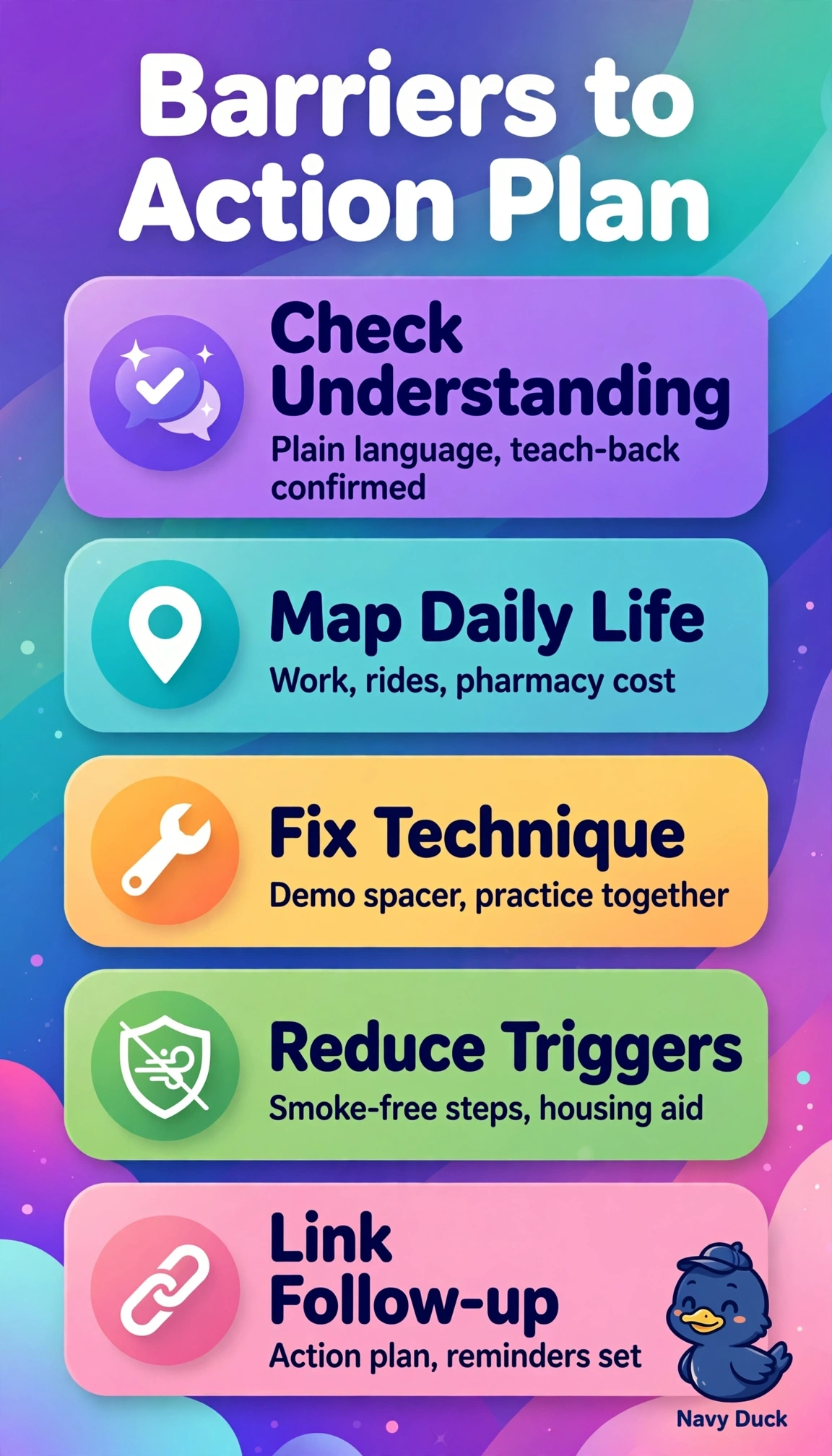
You’re solving the why behind missed doses, not just handing inhalers. Mapping literacy, work, and ride gaps to teach-back turns a shaky plan into one she can actually follow.
Full Explanation
The correct response integrates all stated learning and social factors because recurrent ED use with missed refills signals need to assess health literacy, night-shift constraints, bus access, cost, indoor smoke exposure, and incomplete teach-back to create a feasible action plan with appropriate resources and follow-up. The choice that demonstrates technique without confirming teach-back fails on evaluation of learning because observation alone does not verify retention or correct independent use, which is critical when initial teach-back was incomplete and technique was rushed. The choice that addresses literacy, schedule, transport, cost, and teach-back but omits smoke fails on trigger control because shared housing with indoor smoking remains a major modifiable exacerbation driver and discharge planning must include mitigation or cessation resources. The choice that addresses literacy, schedule, cost, smoke, and teach-back but omits transport fails on access because limited bus access plus night-shift work directly threatens refills and follow-up attendance despite an otherwise tailored plan. As an exam caveat, do not select a thorough-sounding assessment that drops one cue from the stem; every barrier listed is intentionally testable. As a practical check, confirm teach-back in the patient's own words, align refills and follow-up with work and transit realities, and document specific smoke-reduction steps.