
A former 27-week premature infant now 36 weeks postmenstrual age remains oxygen-dependent on nasal cannula, with coarse lung markings, hyperinflation, frequent desaturations with handling, poor weight gain, and echocardiographic pulmonary hypertension. The NICU team plans discharge teaching for bronchopulmonary dysplasia. Which chronic lung disease of prematurity management plan best supports safe growth and ventilation?
Select an answer to reveal the explanation.
Short Explanation
Steady growth is the real lung therapy here, and you are thinking long-term. Balanced oxygen with tight nutrition and fluid control protects fragile lungs.
Full Explanation
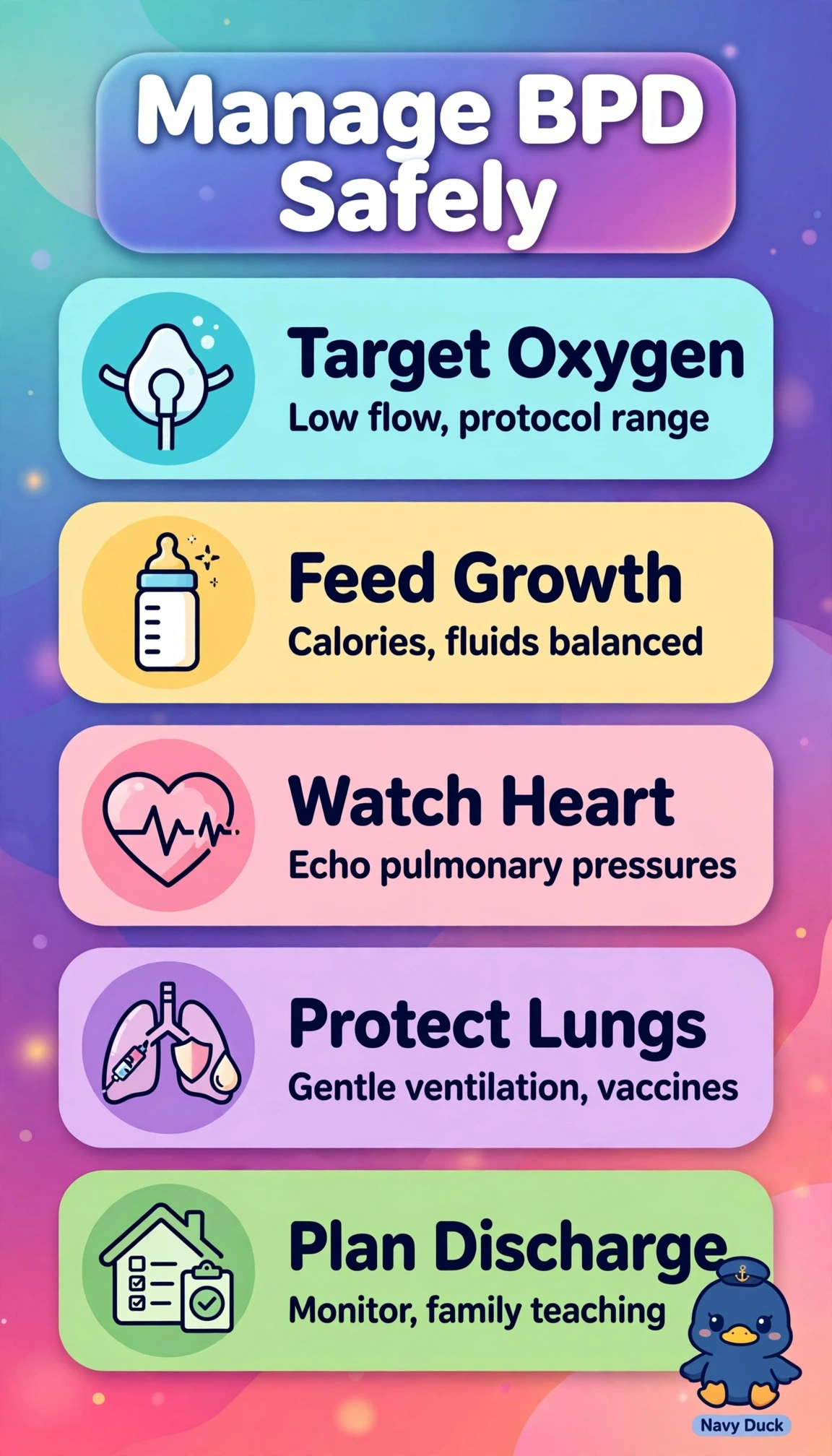
Correct management integrates continuous low-flow oxygen to a pulmonary hypertension-appropriate saturation range with optimized fluids and nutrient-dense feeding plus coordinated diuretic and pulmonary follow-up, which together limit hypoxic vasoconstriction, support alveolar and somatic growth, prevent edema or dehydration, and ensure pressure and medication surveillance during discharge transition for this oxygen-dependent infant with desaturations, poor weight gain, and coarse hyperinflated lungs. The plan proposing routine pulmonary review without diuretic adjustment fails on medication stewardship because bronchopulmonary dysplasia with hypertension needs ongoing weight, electrolyte, renal, and respiratory reassessment to titrate diuretics rather than passive observation. The plan proposing balanced fluids with standard formula fails on caloric adequacy because growth failure on restricted volume requires increased energy density and fortification, so standard concentration maintains fluid goals but underdelivers calories for lung healing and weaning. The plan proposing 88 to 92 percent saturation fails on target selection because pulmonary hypertension demands avoidance of intermittent hypoxia with a higher goal around 92 to 95 percent, whereas the lower range suits stable prematurity without hypertension to limit oxygen toxicity. Exam caveat is that added hypertension, desaturation with handling, or poor gain signals higher saturation and enriched nutrition rather than routine dysplasia targets. Practical check is to verify prescribed flow with backup supply, oximeter alarms, diuretic dose with labs, fortified feeding recipe with weight curve, and dated cardiology-pulmonology follow-up plus escalation guidance.