
A 71-year-old with COPD exacerbation is on 4 L nasal cannula with SpO2 95%, accessory muscle use resolved and ABG pH 7.36 with PaCO2 52, and the respiratory-driven oxygen titration protocol targets 88% to 92% to avoid hyperoxia. The nurse asks if oxygen should stay high for safety. Which protocol-based oxygen titration action best follows evidence-based weaning?
Select an answer to reveal the explanation.
Short Explanation
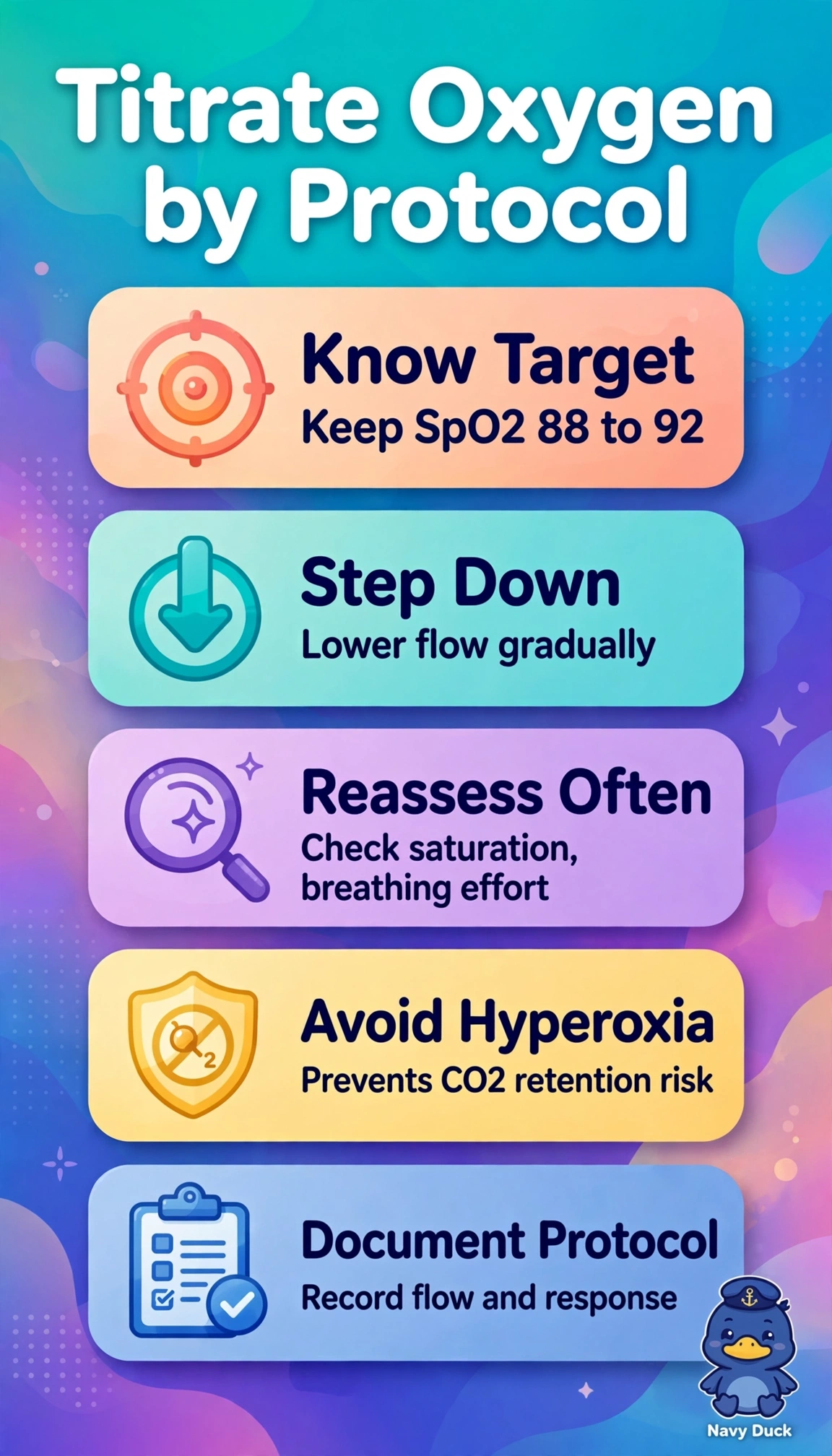
You’re protecting the lungs from too much of a good thing. Stepwise oxygen reduction toward the COPD target window keeps you safe, because precise titration helps prevent CO2 climb and rebound hypoxemia.
Full Explanation
The SpO2 of 95% on 4 L exceeds the protocol target of 88% to 92%. With accessory muscle use resolved and pH 7.36 despite PaCO2 52, the patient is stable for weaning; reducing flow stepwise toward the target with close reassessment corrects hyperoxia while guarding against abrupt hypoxemia. In CO2 retainers, excess oxygen can worsen ventilation-perfusion mismatch, the Haldane effect, and reduced hypoxic drive, raising PaCO2 and acidosis risk. Reducing flow to maintain 94% to 98% with close reassessment misses the stated target: that higher range may suit many acutely ill patients without hypercapnia risk, but permits hyperoxia here. Increasing flow to maintain 88% to 92% has the wrong direction: saturation is already above target, and added oxygen moves it further from goal and may increase CO2 retention and toxicity without benefit. Reducing flow to maintain 88% to 92% but waiting until the next routine shift to recheck lacks close monitoring; active titration in hypercapnia requires observation for rebound hypoxemia, increased work of breathing, drowsiness, or ABG change. Exam caveat: follow the explicit target in the stem rather than defaulting to 94% to 98% or keeping oxygen high for safety after breathing improves. Practical check: use continuous oximetry and reassess respiratory rate, work of breathing, and mentation; repeat oximetry and obtain an ABG if needed after each decrement before further weaning.