
A 64-year-old with moderate COPD, frequent wheeze, and a new tracheostomy with home ventilator dependence completes pulmonary rehabilitation intake. The patient misuses inhalers, avoids activity from fear, and family feels unprepared for suctioning and emergency changes. Which education focus on rehabilitation, COPD, asthma overlap, and tracheostomy-ventilator care best builds safety?
Select an answer to reveal the explanation.
Short Explanation
You're giving this family both a roadmap and a spare tire for daily life. Self-management is the engine here, blending rehab skills with confident trach and ventilator habits.
Full Explanation
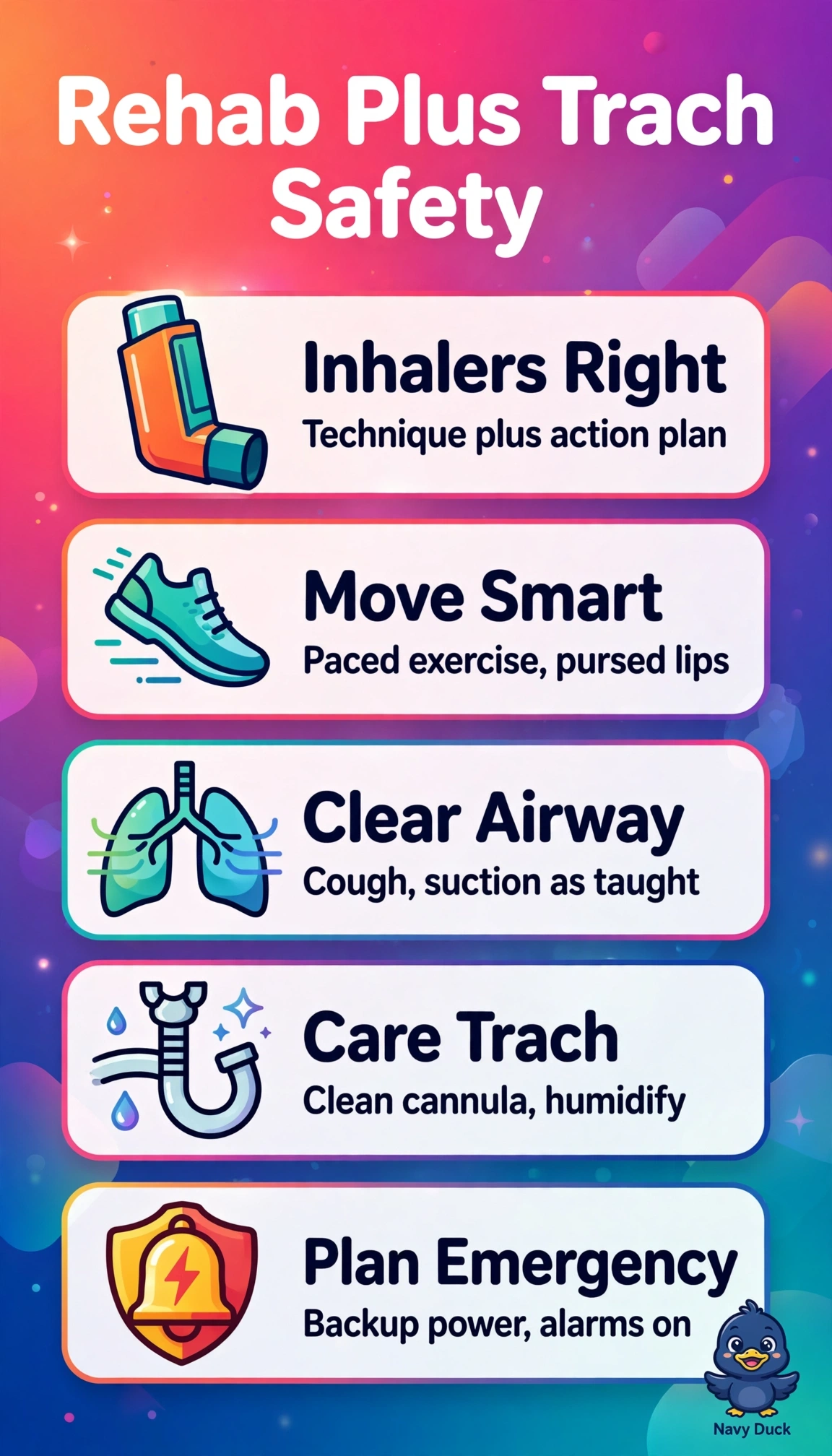
The combined teaching of inhaler technique, action plan, exercise pacing, suctioning, humidification and emergency backup is correct because it addresses all linked safety needs together: technique correction restores airway drug delivery for COPD with asthma overlap and frequent wheeze, a written action plan allows early exacerbation response, graded pacing with monitoring reverses fear-driven avoidance while respecting moderate COPD and ventilator dependence, and family hands-on training in suctioning, humidification, inner cannula care and backup with spare tracheostomy, obturator, suction and power-failure steps prevents plugging, decannulation crisis and ventilator failure. The routine daily tracheostomy care approach with inhalers, plan, exercise and humidification fails by omission of emergency preparedness, critical for new home ventilator dependence where dislodgement, obstruction or power loss needs immediate backup beyond daily care. The action plan plus breathing exercises, suctioning and emergency backup approach fails by omission of inhaler correction, violating drug delivery since a sound plan fails if misuse blocks maintenance and rescue drugs. The inhalers, action plan, supervised exercise, emergency backup and alarm approach fails by omission of secretion management, violating airway patency because tracheostomy dependence needs suctioning and humidification to prevent thick secretions, plugging and infection. Exam caveat: choose comprehensive safety over partially familiar routine when the stem lists multiple deficits. Practical check: teach-back demonstration of inhaler use, suctioning and emergency tube change plus verify written plan, exercise limits, humidification and charged backup.