
In an adult pulmonary clinic a 32-year-old with severe eosinophilic asthma has two exacerbations and one hospitalization in the past year despite high-dose inhaled corticosteroid plus long-acting beta-agonist, correct technique, and adherence, with blood eosinophils 420 cells per microliter and nasal polyps. A preterm infant and a cystic fibrosis teen are managed separately. Which recommendation best addresses surfactant, asthma biologics, and CFTR modulators for this asthma patient?
Select an answer to reveal the explanation.
Short Explanation
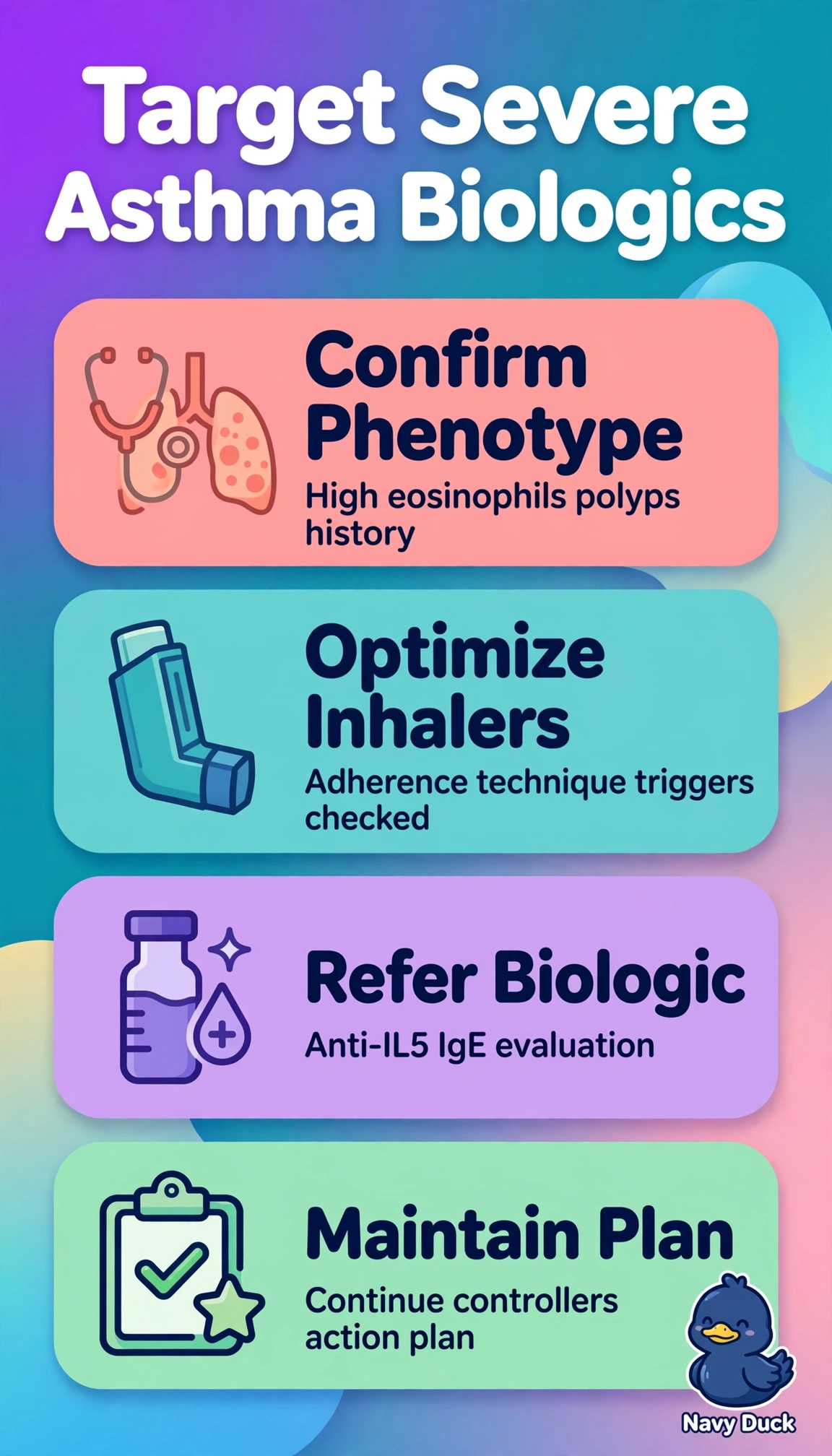
You’re seeing type-2 inflammation that the current inhalers haven’t controlled. Adding targeted biologics while keeping your inhaled therapy in place can reduce exacerbations.
Full Explanation
Referral for anti-interleukin-5 or anti-IgE biologic evaluation is appropriate for severe eosinophilic asthma with repeated exacerbations and hospitalization despite adherent high-dose inhaled corticosteroid plus long-acting beta-agonist therapy and correct technique. Blood eosinophils of 420 cells per microliter and nasal polyps support T2-high disease, in which targeted biologic therapy can reduce exacerbations and hospitalization; continue inhaled therapy and exacerbation planning. Adding tiotropium is guideline-supported to improve control and lung function in uncontrolled asthma, but it does not target the eosinophilic mechanism that predicts biologic benefit and relates to polyps. Continuing the same inhaled regimen with trigger avoidance may suit stable asthma, but it omits escalation despite recent exacerbations and hospitalization, which signal high future risk. Daily maintenance oral corticosteroids can control eosinophilic inflammation, but the steroid-sparing principle favors biologics first because of cumulative metabolic, bone, adrenal, and infectious toxicity; calcium and vitamin D do not remove those risks. An exam caveat is to keep the cohorts distinct: surfactant is for preterm distress and CFTR modulators are for cystic fibrosis, so neither applies to this adult. A practical check during referral is to verify repeat eosinophils, IgE and sensitization, FeNO, adherence, technique, immunizations, and polyp therapy.