
A 55-year-old patient with ARDS on volume assist-control ventilation at 450 mL, rate 18, PEEP 10 cmH2O, and flow 60 L/min is agitated, with double-triggered breaths, rising peak pressures, and ventilator rate exceeding set rate on the monitor. Sedation is light, pH is 7.32, and there is no circuit leak or auto-PEEP on exam. Which ventilator adjustment best corrects this patient-ventilator dyssynchrony?
Select an answer to reveal the explanation.
Short Explanation
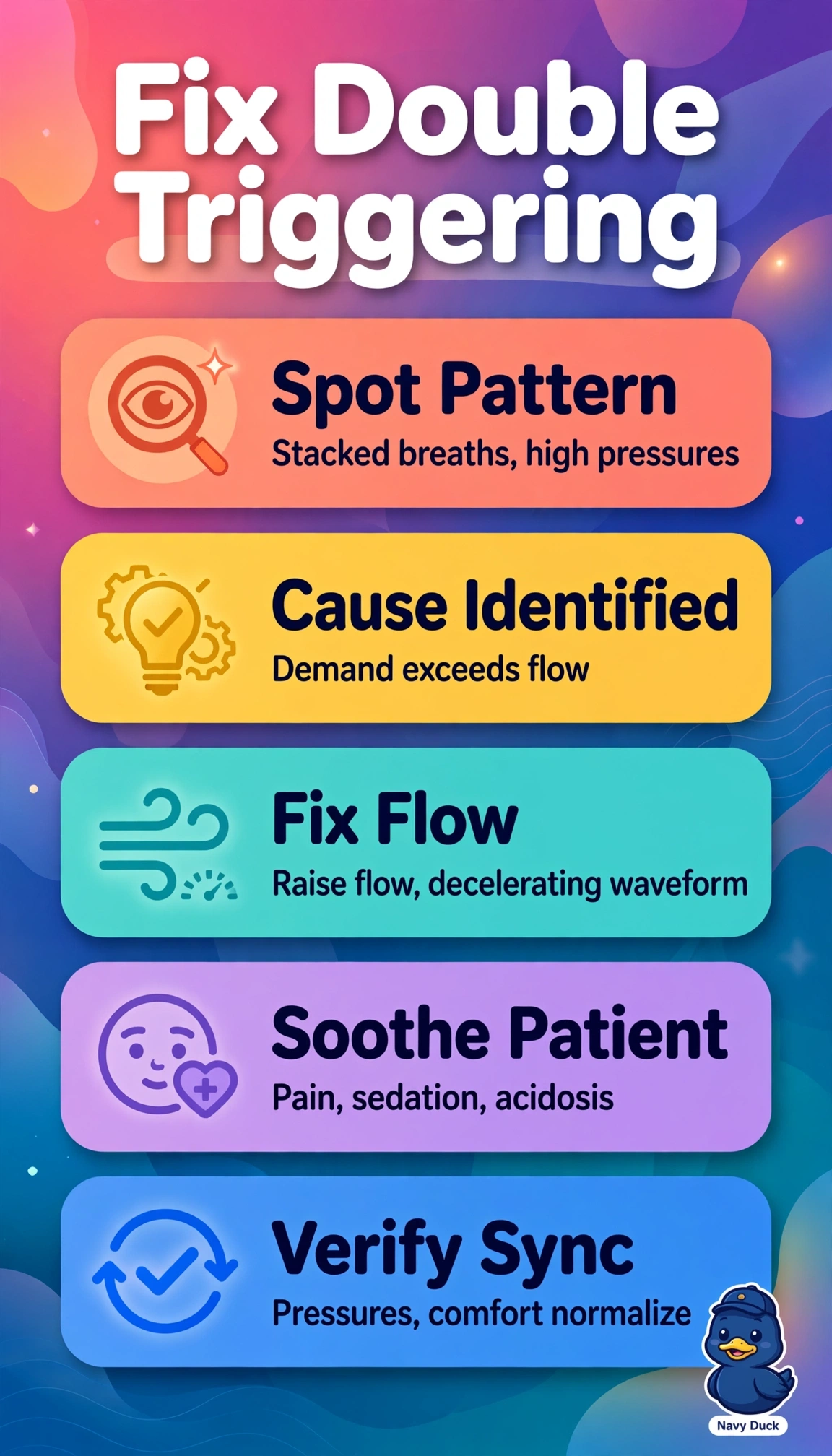
Double-triggering suggests that your patient’s inspiratory demand exceeds the ventilator’s delivered flow, and you’ve recognized the mismatch. Increasing flow or using decelerating flow can reduce breath stacking; assess whether deeper sedation or assistance is needed.
Full Explanation
In volume assist-control, fixed flow may not meet inspiratory demand, so the patient continues to inspire and triggers a second breath, stacking volume and raising pressures. Increasing inspiratory flow or switching to decelerating flow better matches demand; assess whether deeper sedation or assistance is needed. Decreasing tidal volume and adding an inspiratory pause target air trapping, not flow hunger, and may worsen demand mismatch and agitation while prolonging inspiratory time. Raising the set rate and making the trigger more sensitive can add breaths without correcting inadequate flow per breath, increasing stacking and the risk of auto-PEEP. Raising PEEP and FiO2 addresses oxygenation rather than the dyssynchrony mechanism; higher PEEP may increase discomfort and drive while leaving flow starvation unresolved. An exam caveat is to inspect waveforms for double-triggering versus auto-triggering from a leak or cardiac oscillation before changing trigger sensitivity. In practice, make one change at a time and check for waveform normalization, falling peak pressure, stable exhaled volume, and improved comfort.