
In a surgical ICU a mechanically ventilated adult with agitation and ventilator dyssynchrony receives continuous midazolam and fentanyl without a pain assessment, daily interruption, or train-of-four monitoring, now with prolonged somnolence, hypotension, and weak cough after vecuronium was added for shivering. The team considers prolonged blockade and oversedation risks. Which recommendation best addresses sedatives, analgesics, reversal agents, and neuromuscular blockers for this patient?
Select an answer to reveal the explanation.
Short Explanation
Comfort and safety beat deeper sedation every time. You're matching drugs to measured pain and blockade, so protocolized monitoring lets you reverse cleanly and wean faster.
Full Explanation
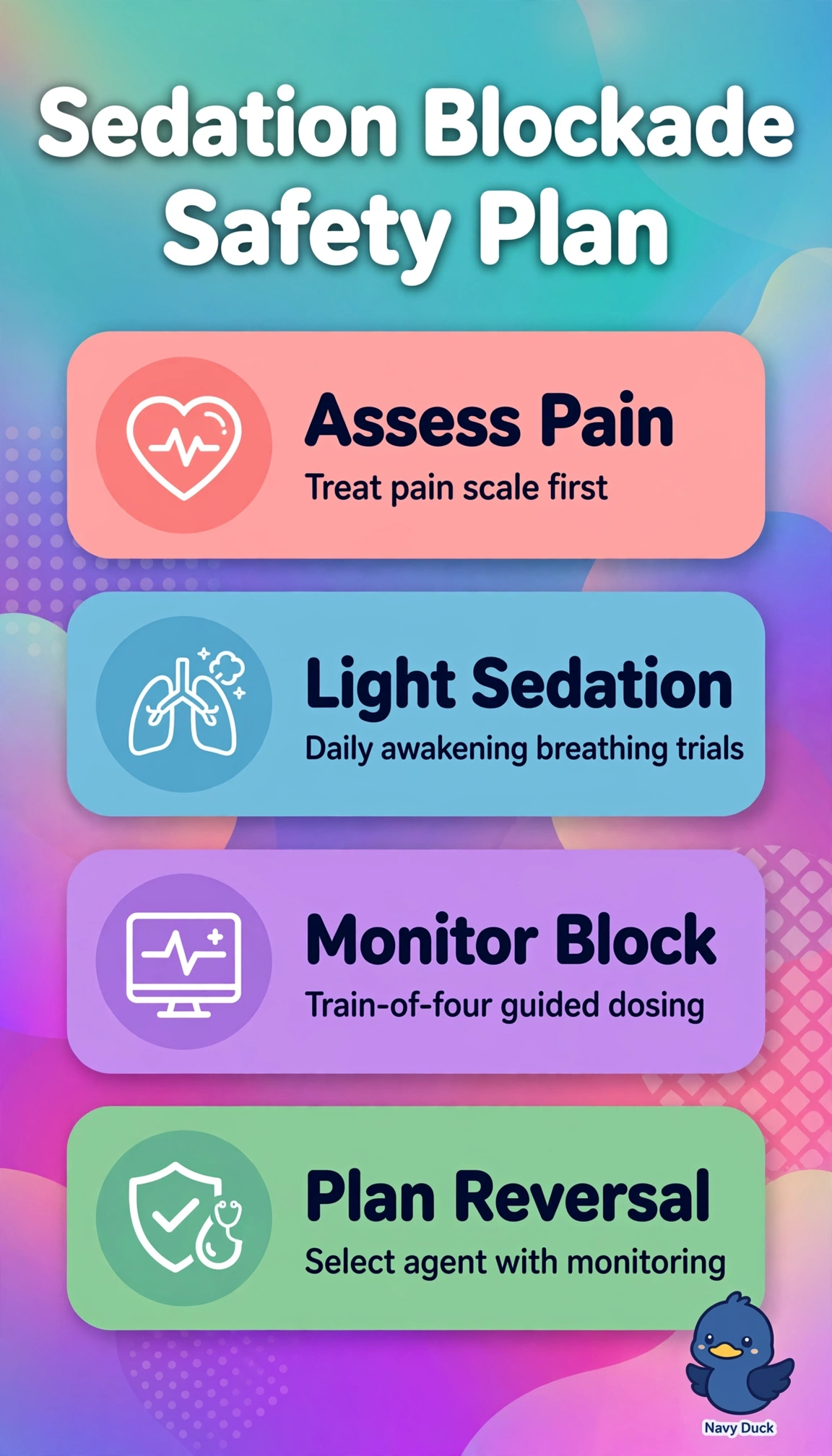
The correct recommendation is right because prolonged somnolence, hypotension and weak cough after unassessed midazolam-fentanyl plus vecuronium for shivering reflect combined oversedation, opioid accumulation and residual blockade requiring pain-first assessment, awakening, objective blockade monitoring and planned recovery. Validated pain assessment prevents treating pain with more sedation, daily interruption with a light-sedation protocol limits benzodiazepine-opioid accumulation, shortens ventilation and uncovers weaning readiness, train-of-four monitoring distinguishes residual paralysis from sedation as the cause of weak cough and guides stopping or titrating blocker, and neostigmine-based or sugammadex-based reversal planning restores strength and airway protection. Continuing vecuronium for synchrony despite assessment, interruption and monitoring fails on de-escalation because persisting blockade without a stop and reversal plan prolongs weakness and obscures awakening in a patient whose indication was transient shivering. Light-sedation protocol with pain assessment, monitoring and reversal but without daily interruption fails on accumulation because continuous midazolam-fentanyl still builds up and sustains somnolence and hypotension. Sedation interruption with propofol titration, monitoring and reversal but without pain assessment fails on etiology because agitation-dyssynchrony often signals untreated pain that sedation alone masks. Exam caveat is to match reversal to blocker and train-of-four depth and avoid routine flumazenil or abrupt opioid stop with withdrawal risk. Practical check is to chart pain score, sedation target, train-of-four count and blocker stop plan daily and confirm stronger cough and lighter alertness.