
A former 27-week infant at 37 weeks postmenstrual age has bronchopulmonary dysplasia with crackles, tachypnea, and needs 0.5 L nasal cannula to keep SpO2 90-95%. Chest film shows hazy hyperinflation, feeds are advancing, and the infant is off ventilation on caffeine. Parents ask about long-term breathing care. Which management strategy for chronic lung disease of prematurity best supports recovery?
Select an answer to reveal the explanation.
Short Explanation
You're coaching tiny, scarred lungs toward steady growth, not sprinting. Gentleness rules here, like training a seedling with just enough sun and water to thrive.
Full Explanation
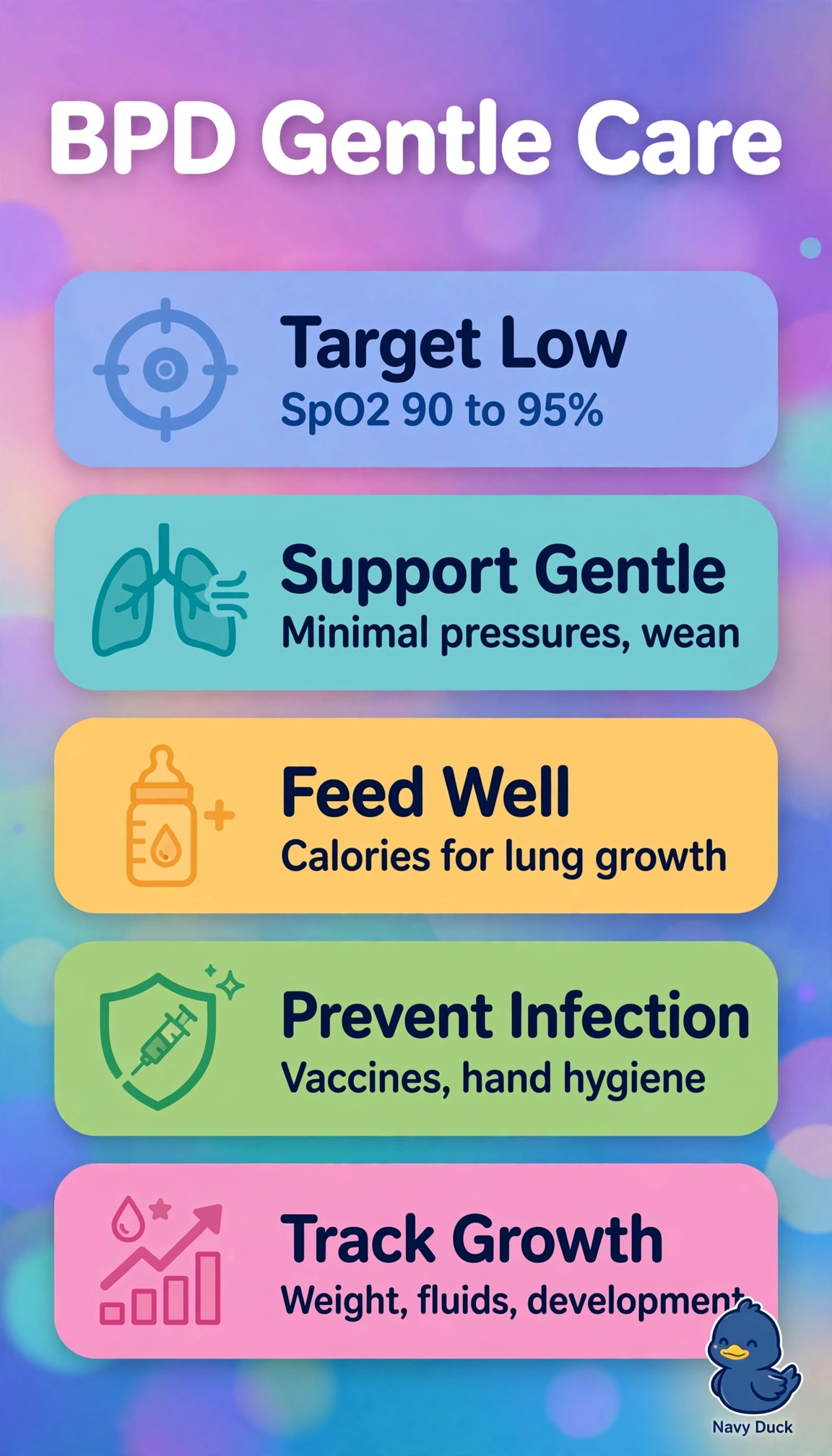
Stable bronchopulmonary dysplasia at 37 weeks postmenstrual age with crackles, tachypnea, hazy hyperinflation and 0.5 L need to keep SpO2 90-95% off ventilation reflects impaired alveolar growth that recovers best when further injury is minimized while growth is supported, so low targeted oxygen, continued gentle support, optimized nutrition with judicious fluids, timely vaccines and close growth and respiratory monitoring correctly balance lung healing and development. The strategy targeting SpO2 96-99% fails by oxygen toxicity because sustained hyperoxia worsens oxidative injury, airway remodeling, retinopathy risk and atelectasis without improving alveolarization. The strategy deferring vaccines until breathing stabilizes fails by prevention because chronic lung disease greatly raises severe viral illness risk and inactivated vaccines stay indicated on schedule for stable disease. The strategy weaning rapidly to air to build strength fails by physiology because removing still-needed support raises work of breathing, oxygen use, feeding difficulty and pulmonary hypertension with growth failure. Exam caveat is to distinguish stable chronic disease from acute decompensation or established pulmonary hypertension where targets and drug decisions differ. Practical check is to verify flow, saturation limits, calories, weight gain, fluid balance, vaccine record and pulmonary and nutrition follow-up.