
A 4-year-old with known moderate persistent asthma presents to the emergency department with two days of viral upper respiratory symptoms, now with expiratory wheezing, barking cough, nasal flaring, SpO2 91% on room air, and poor response to home albuterol. Chest radiograph shows hyperinflation without focal consolidation. Which pediatric asthma and bronchiolitis management decision best guides acute respiratory care?
Select an answer to reveal the explanation.
Short Explanation
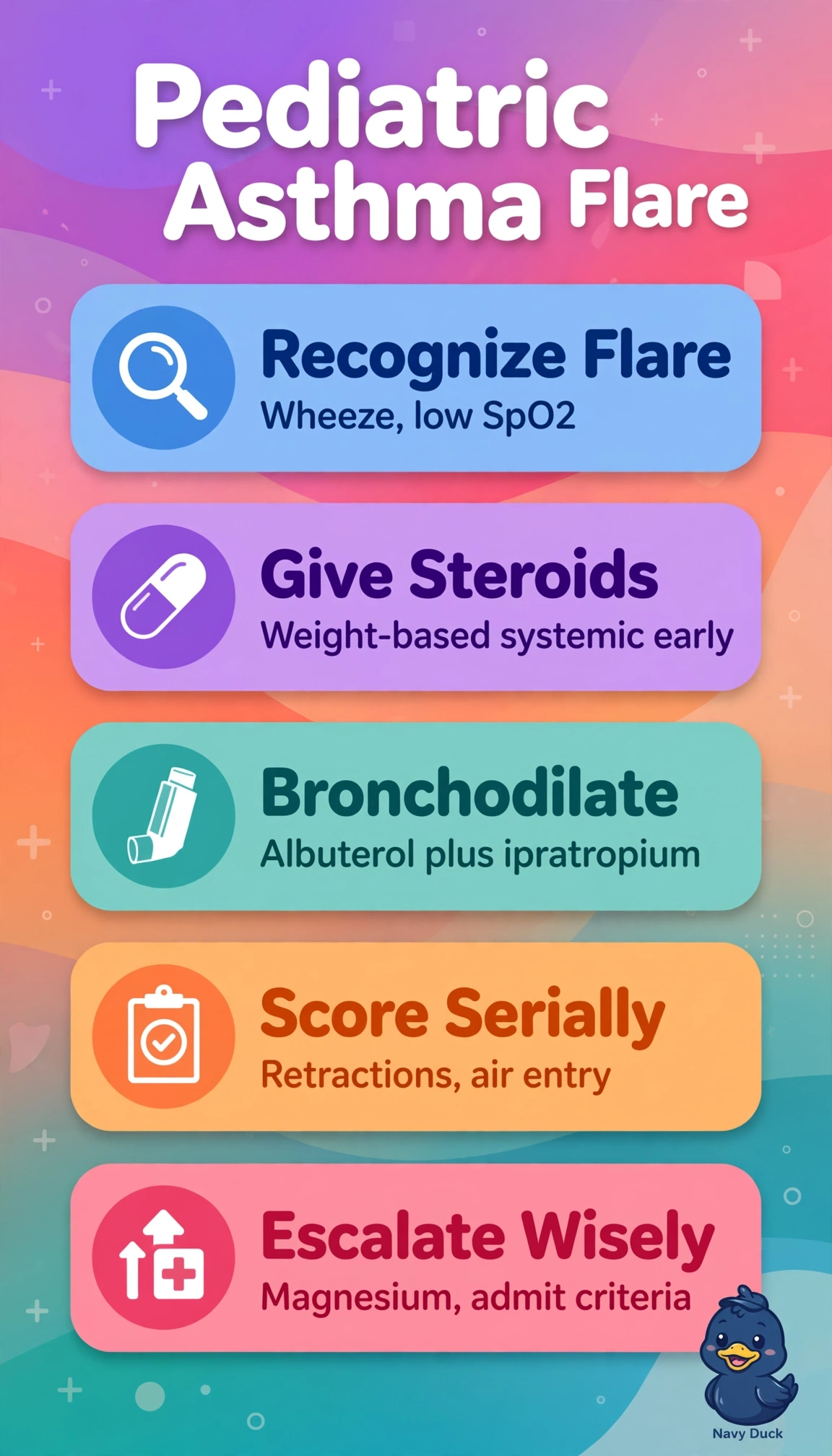
Asthma flares love steroids plus frequent bronchodilators, and you caught that pattern fast. Serial scoring with timely systemic steroids shortens this kind of exacerbation.
Full Explanation
This 4-year-old has viral-triggered moderate-to-severe asthma exacerbation evidenced by known moderate persistent asthma with expiratory wheezing, SpO2 91% on room air, nasal flaring, poor home albuterol response, and hyperinflation without consolidation indicating lower-airway obstruction with air-trapping. Weight-based systemic corticosteroids with repeated albuterol-ipratropium and asthma-score monitoring is correct because steroids reduce airway inflammation to prevent progression, albuterol provides beta2 bronchodilation while ipratropium adds anticholinergic bronchodilation in poorly responsive exacerbation, with oxygen and scoring guiding escalation and disposition. The croup-focused strategy with dexamethasone plus racemic epinephrine fails because it targets subglottic edema suggested only by barking cough while neglecting dominant lower-airway asthma with history, expiratory wheeze, hypoxia, and bronchodilator need. The bronchiolitis supportive strategy with oxygen, suctioning, and hydration while withholding steroids fails because that suits wheezing infants with small-airway viral disease, whereas recurrent asthma at age four requires anti-inflammatory therapy and withholding steroids risks deterioration. The outpatient step-up strategy with increased inhaled corticosteroids and as-needed albuterol with next-day follow-up fails because it suits mild responsive exacerbation, not hypoxia with increased work and poor response requiring emergency stabilization. Exam caveat is to avoid anchoring on barking cough or viral symptoms and integrate age, history, wheeze pattern, oximetry, therapy response, and imaging. Practical check is to reassess rate, retractions, wheeze, SpO2, and score after each cycle and steroids while confirming oxygen and defining magnesium, escalation, or admission thresholds.