
In a delivery room a term infant is apneic and limp after drying, warming, and stimulation, with heart rate 80 beats per minute, poor tone, and no cry at 60 seconds despite a clear airway and proper positioning. The team has pulse oximetry and blended oxygen available and a skilled resuscitation leader present. Which neonatal resuscitation action best follows current resuscitation principles for this infant?
Select an answer to reveal the explanation.
Short Explanation
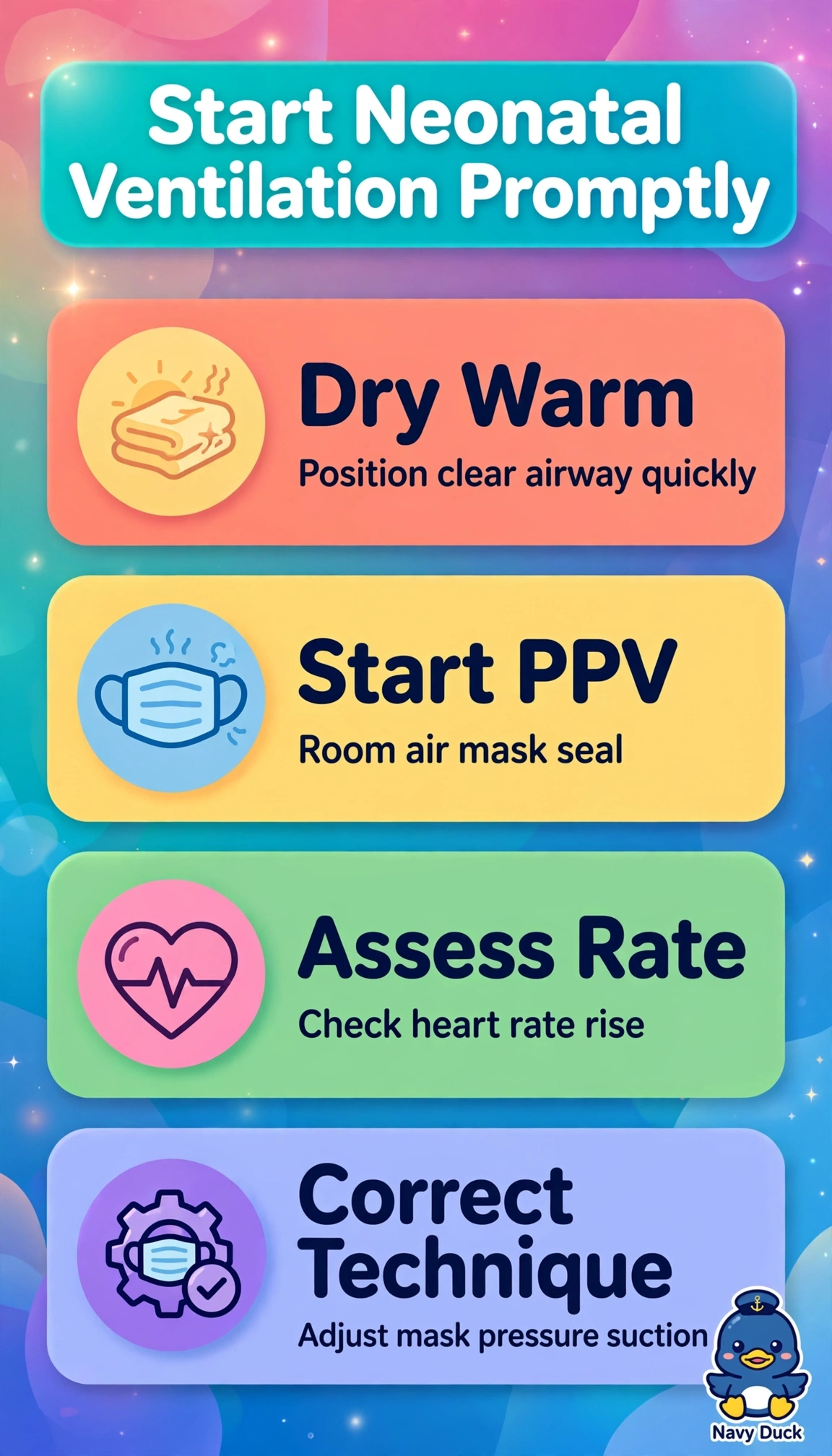
You start with effective ventilation in room air because this apneic infant needs lung inflation to restore oxygenation and raise the heart rate. Prompt ventilation often reverses newborn bradycardia; then you reassess the response.
Full Explanation
Effective mask positive-pressure ventilation with room air and prompt reassessment is appropriate because this term infant remains apneic with a heart rate of 80 after drying, warming, positioning, airway clearance, and stimulation. Lung aeration, rather than compressions, is the key initial treatment for hypoxic bradycardia. Starting with room air, while using the available blender and pulse oximetry to guide oxygen adjustments toward age-specific saturation targets, also avoids unnecessary hyperoxia. Positive-pressure ventilation with 100% oxygen is not the preferred start for a term infant: routine high oxygen can increase oxidative injury without benefit, and oxygen should be titrated if hypoxemia persists. Adding immediate chest compressions because the heart rate is below 100 uses the wrong threshold and sequence; compressions are reserved for a heart rate below 60 after at least 30 seconds of demonstrably effective ventilation. Continuous positive airway pressure is also unsuitable while the infant is apneic and limp: it can splint airways in a spontaneously breathing infant but does not provide tidal inflations when respiratory drive is absent. An exam caveat is to distinguish the heart-rate threshold below 100 that prompts ventilation from the threshold below 60 that prompts compressions after effective ventilation. In practice, check neutral head position, a tight mask seal, visible chest rise, and a rising heart rate within 15 to 30 seconds; if ventilation is ineffective, correct mask position and seal, open the mouth, clear the airway as needed, or adjust pressure before proceeding.