
An adult volume-controlled ventilated patient in the ICU suddenly triggers a high peak pressure alarm with low exhaled tidal volume. The circuit is newly assembled, the patient is biting the tube, and secretions are present. Which ventilator circuit troubleshooting step best resolves this high-pressure low-volume alarm?
Select an answer to reveal the explanation.
Short Explanation
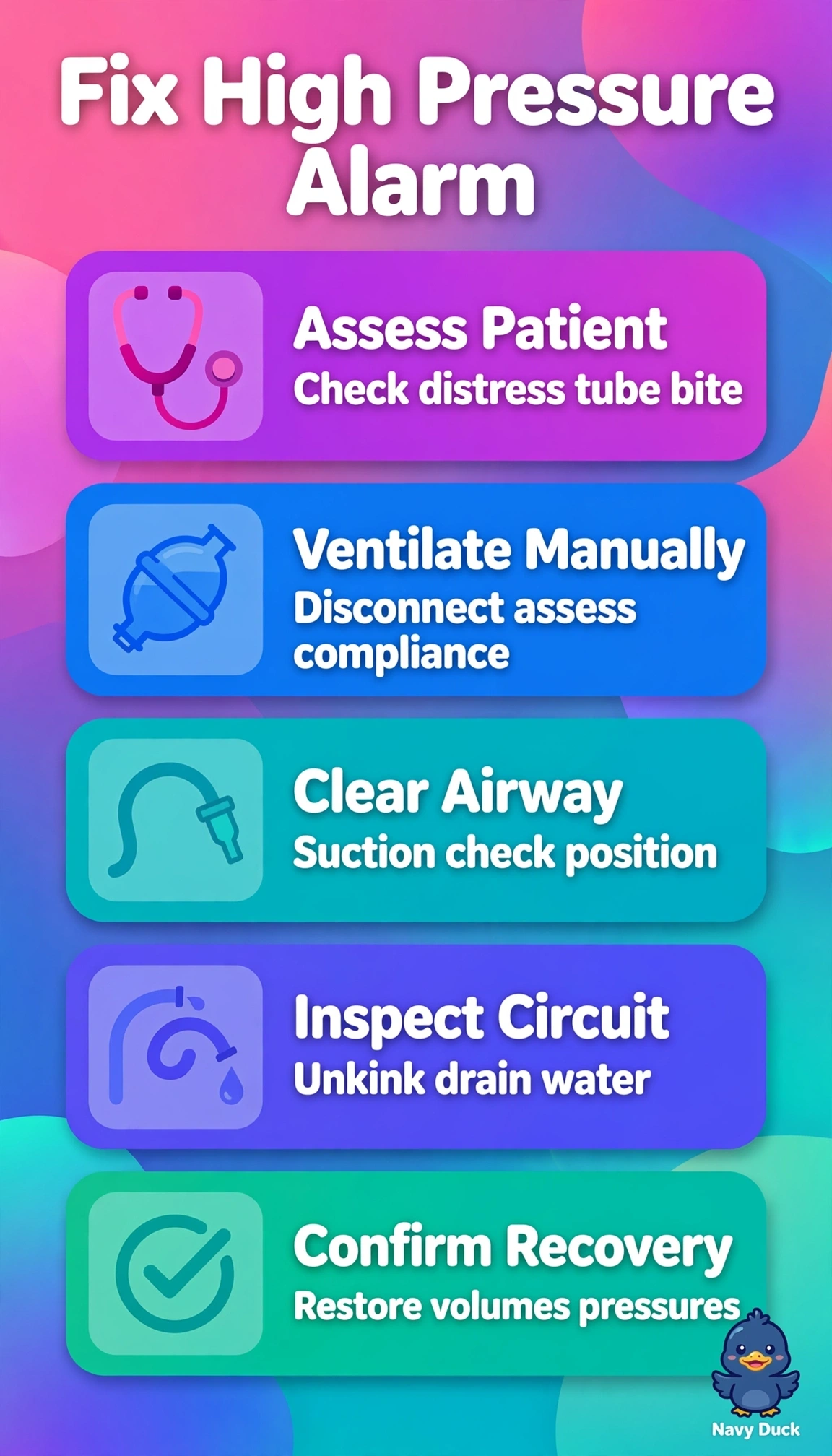
You can start with a calm, systematic patency check before changing settings. Clearing the obstruction—such as secretions or a kink—addresses the likely cause of the alarm.
Full Explanation
High peak pressure with low exhaled volume during volume-controlled ventilation suggests increased resistance or acute airway obstruction. Here, biting the tube and secretions point to obstruction, while a newly assembled circuit may have a kink, misconnection, or tube malposition. Briefly disconnecting and manually ventilating maintains oxygenation while you assess resistance, clear secretions, unkink tubing, and check tube patency and position. Auscultating for bronchospasm and administering a bronchodilator may help when bronchospasm raises airway resistance, but it will not relieve a mechanical blockage from biting, mucus, or kinked tubing. Verifying settings and recalibrating the flow sensor addresses delivery or measurement errors, not the high resistance suggested by this presentation, so it leaves the obstruction untreated. Draining condensate and checking humidifier level can address resistance from water in the circuit, but does not clear secretions or relieve tube compression. An exam caveat: high peak pressure with normal plateau pressure suggests increased resistance; elevations in both may indicate reduced compliance, such as from pneumothorax, edema, or mainstem intubation. As a practical check, confirm that a suction catheter passes freely, observe chest rise and end-tidal CO2 during manual ventilation, then reconnect and confirm that exhaled volume returns and the alarm resolves.