
In the emergency department a 3-kg neonate remains apneic and bradycardic. The team assembles a T-piece resuscitator set to 20/5 cm H2O with 10 L/min gas flow, but the manometer shows no PEEP, the chest does not rise, and the mask seal appears tight. Which resuscitator troubleshooting action best restores T-piece function?
Select an answer to reveal the explanation.
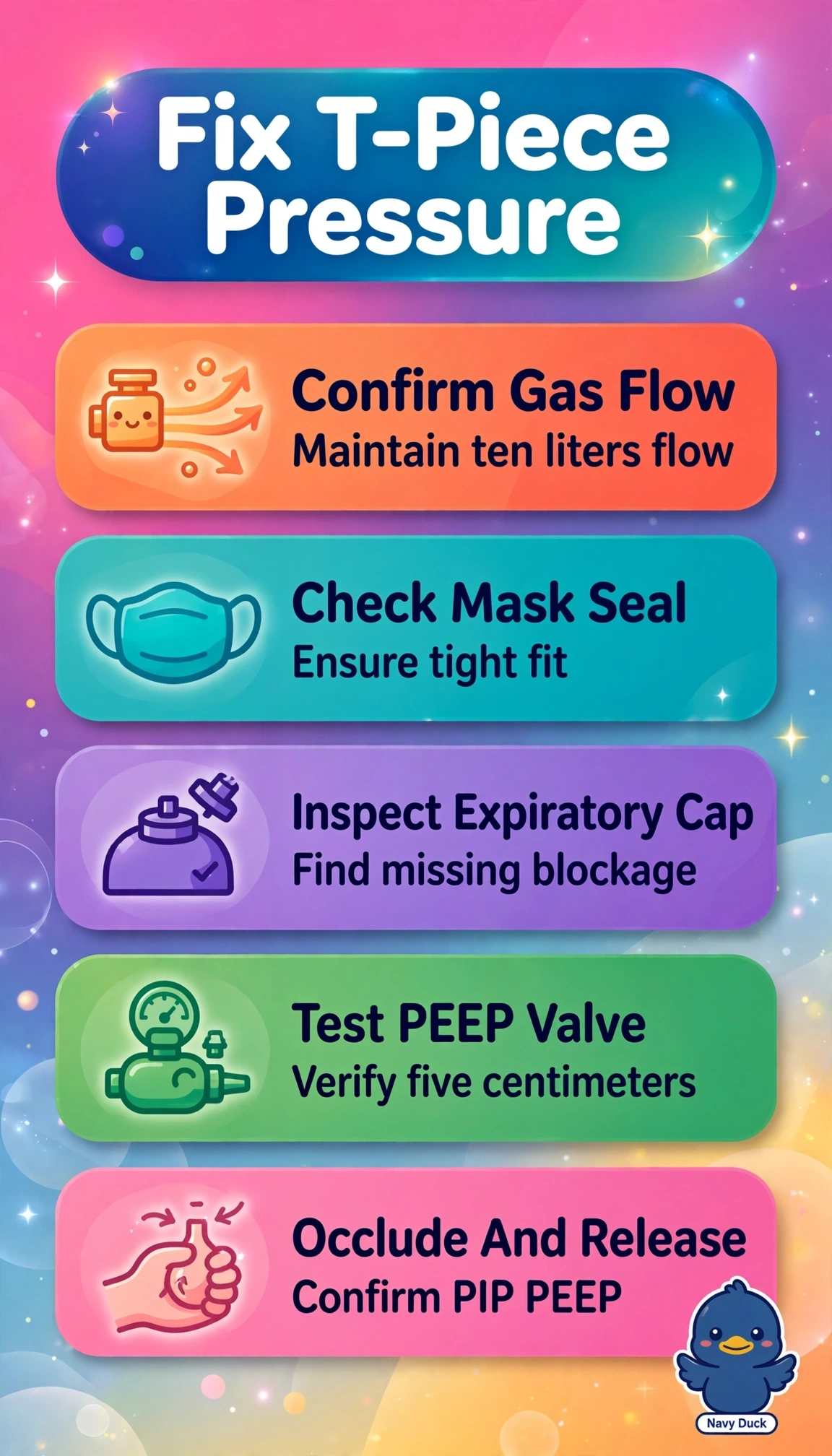
Short Explanation
You're losing PEEP despite good flow and seal, so the leak is at the back end. The T-piece lives or dies by its valve, so check that cap first. No cap, no PEEP.
Full Explanation
The T-piece requires continuous flow and intact expiratory resistance to generate PIP and PEEP, so zero PEEP despite 20/5 setting, 10 L/min which exceeds neonatal demand, and tight seal points directly to loss, misassembly or occlusion of expiratory cap and PEEP valve that normally provides back-pressure. Without that resistance pressure vents to atmosphere, manometer stays flat and no inflation reaches the airway despite good interface. Repositioning airway and reseating mask is first-line for obstruction or perimask leak but fails conceptually here because seal is already tight and airway maneuvers cannot replace missing expiratory resistance in the circuit. Increasing flow and raising PIP helps when flow is insufficient or mask leak bleeds pressure, but fails here because flow is already adequate and extra flow through an open cap cannot recreate PEEP without benefit. Switching to a self-inflating bag with PEEP valve is a valid backup for ventilation failure but fails the stated task because it replaces rather than restores T-piece function and leaves the correctable assembly fault unaddressed during bradycardia. Exam caveat is to separate absent PEEP with good seal indicating device-circuit failure from present PEEP without chest rise indicating airway or lung compliance failure. Practical check is to occlude the outlet, adjust the PEEP cap to observe manometer response, confirm diaphragm seated, then reapply mask at 20/5 to confirm rise.