
A 68-year-old patient scheduled for upper abdominal laparotomy has a 40 pack-year history, productive cough, and baseline SpO2 93% on room air, with atelectasis on chest radiograph and weak cough effort. Surgery is in two days and the surgeon requests respiratory optimization. Which pre- and post-operative respiratory care plan best prevents complications?
Select an answer to reveal the explanation.
Short Explanation
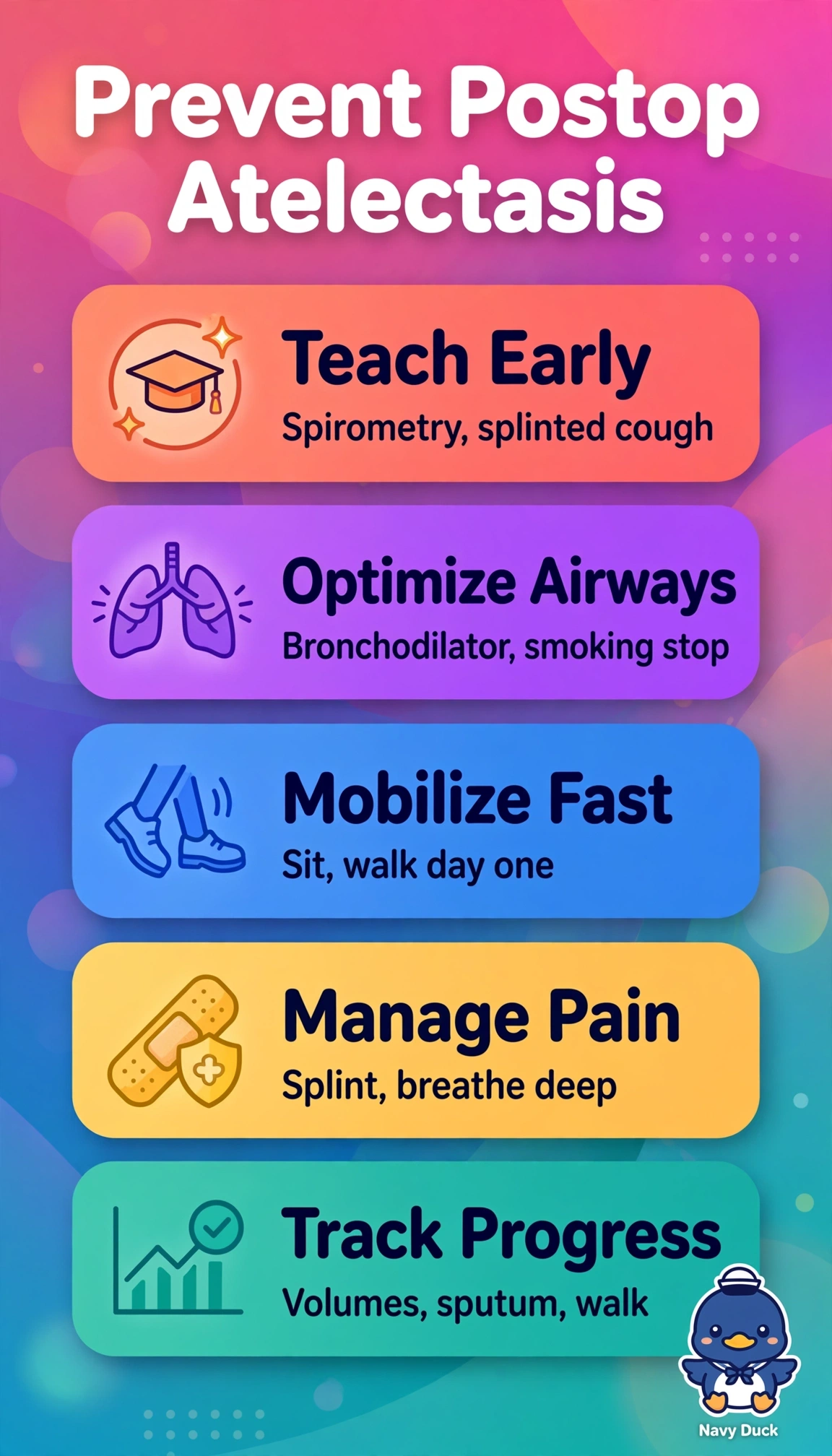
Starting strong before surgery pays off, and you are setting this patient up for success. Pairing preoperative training with bronchodilators and early walking tackles atelectasis from both ends.
Full Explanation
The correct plan succeeds because it uses the two-day preoperative window to teach incentive spirometry and splinted coughing before pain impairs learning, adds bronchodilator therapy for 40 pack-year history with productive cough and atelectasis, and continues with early postoperative mobilization to counter the high atelectasis risk after upper abdominal laparotomy in a 68-year-old with SpO2 93% and weak cough. Starting the same spirometry, bronchodilator and mobilization bundle only after surgery fails by timing because atelectasis is already present and preoperative practice improves retention, inspiratory volumes and secretion clearance before anesthesia depresses ventilation. Providing preoperative training with cessation counseling and mobilization but without bronchodilators fails by airway management because hyperreactivity and retained secretions need bronchodilation to improve expiratory flow and make spirometry effective, and brief counseling cannot relieve acute obstruction in two days. Teaching spirometry with bronchodilators and mobilization but using vigorous unsplinted coughing fails by incisional protection because upper abdominal pain inhibits deep inspiration and unsupported forceful coughing worsens pain, reduces compliance and raises dehiscence concern in weak patients. Exam caveat is to favor combined pre-plus-postoperative bundles over excellent single-phase care when baseline pulmonary compromise and a usable optimization interval coexist. Practical check is to confirm teach-back of splinted technique preoperatively, reassess wheeze, secretion volume and SpO2 after bronchodilator, and track mobilization distance with oxygen recovery postoperatively.