
In a level III NICU a 27-week preterm infant at 36 weeks postmenstrual age remains oxygen-dependent on low-flow nasal cannula, shows poor weight gain, increased work of breathing, and chest radiograph with hazy streaky changes after prolonged ventilation and sepsis. Fluids are restricted and feeds are fortified. Which management strategy best addresses chronic lung disease of prematurity for this infant?
Select an answer to reveal the explanation.
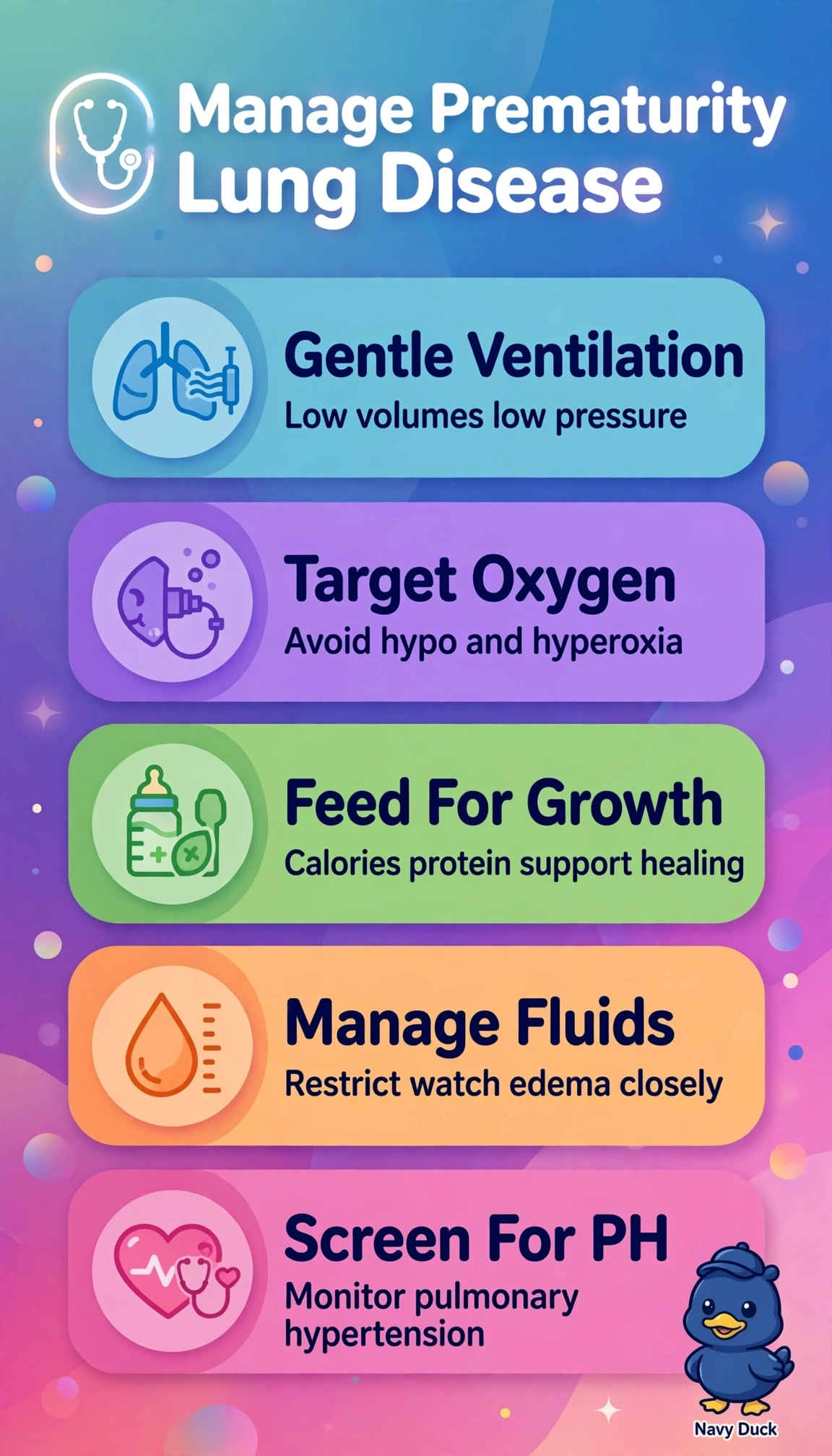
Short Explanation
Slow and steady wins with fragile lungs here. You're protecting healing airways while fueling growth, so balanced oxygenation prevents both lung injury and pulmonary hypertension.
Full Explanation
The clinical picture meets bronchopulmonary dysplasia with oxygen dependence at 36 weeks postmenstrual age in a former 27-week infant with poor growth, increased work of breathing and hazy streaky radiograph after prolonged ventilation and sepsis, so optimal care combines lung-protective ventilation to limit volutrauma, targeted saturation goals to prevent hypoxic vascular remodeling and hyperoxic injury, energy- and protein-enriched fortified nutrition to meet high metabolic demands and support alveolar growth, fluid restriction to reduce interstitial edema and improve compliance, and active screening for pulmonary hypertension by examination and echocardiography because chronic hypoxia and dysmorphic vasculature predispose to elevated pressures. The liberal-fluids-for-growth strategy fails on fluid physiology because added volume worsens edema, compliance and oxygen need despite otherwise appropriate support. The unfortified-breast-milk-feeds strategy fails on nutrition physiology because human milk alone without fortification lacks density for catch-up growth and lung repair in chronic oxygen-dependent disease. The routine eye-and-hearing-surveillance strategy fails on monitoring priority because although retinopathy and hearing screening are mandatory preterm care, they do not detect pulmonary vascular disease that determines outcome in established chronic lung disease. For examinations, persistent need at 36 weeks with characteristic imaging distinguishes chronic disease from acute distress or new sepsis, so do not choose general preterm surveillance when vascular assessment is required. In practice confirm saturation targets, daily weight, fortification, fluid balance and obtain echocardiography when oxygen dependence or poor growth persists.