
In a busy emergency department a sputum trap from a tuberculosis isolation patient cracks and leaks purulent secretions onto the bedside table, and the nurse asks for help while two intubated patients wait nearby. The spill kit, red bags, disinfectant and puncture-proof sharps box are stocked. Which biohazard containment action best handles leaking respiratory secretions safely?
Select an answer to reveal the explanation.
Short Explanation
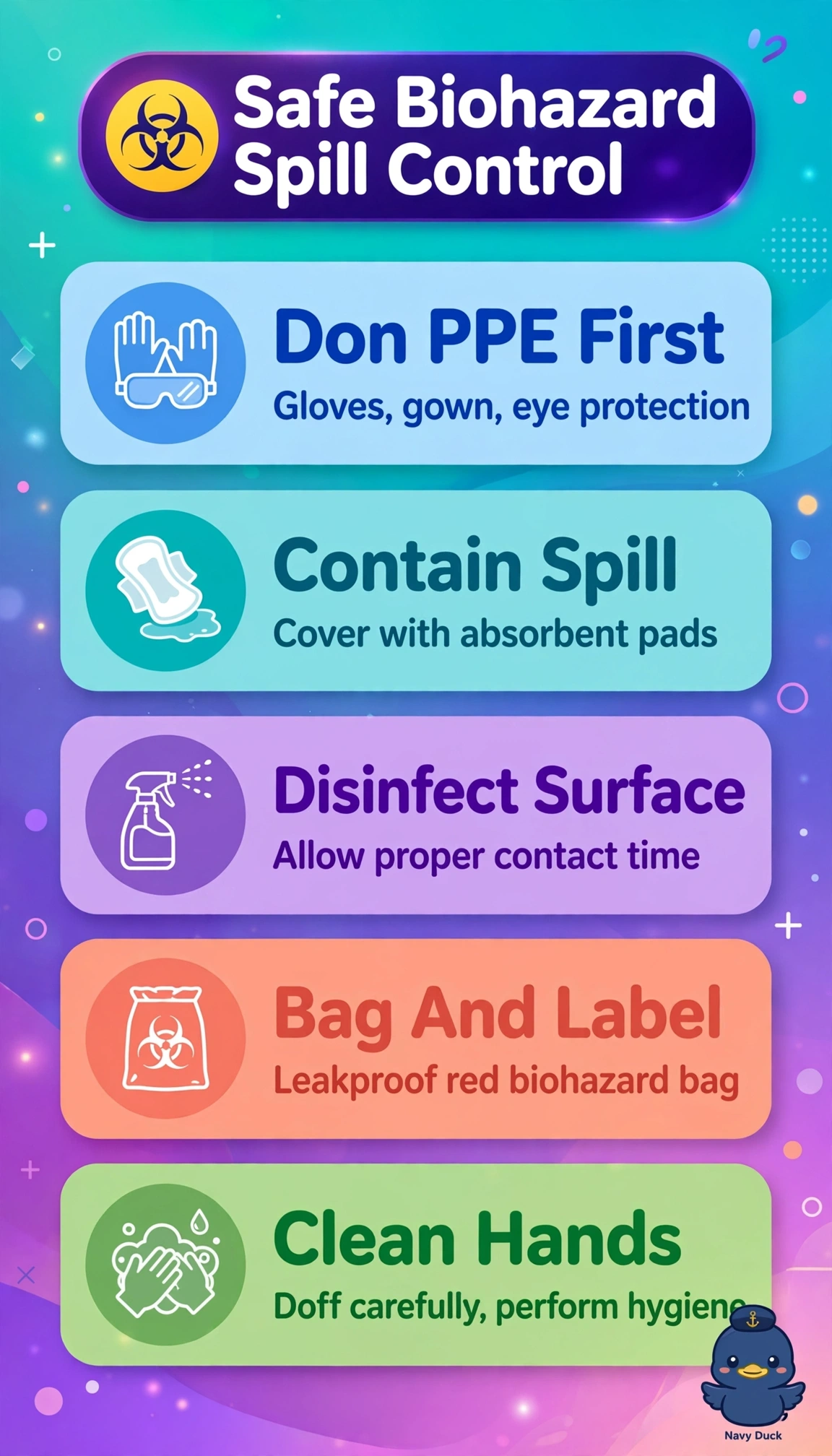
You keep everyone safe by suiting up before you clean up. Gloves, absorbent containment plus labeled disposal breaks the chain, and solid containment beats a quick wipe every time.
Full Explanation
The correct action follows standard infectious spill management for purulent tuberculosis secretions where contact and airborne risk persist on surfaces: gloves and gown prevent contamination of skin and clothing before contact, absorbent pads provide immediate source containment and stop spread from the cracked trap across the bedside table, disinfectant with adequate contact time is essential to inactivate mycobacteria that wiping alone cannot eliminate, and sealing debris in a labeled biohazard bag ensures correct segregation, transport and treatment when red bags are stocked. Placing soft spill waste into the puncture-proof sharps box fails on waste-segregation principle because that rigid container is reserved for needles and glass to prevent sharps injury, so bulky pads waste capacity, risk overfilling and violate medical-waste policy. Containing and bagging without disinfecting fails on decontamination principle because physical removal is not microbial kill, leaving viable pathogens on a high-touch table to threaten staff and nearby intubated patients. Delaying to check ventilators first fails on exposure-control and prioritization principle because an actively leaking tuberculosis spill needs prompt containment and cannot be left to spread or aerosolize while routine tasks are done, especially with help requested. Exam caveat: busy-setting distractors often test whether stocked equipment tempts use of the wrong waste stream or deferred care, so match soft infectious waste to labeled biohazard bags with immediate contain-plus-disinfect. Practical check: confirm the bag is sealed and labeled, the surface stays wet for the full contact time, PPE is doffed without self-contamination followed by hand hygiene, and the trap source is secured against further leak.