
An adult with pneumonia is on heated high-flow nasal cannula at 50 L/min, FiO2 0.60 with target 37 C. The circuit shows heavy rainout, chamber is overfilled, temperature reads 31 C and the low-temperature alarm sounds. Tubing drapes below the bed with condensate draining toward the patient. Which troubleshooting step for heated high-flow humidification best restores warm humidification?
Select an answer to reveal the explanation.
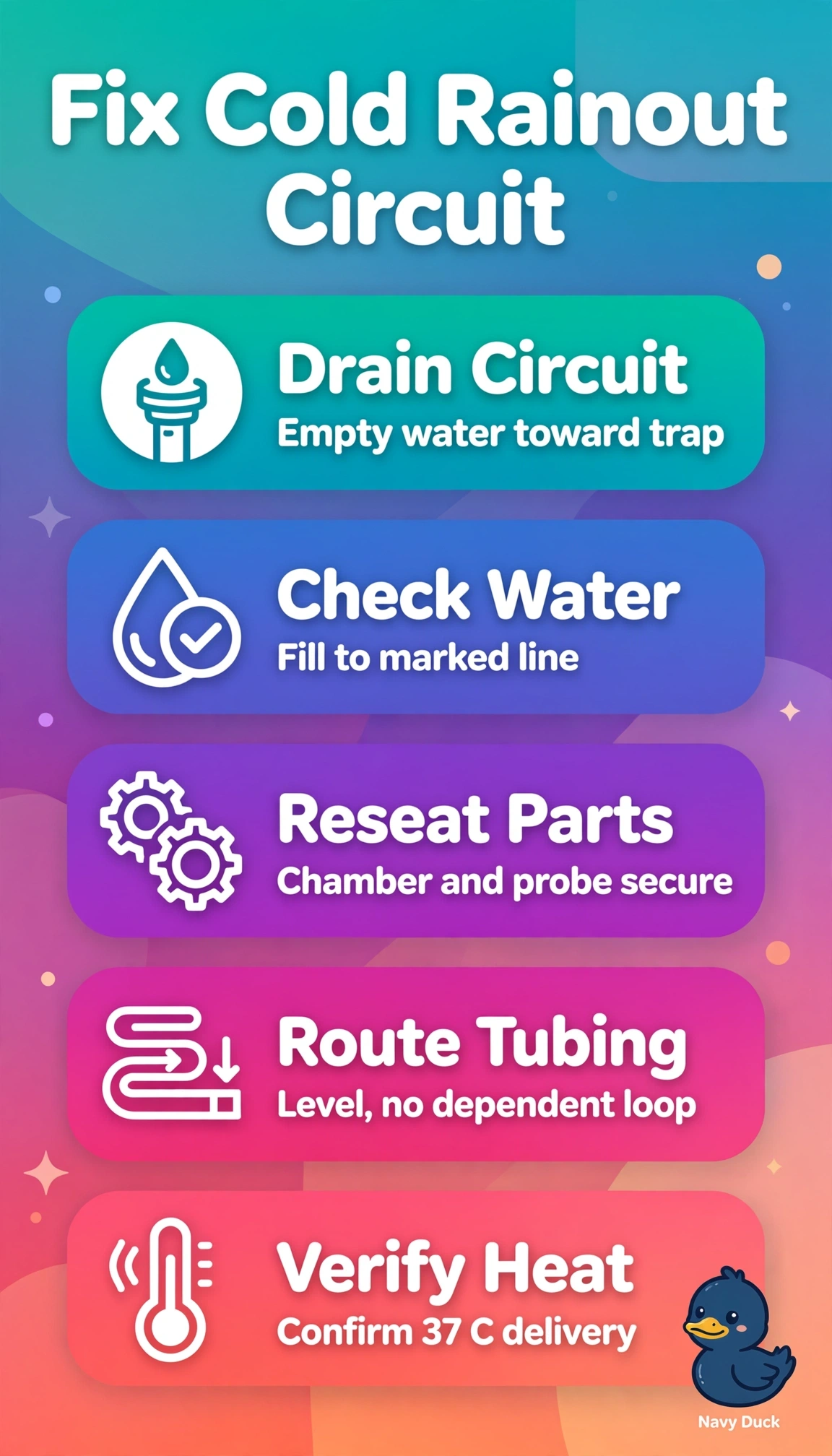
Short Explanation
You’ve got a soggy, chilly circuit that can’t heat properly. Condensate is your clue: drain it, bring the chamber to the fill line, reseat the probe, and keep the tubing level so warm humidification can recover.
Full Explanation
Drain the condensate, lower the chamber water to the fill line, reseat the temperature probe, and keep the tubing level to restore warm humidification. Removing water clears accumulated condensate; the proper chamber level supports heat transfer and prevents carryover, while a correctly seated probe restores accurate feedback so the heater can approach the 37 C target. Level tubing helps prevent water from collecting and draining toward the patient. Leaving the chamber overfilled after draining fails because excess water can act as a heat sink and promote carryover, allowing low temperature and rainout to recur. Correcting the water level and tubing but leaving the displaced probe uncorrected fails because inaccurate sensing disrupts temperature control, leaving the gas under-heated and the alarm potentially active. Correcting the chamber and probe while retaining a dependent loop below the bed that drains toward the patient fails because condensate can recollect, increase resistance, risk aspiration, and cool the gas. Exam caveat: silencing or tolerating an alarm is not the same as correcting the cause; cold, under-humidified gas can impair mucociliary function. Practical check: confirm the temperature rises toward 37 C, the alarm clears, the chamber stays at the fill line, there is no gurgling, and condensate does not return toward the airway.