
A 16-year-old with cystic fibrosis and F508del mutation has frequent exacerbations, declining FEV1, chronic Pseudomonas colonization, and difficult asthma-like wheezing despite inhaled steroids. The team discusses advanced therapies including surfactant history, biologics, and modulators. Which medication recommendation best targets the underlying CFTR defect in this CF?
Select an answer to reveal the explanation.
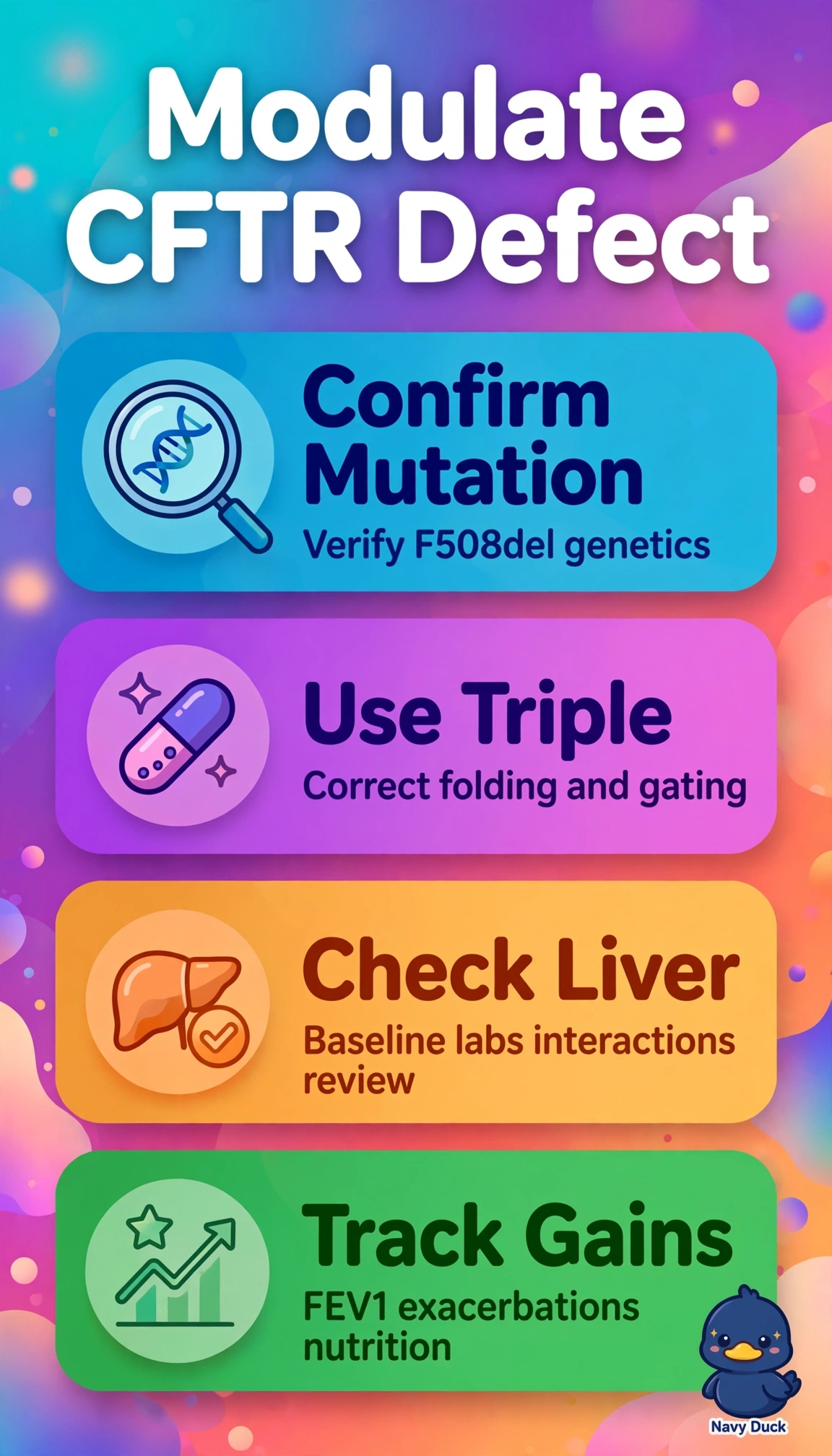
Short Explanation
You're fixing the faulty gate, not just mopping the floor. Modulation restores flow here, like oiling a rusted hinge versus painting it.
Full Explanation
Highly effective CFTR modulator triple therapy addresses F508del protein folding and gating defects, improving chloride transport, lung function, and exacerbation frequency after confirming genetics, drug interactions, and liver function. Exogenous surfactant replaces deficiency in neonatal respiratory distress and does not correct CFTR channel dysfunction or chronic CF pathophysiology. Omalizumab targets IgE-mediated severe asthma and may help allergic phenotype but does not restore CFTR function and is not primary disease-modifying therapy for F508del cystic fibrosis. Chronic azithromycin offers anti-inflammatory and exacerbation benefits in selected patients but does not modulate CFTR protein and alone cannot reverse the basic defect. Exam caveat is to distinguish CFTR modulators from asthma biologics and surfactant by mechanism and indication. Practical check is to verify mutation, liver tests, ophthalmologic and interaction screening, and adherence with airway clearance and cultures.